
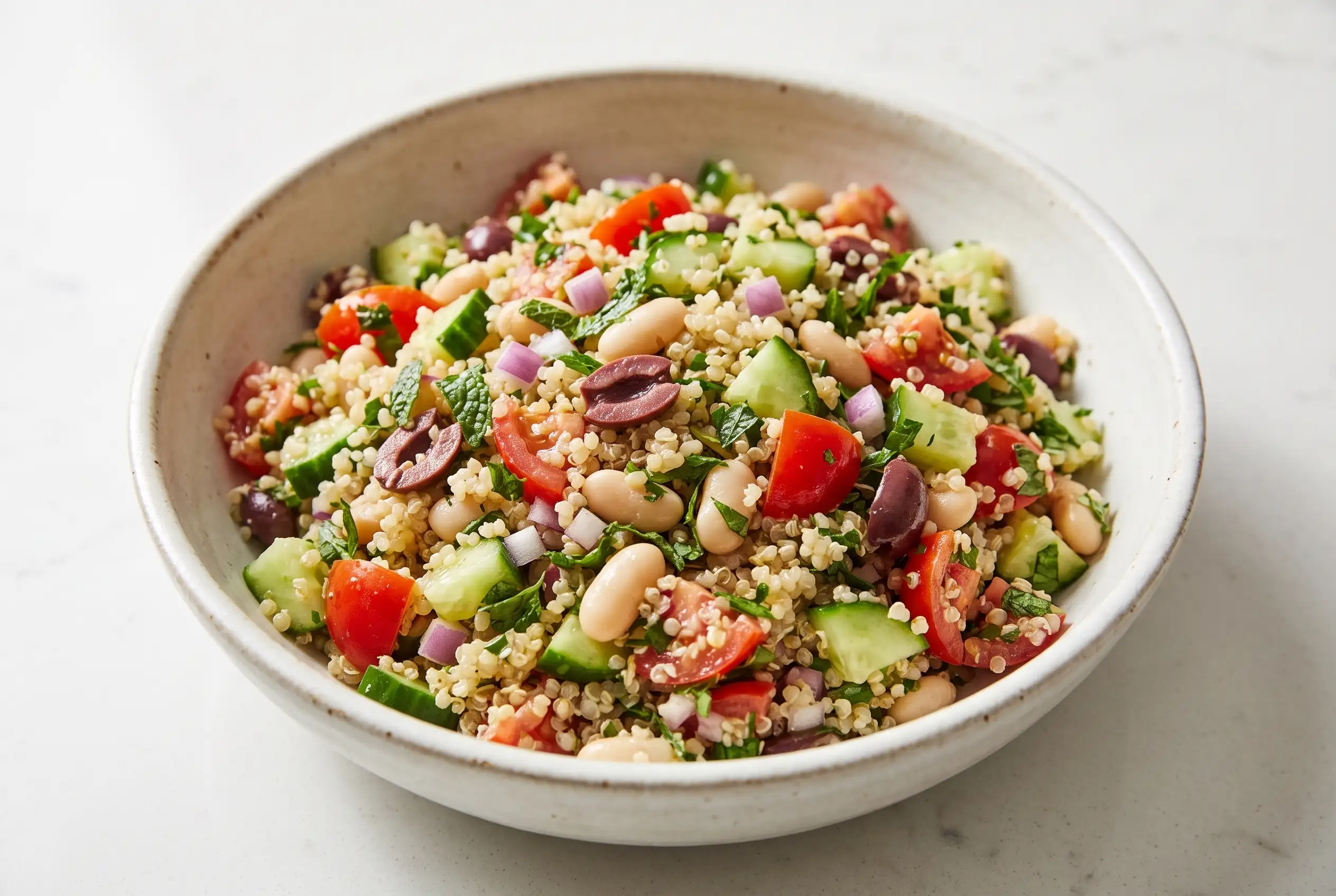
Chopped Greek Salad Brings Quinoa and Herbs Together
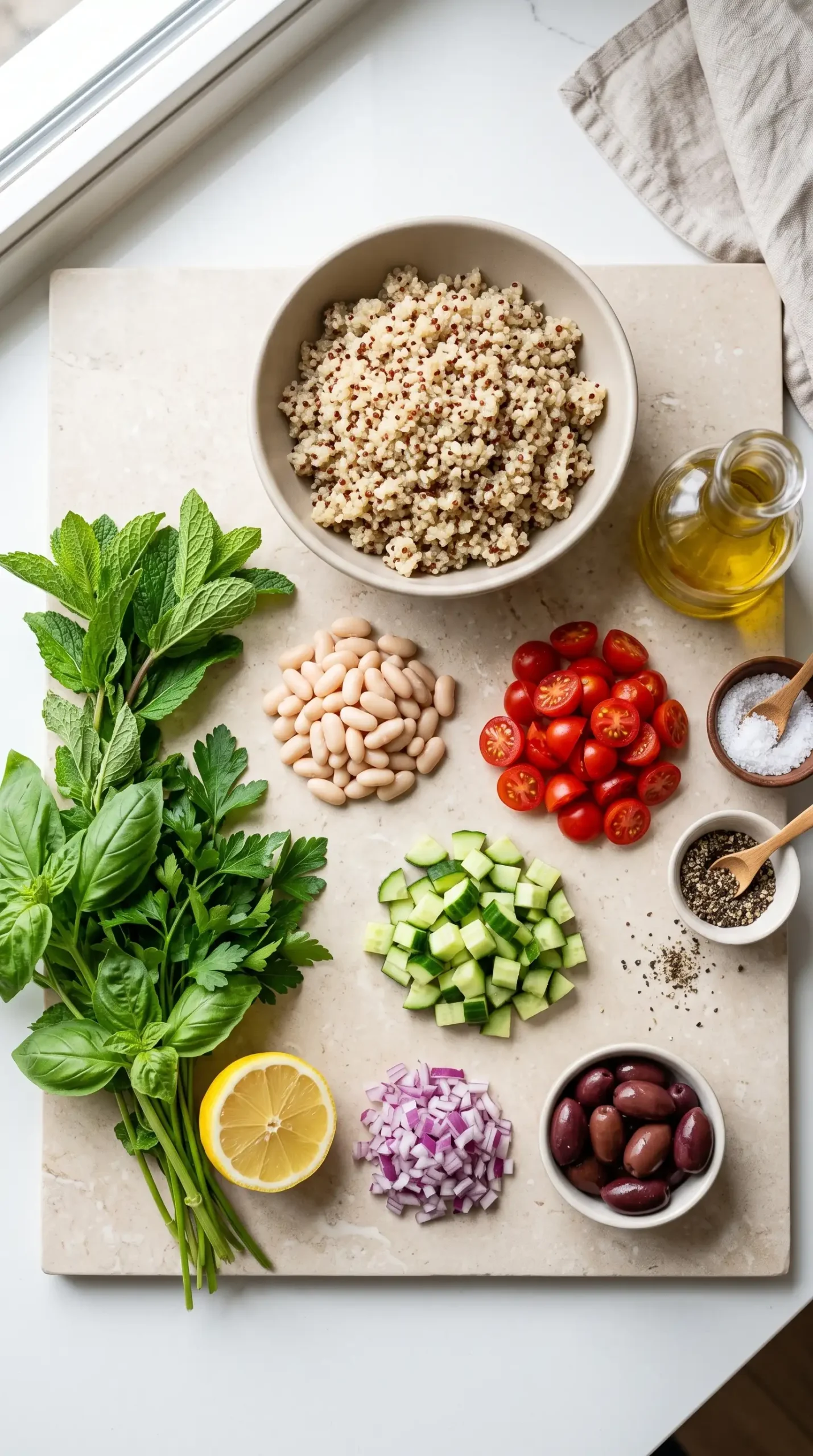
Chopped Greek salad takes the familiar brightness of tomatoes, cucumbers, olives, onion, and lemon into a more filling bowl with quinoa and white beans. The combination keeps the crisp, fresh character of a Greek-inspired salad while adding hearty textures that make it suitable for lunches, side dishes, or a simple meal.
Fresh herbs are the detail that gives this salad its distinctive personality. Mint, parsley, and basil create a lively flavor profile that works with the lemon juice and olive oil dressing, while quinoa provides a soft base that carries every chopped ingredient through each bite.
Quinoa Creates a Heartier Greek Salad Texture
Quinoa changes the structure of a traditional chopped salad by adding small, tender grains throughout the mixture. Instead of having only crisp vegetables and creamy beans, the bowl develops a layered texture where the quinoa absorbs the flavors surrounding it.
Cooling the cooked quinoa before combining it with the vegetables helps maintain a lighter texture. Warm quinoa can hold onto moisture differently, while cooled grains are easier to toss with tomatoes, cucumbers, and herbs without becoming overly sticky.
White beans add another substantial element, and other beans can work when you want a slightly different variation. The result is a quinoa Greek salad that keeps the bright qualities of a vegetable-forward dish while offering more staying power from the grains and legumes.
Herb Choices Shape the Lemony Herb Greek Salad Flavor
The fresh herbs deserve attention because they are not just a finishing touch in this salad. Mint, parsley, and basil bring different notes that balance the acidity of lemon juice and the richness of olive oil.
Parsley provides a familiar fresh green flavor, basil brings a softer aromatic quality, and mint adds a cool contrast alongside the tomatoes and cucumbers. Keeping the herbs chopped and evenly distributed allows their flavors to reach every portion of the bowl.
Using a generous amount of herbs is what helps create the character of a lemony herb Greek salad. The combination works especially well with the salty kalamata olives and the creamy texture of white beans.
Kalamata Olives and Vegetables Build Balanced Bites
Tomatoes, cucumbers, red onion, and olives each contribute a different texture to the chopped Greek salad. The vegetables provide freshness and crunch, while olives introduce a deeper savory note that connects the ingredients with the lemon and olive oil dressing.
Small Preparation Choices Improve Every Bowl
Simple preparation decisions can make the finished salad feel more balanced. Chopping vegetables into similar sizes helps each forkful include multiple flavors, and adjusting the amount of dressing at the end allows the ingredients to stay vibrant.
These choices also make the salad adaptable for different preferences. Someone who enjoys a sharper flavor can add more lemon juice, while someone looking for a milder profile can use a lighter touch with the onion or olives.
A few finishing adjustments are useful after everything has been tossed together. Taste for salt, pepper, acidity, and richness so the dressing supports the vegetables, quinoa, and beans without overpowering them.
- Herb balance: Keep the fresh herbs noticeable so they remain part of the main flavor.
- Dressing control: Add olive oil and lemon juice gradually until the salad reaches the desired brightness.
- Texture check: Combine cooled quinoa with chopped ingredients for a more even mixture.
Cooking Quinoa Without Losing Salad Texture
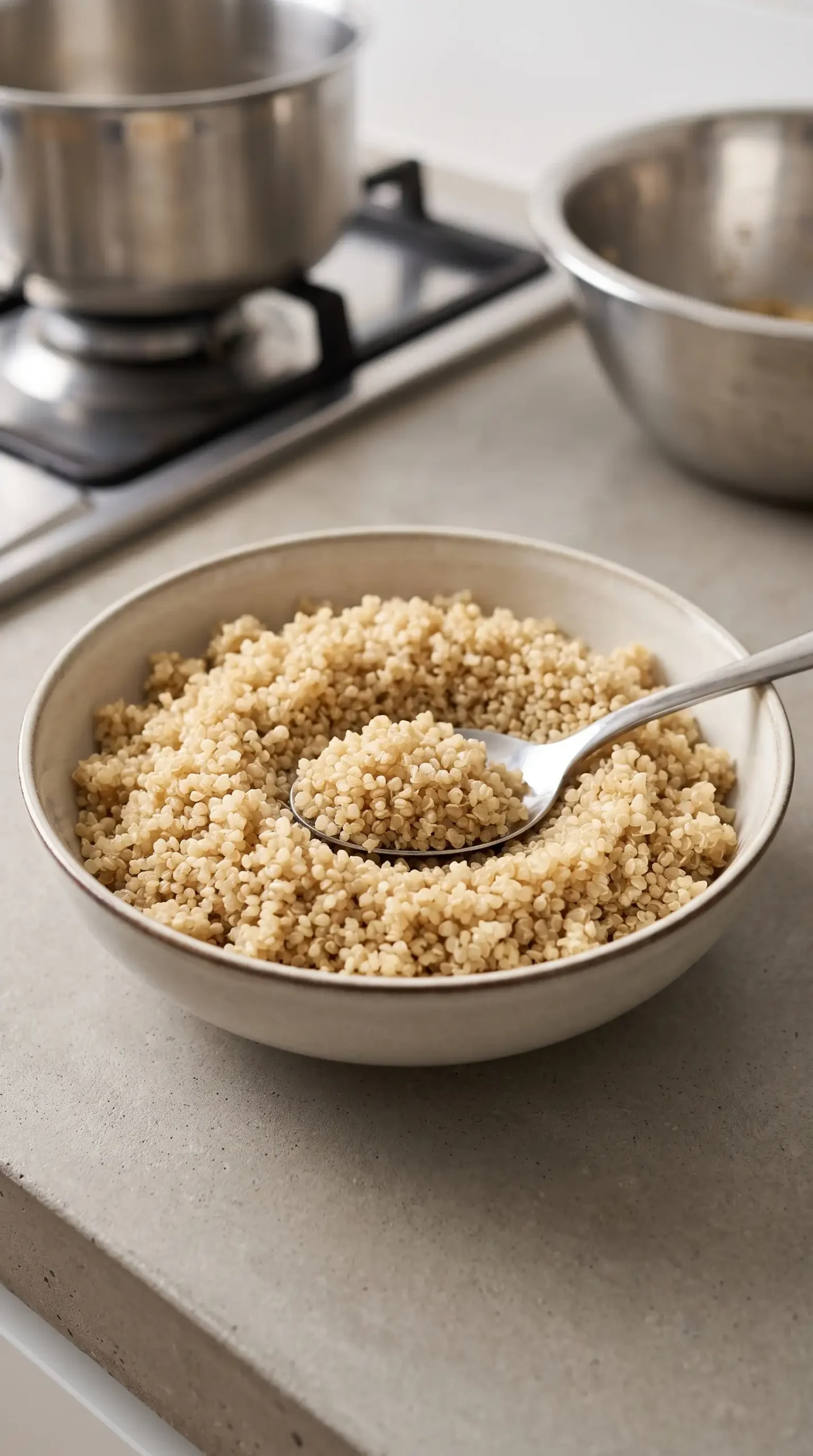
Quinoa preparation has the biggest effect on the final texture because it becomes the foundation of the bowl. Following the package instructions and allowing the cooked grains to settle creates a better base for mixing with fresh ingredients.
One useful step before cooking is rinsing quinoa before cooking, which can remove the naturally occurring saponin coating that may contribute a bitter flavor. This helps create a cleaner-tasting base for the salad before the grains are combined with the other ingredients.
Excess moisture can make a chopped salad feel heavy, especially when combined with juicy tomatoes and cucumbers. Letting quinoa cool and keeping the vegetables freshly prepared helps preserve the contrast between tender grains and crisp produce.
The cooking process itself is straightforward, but attention after cooking matters. Once the quinoa is ready, the focus shifts to combining ingredients in a way that keeps the flavors distinct while allowing the lemon, olive oil, salt, and pepper to season the entire bowl.
Common Chopped Greek Salad Mistakes to Avoid
Adding hot quinoa directly to the chopped vegetables can affect the salad’s texture. Cooling the grains first helps prevent the mixture from becoming overly soft and allows the vegetables to maintain their fresh qualities.
Overlooking seasoning adjustments is another common issue. Tomatoes, olives, beans, and herbs all have different flavor strengths, so the amount of lemon juice, olive oil, salt, and pepper may need small changes after mixing.
Cutting ingredients into uneven pieces can also affect the eating experience. Large pieces of one ingredient and tiny pieces of another may leave some bites dominated by a single flavor instead of creating a balanced combination.
| Ingredient group | Texture contribution | Flavor role |
|---|---|---|
| Quinoa and white beans | Tender, filling base | Mild foundation for dressing |
| Tomatoes and cucumbers | Fresh, crisp contrast | Bright vegetable flavor |
| Herbs and kalamata olives | Light and varied textures | Aromatic and savory accents |
Serving Ideas for Greek Salad with Quinoa and White Beans
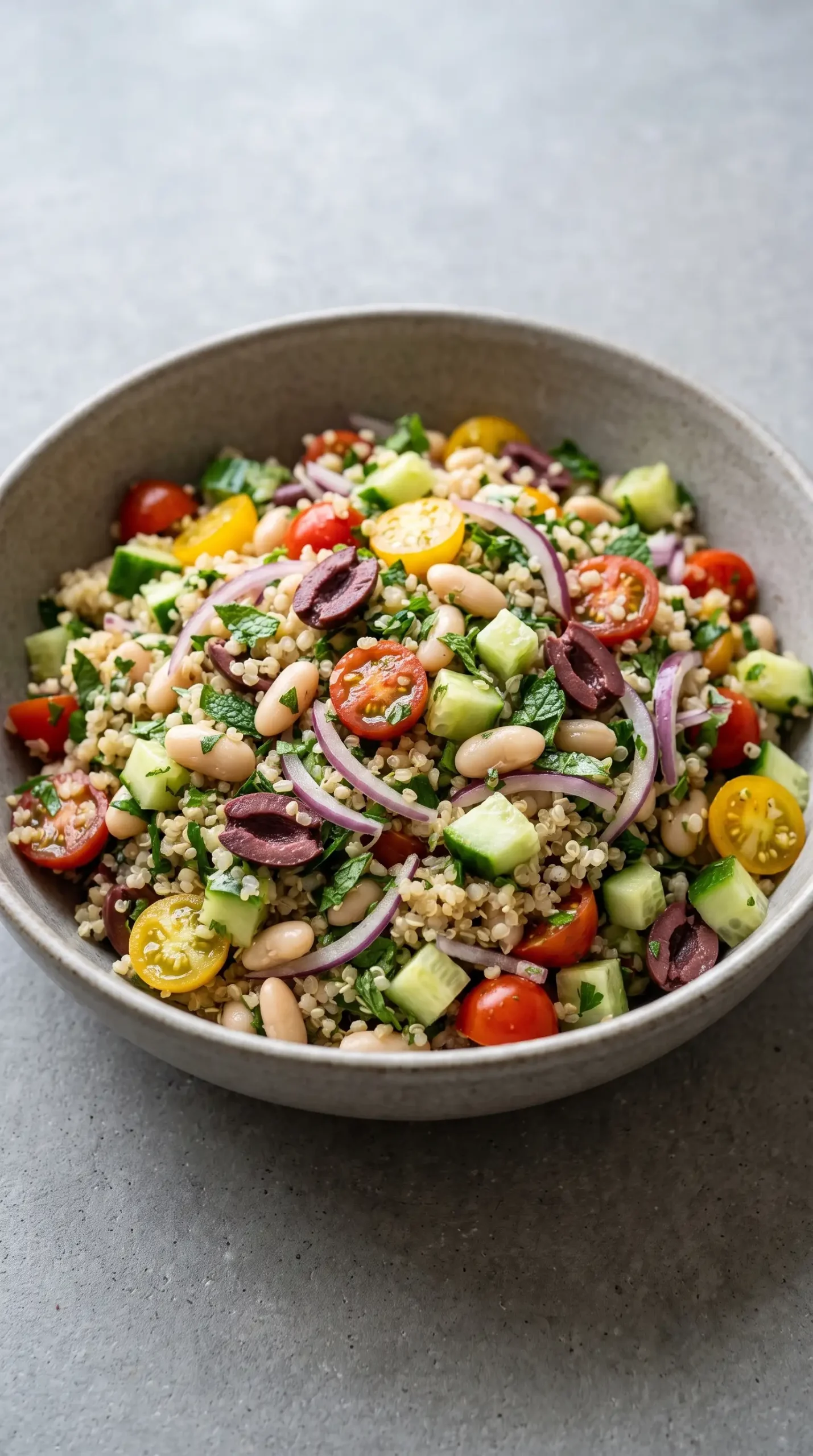
Greek salad with quinoa and white beans works well as a standalone bowl or as a colorful addition to a larger spread. A handful of greens can be mixed in when you want extra freshness, and the salad’s flavors pair naturally with Mediterranean-inspired dishes like couscous salad with chickpeas and fresh herbs.
Storage Keeps Chopped Ingredients Enjoyable
The salad can be enjoyed after it has rested because the quinoa and vegetables continue to absorb the lemon and olive oil flavors. The texture may soften slightly over time, creating a more tabbouleh-like quality.
Keeping the salad chilled helps maintain the freshness of the chopped vegetables and herbs. If preparing ahead, paying attention to moisture levels can help preserve the contrast between crisp produce and tender quinoa.
Extra servings can be refreshed with a little additional lemon juice, olive oil, or fresh greens when desired. These additions can brighten the flavors after the salad has been stored.
Flexible Additions Match Your Salad Preferences
The chopped Greek salad format welcomes personal adjustments because the core combination of quinoa, vegetables, herbs, beans, and dressing provides a versatile foundation. Extra greens, different beans, or other preferred additions can be incorporated while keeping the same fresh style.
Chopped Greek Salad Depends on Fresh Balance
Chopped Greek salad succeeds when the cooked quinoa supports the vegetables instead of competing with them. The most important choice is maintaining the balance between tender grains, crisp produce, aromatic herbs, and a bright lemon dressing.
Fresh herbs, careful seasoning, and properly prepared quinoa create a bowl where every ingredient has a clear place. The finished salad stays connected to Greek-inspired flavors while offering the satisfying texture of quinoa and white beans.
Chopped Greek Salad Questions About Storage and Preparation
Can quinoa be prepared ahead for chopped Greek salad?
Yes, cooked quinoa can be prepared ahead and cooled before mixing with the other ingredients. Having chilled quinoa ready makes it easier to assemble the salad while keeping the texture light.
How can the herbs stay fresh in the salad?
Adding the chopped herbs with the other ingredients and keeping the salad chilled helps preserve their fresh flavor. A final adjustment with lemon juice can also help brighten the herb flavors before serving.
Can other beans replace white beans?
Yes, lentils and garbanzo beans are suitable alternatives that keep the salad’s hearty texture. The choice of bean can slightly change the texture while still working with the quinoa, vegetables, and dressing.
Why does the salad resemble tabbouleh?
The similarity comes from the combination of chopped fresh vegetables, abundant herbs, and a grain-based texture. Quinoa creates a comparable style while adding its own texture to the mixture.
Should greens be added before serving?
Greens can be mixed in when you want additional freshness and a different texture. Adding them close to serving helps them maintain their structure alongside the chopped ingredients.
Chopped Greek Salad with Quinoa and White Beans and Herbs
Ingredients
Method
- Prepare the quinoa according to the package directions.
- While the quinoa is cooking, chop all of the vegetables and herbs.
- Combine the cooked quinoa, white beans, tomatoes, herbs, red onion, cucumbers, and kalamata olives in a bowl.
- Add olive oil, salt, pepper, and lemon juice to taste, then toss everything together until combined.