
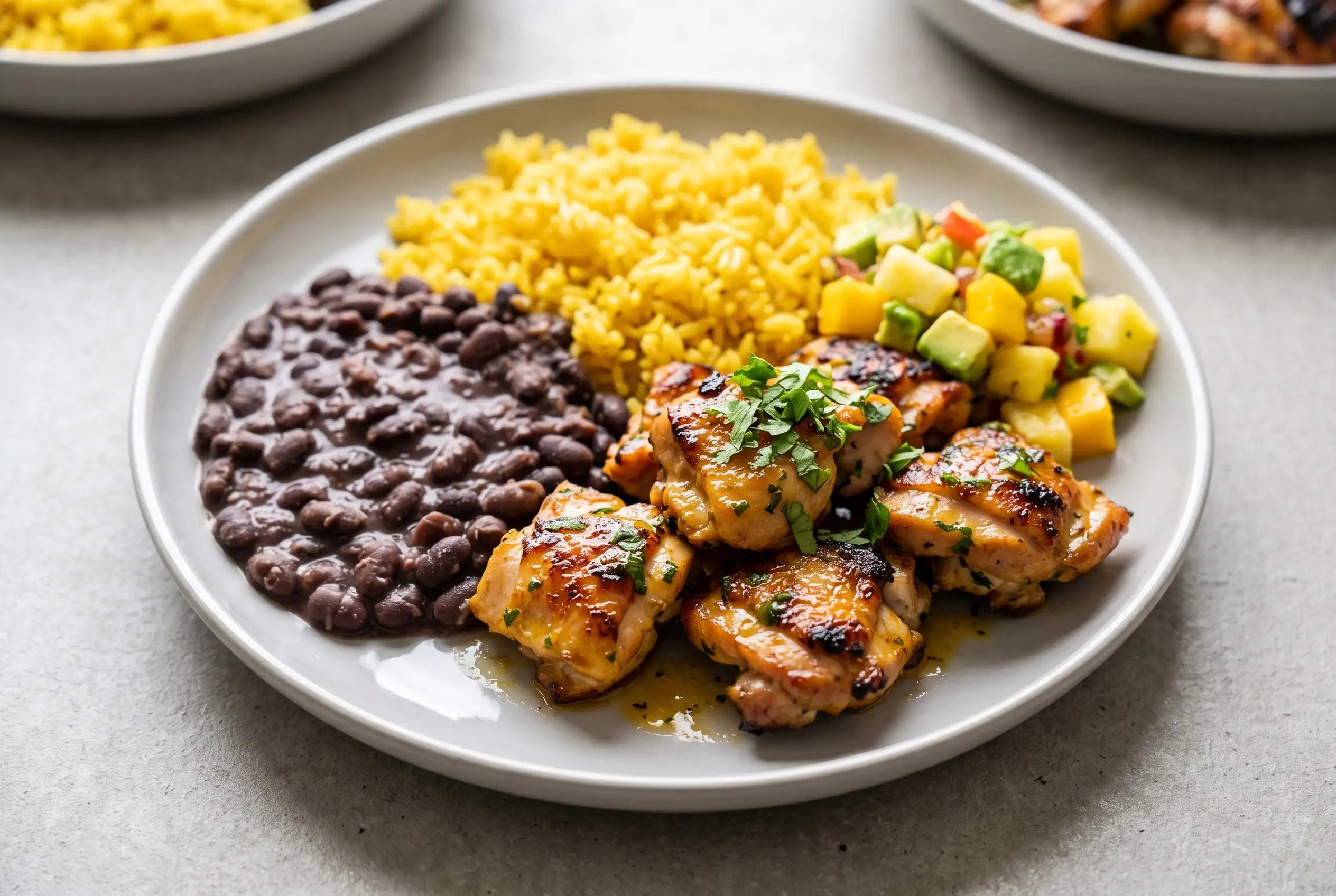
Cilantro Orange Chicken Brings Bright Citrus Balance
Cilantro Orange Chicken with Rice and Beans combines juicy chicken, orange-forward flavor, and savory sides into a meal that feels fresh without requiring complicated preparation. The orange chicken flavor comes from a simple marinade that balances sweet citrus notes with garlic, herbs, and a lightly tangy finish.
Unlike heavier versions often associated with orange chicken, this approach highlights broiled chicken pieces with a golden exterior and a fresh serving style. The rice, beans, and optional fruit topping create contrast so each bite carries savory, sweet, and bright flavors together.
Fresh cilantro plays an important role after the citrus and heat have done their work. Its herbal character keeps the dish lively, while the orange zest and juice help connect the chicken with the colorful sides.
The Citrus Marinade Shapes the Chicken Finish
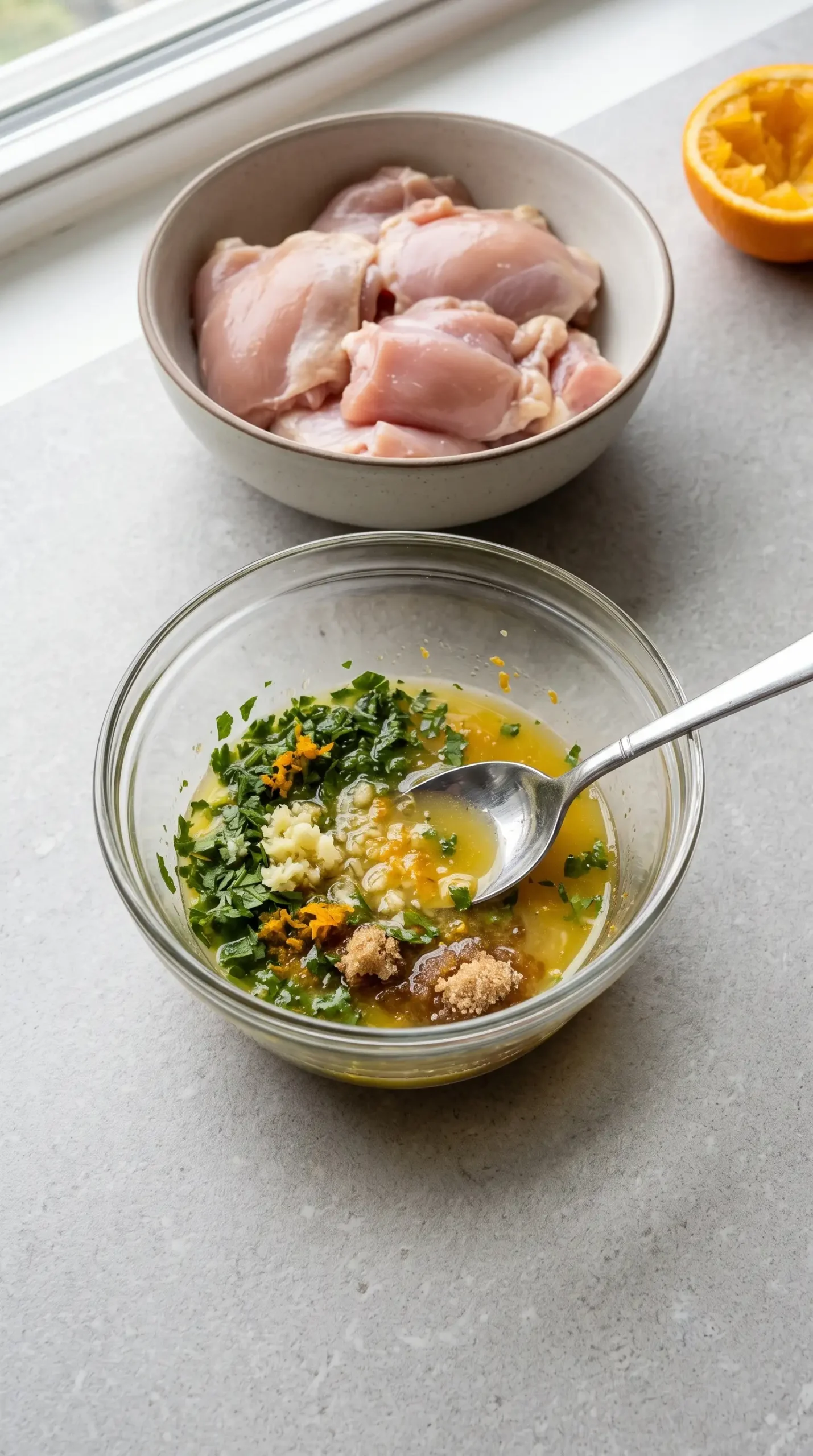
The marinade is where cilantro orange chicken gets its signature personality. Orange juice provides acidity and sweetness, while brown sugar helps create the deep color that develops during broiling. Garlic and vinegar add sharpness that prevents the sweeter elements from becoming flat.
Avocado oil helps the coating cling to the chicken pieces and supports browning under high heat. Since only part of the sauce is used before cooking and the rest is saved for finishing, the flavors stay layered instead of blending into one note.
Understanding the balance of the marinade makes it easier to adjust the dish thoughtfully. A slightly less salty version can be made by reducing the initial salt amount and seasoning the cooked chicken afterward, while keeping the citrus and garlic foundation intact.
Choosing the Right Rice and Beans Pairing
The sides determine how the orange chicken with rice and beans feels as a complete meal. Yellow rice offers a warm, seasoned base, while black beans or refried beans bring creaminess and a savory contrast that works with the sweet citrus chicken. A bowl-style serving can keep the chicken, rice, and beans in clear portions, and crockpot chicken bowls with yellow rice and cilantro pesto brings together a rice-based meal with herb-forward flavor.
| Side choice | Texture contribution | Flavor effect |
|---|---|---|
| Yellow rice | Soft and fluffy | Warm, seasoned foundation |
| Black beans | Firm and creamy | Earthy balance for citrus flavors |
| Refried beans | Smooth and rich | Comforting contrast to broiled chicken |
Broiler Control Creates Better Orange Chicken Skewers
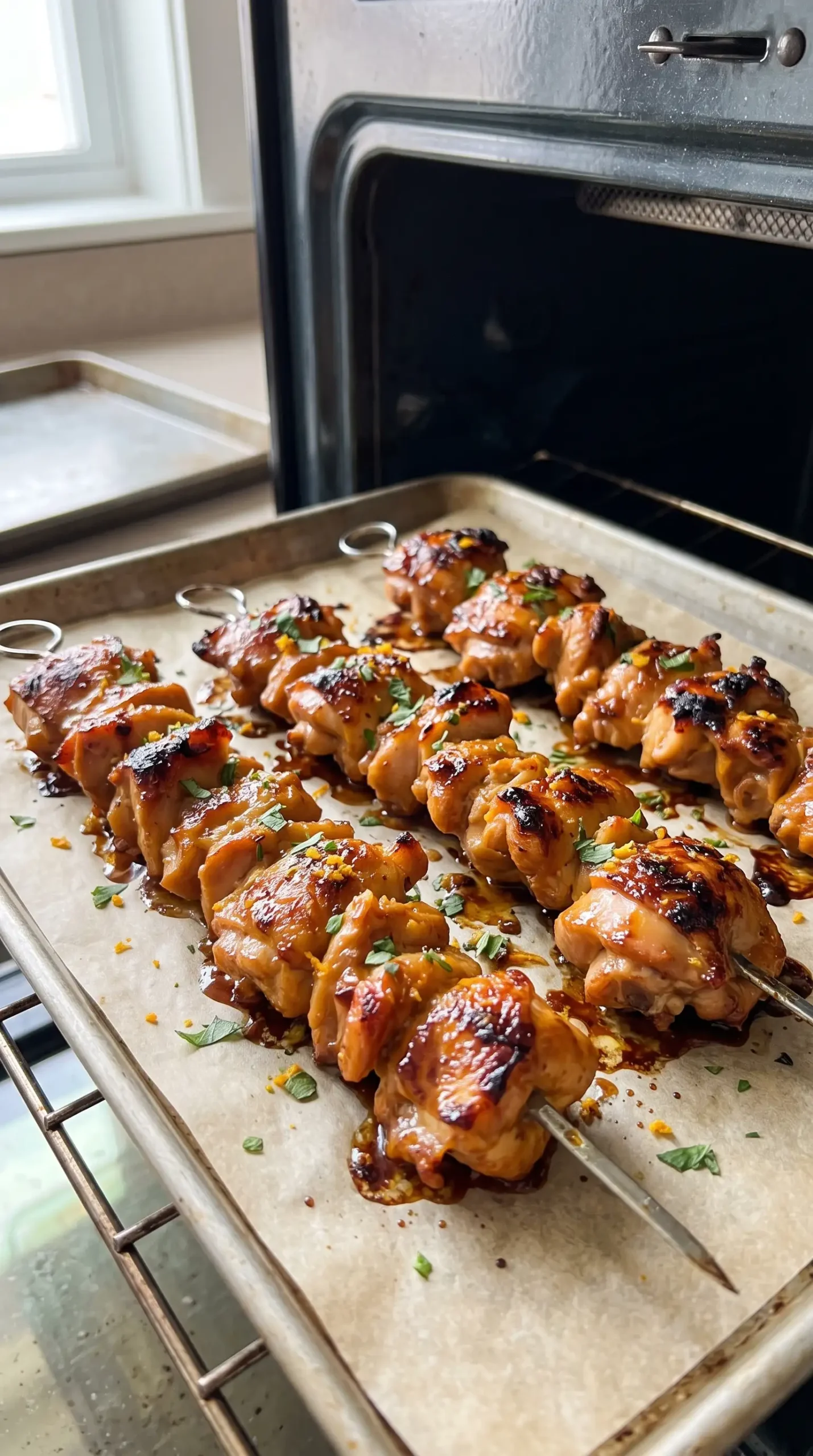
High heat is the defining cooking choice for these broiled orange chicken skewers. Positioning the chicken close to the heating element encourages the surface to caramelize quickly while the interior cooks through.
Broiling requires attention because the exterior can change quickly. The chicken should develop a burnished appearance without letting the sugary marinade scorch. Keeping pieces similar in size helps them finish at the same pace.
Skewers offer a classic presentation, but the same approach works when the chicken pieces are placed directly on a lined baking sheet. If wooden skewers are used, soaking them before cooking helps prepare them for the high-heat environment.
Fruit Additions Change the Plate’s Freshness
Pineapple, mango, or avocado can turn the finished plate into a brighter combination by adding juicy sweetness or creamy texture. Tossing diced fruit with a small amount of the reserved sauce creates a quick topping that ties the meal together.
Cilantro Orange Chicken Mistakes That Dull the Flavor
Several small choices can affect the finished dish. Using all of the marinade before cooking removes the opportunity to add a fresh coating after the chicken comes out, while saving some sauce preserves the glossy citrus finish.
Another common issue is overcrowding the chicken pieces on the pan. When pieces sit too close together, moisture can slow the browning that gives orange chicken its appealing roasted exterior because overcrowding can reduce browning. Spacing helps the surface develop color.
Some cooks also worry about the stronger salt level in the marinade. That seasoning is intentional because only part of the sauce coats the chicken during cooking. Reducing the salt slightly is possible, but changing the balance too much can leave the citrus flavor less defined.
Preparing Chicken Pieces for Even Browning
Uniform chicken pieces make the broiling process more predictable. Cutting the boneless skinless chicken thighs into similar bite-sized portions allows each piece to receive similar exposure to the heat and marinade.
Sauce Handling Keeps the Orange Chicken Glossy
The reserved sauce has a specific purpose after cooking. Brushing it over the golden chicken restores the fresh orange and cilantro notes that can soften during high heat.
Keeping raw chicken contact separate from the finishing portion is also important when preparing the sauce. The portion used for coating raw chicken should not be used as a finishing sauce unless it has been cooked appropriately.
Careful sauce handling also makes the dish easier to customize. A little extra zest can emphasize the orange character, while keeping the topping simple allows the chicken, rice, and beans to remain balanced.
Serving Ideas for Orange Chicken with Rice and Beans
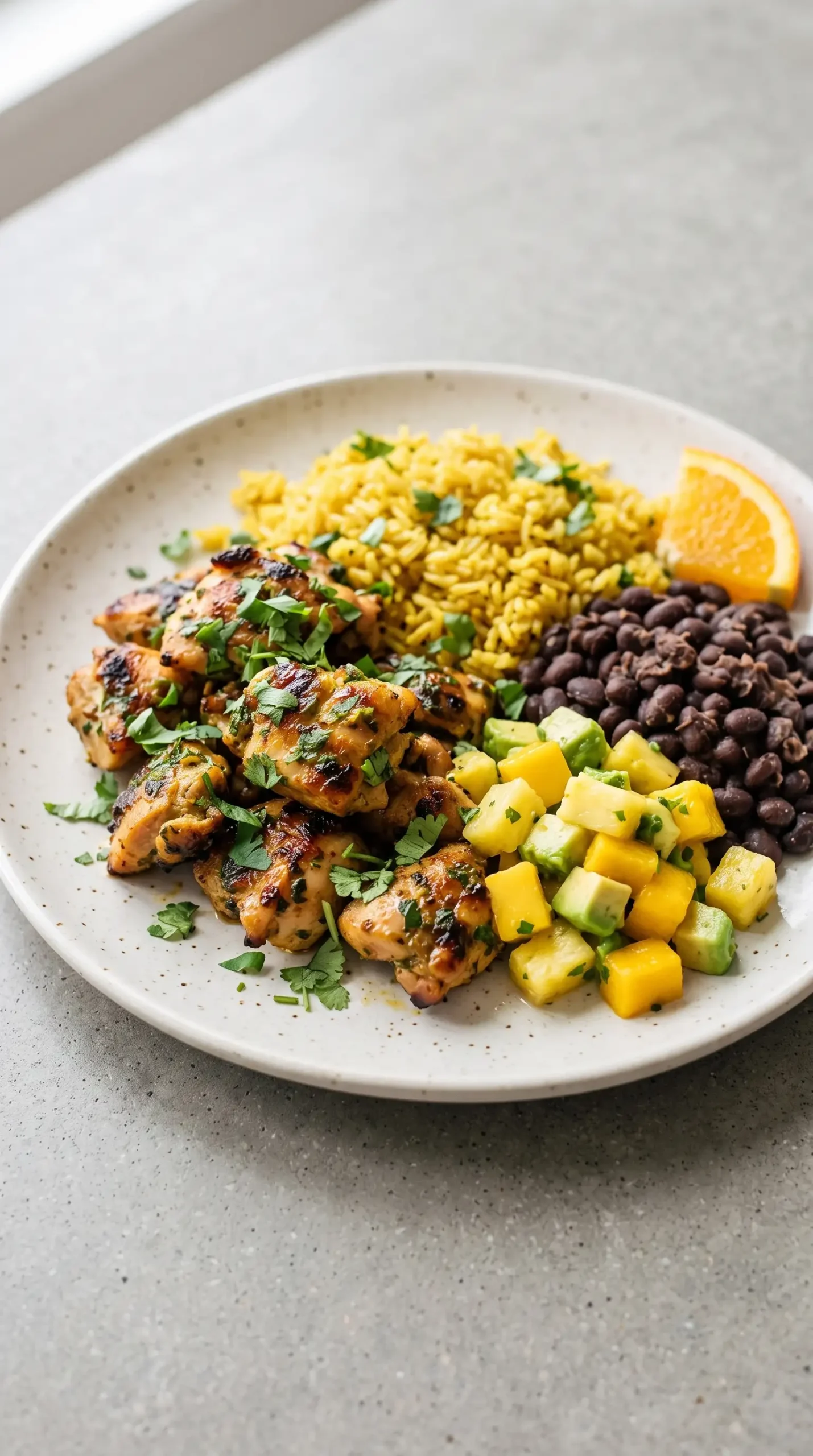
The plated arrangement can highlight the contrast between components. Spoon rice and beans alongside the chicken, then add the fruit topping where its color and freshness can stand out without covering the browned surface.
Storage and Reheating Keep Textures Balanced
Leftover cilantro orange chicken can be stored with the sides separately when possible. Keeping the chicken away from the rice and beans helps each part maintain its own texture during storage.
Reheating gently helps protect the chicken from becoming dry. Warm portions until heated through, then refresh the plate with a little of the reserved flavor profile if additional citrus brightness is desired.
Prepared fruit toppings may change texture sooner than the cooked components. Adding fresh pineapple, mango, or avocado after reheating can provide a better contrast than reheating the fruit mixture.
Small Adjustments for Different Kitchens
The dish adapts well to different equipment choices. A baking sheet works without skewers, and aluminum foil can be used when a cook prefers an alternative lining option for the broiler.
What Makes This Broiled Orange Chicken Work
Several details make this version stand out: the citrus marinade, quick high-heat cooking, and combination of savory sides. Each element has a distinct role, but they meet in the finished plate.
Orange chicken benefits from contrast, and the rice and beans provide exactly that. The soft sides balance the browned chicken, while fruit additions bring another layer of freshness.
A simple broiling technique can create a meal that feels vibrant and complete. The result is a dish built around smart flavor control instead of a long ingredient list or complicated preparation.
Cilantro Orange Chicken Gains Its Best Balance at the Finish
The broiled chicken develops its most appealing character when the browned exterior meets the fresh citrus finish added afterward. That contrast allows the orange flavor, cilantro, and savory sides to remain distinct.
Serving the chicken alongside rice and beans creates a complete plate where every component supports the others. The strongest result comes from protecting the bright finishing flavors while allowing the broiler to create depth.
Orange Chicken Questions About Flavor, Heat, and Preparation
Can I make cilantro orange chicken without skewers?
Yes. The chicken pieces can be arranged directly on a prepared baking sheet, allowing the same broiling approach and browned exterior without threading the pieces onto skewers.
How can I make the orange flavor stronger?
Adding a little more orange zest is a useful way to emphasize citrus aroma because zest contributes concentrated orange character without changing the balance of the sauce as much as extra liquid would.
What fruit works best with orange chicken with rice and beans?
Pineapple, mango, and avocado each bring a different finish. Pineapple adds juicy sweetness, mango adds tropical softness, and avocado contributes creamy richness that pairs well with the savory beans.
Why does my chicken not brown under the broiler?
Chicken may need better spacing or closer placement to the heat source. Excess moisture from crowded pieces can slow surface browning, so arranging the pieces with room around them helps.
Can I prepare the marinade ahead of time?
The sauce components can be mixed ahead for convenience, but keeping portions separate for raw chicken coating and finishing helps maintain both safety and the fresh flavor of the completed dish.
Cilantro Orange Chicken with Rice and Beans and Garlic
Ingredients
Method
- If using wood skewers, soak them before cooking.
- Line a baking sheet with parchment paper or aluminum foil. Set the broiler on and place an oven rack about 6 inches from the heating element.
- Add the chicken pieces to a large mixing bowl.
- Mix the sauce ingredients together in a small bowl.
- Coat the chicken with half of the sauce, keeping the remaining sauce aside for finishing. Thread the chicken onto skewers, or place the coated pieces directly on the prepared baking sheet after allowing excess sauce to drip away. Add a small pinch of additional salt to the chicken if desired.
- Broil the chicken for 12 minutes, or until it is cooked through and has a browned exterior.
- Combine a small amount of the reserved sauce with the diced pineapple, mango, and/or avocado to make an optional fruit topping.
- Brush the cooked chicken with the reserved sauce.
- Serve the chicken with rice, beans, and the optional fruit topping.