
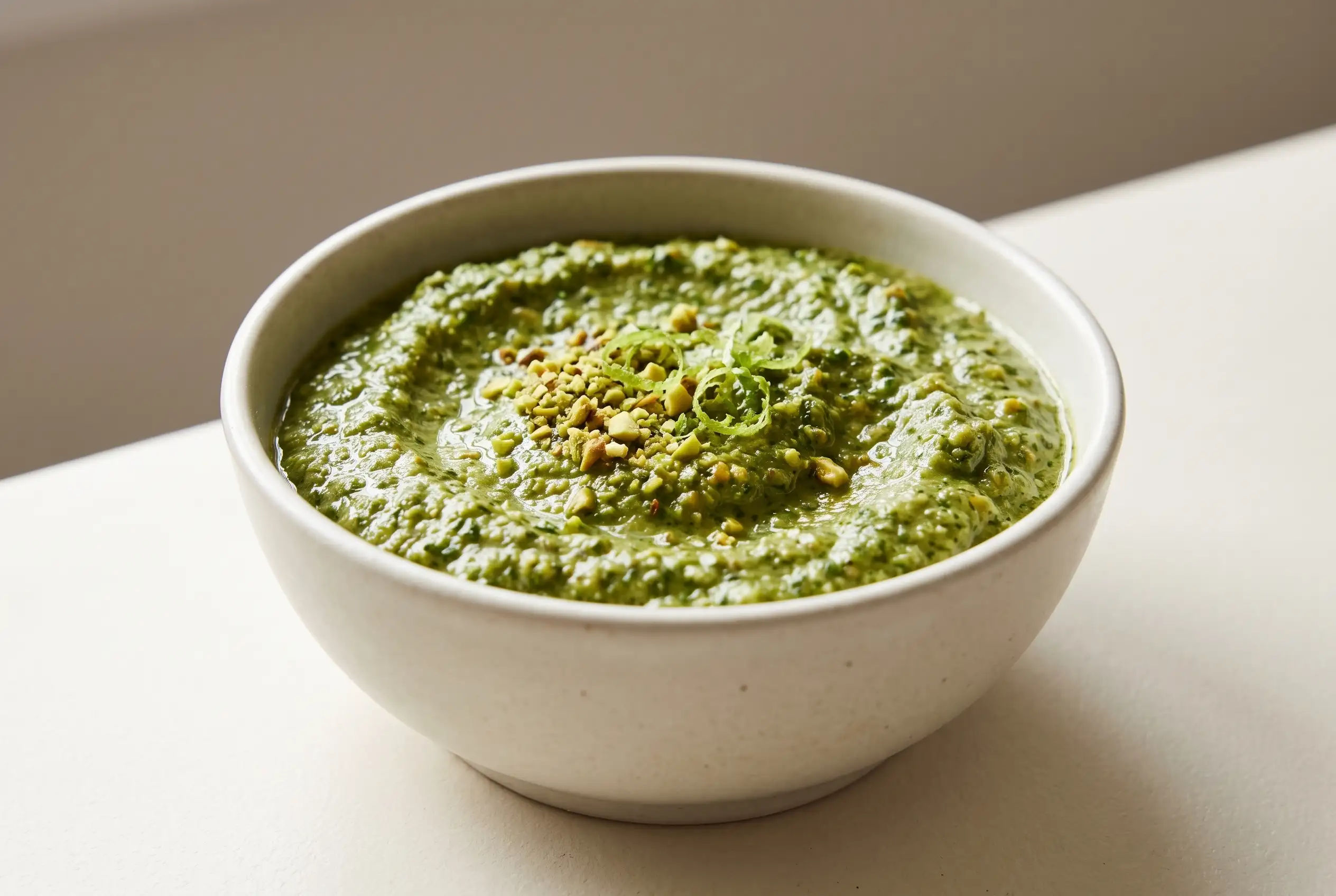
Cilantro pesto brings together fresh herbs, citrus, roasted pistachios, and gentle heat in a vibrant sauce that can transform everyday meals. The bright flavor of cilantro, the richness of pistachios, and the sharp lift of lime create a homemade condiment that works far beyond traditional pasta pairings. A well-balanced cilantro pesto keeps the texture slightly rustic while delivering a fresh, savory finish for bowls, soups, pizza, eggs, sandwiches, and wraps.
Cilantro Pesto Builds Flavor Beyond Traditional Herb Sauces
Unlike basil-centered sauces that lean toward sweet and grassy notes, cilantro pesto has a sharper personality with citrus-forward freshness. The lime juice and zest help the herb taste lively, while garlic and jalapeño create a savory backbone without overwhelming the sauce.
Roasted pistachios give the mixture a distinctive character by adding body and a nutty depth. Their salted finish also helps season the sauce as it comes together, allowing a small amount of salt adjustment at the end to match personal preference.
Pistachios and Lime Shape the Best Cilantro Pesto Balance
The most important ingredient decisions for cilantro pesto come from choosing the right proportions of texture, acidity, and freshness. Cilantro needs enough supporting ingredients to become a spoonable sauce instead of a thin herb puree.
A cilantro pistachio pesto depends on using enough cilantro volume to create the signature green base. Pistachios provide structure, while oil helps everything blend into a cohesive consistency. Lime keeps the flavors focused and prevents the sauce from tasting heavy.
| Component | Role in the sauce | Cook-facing choice |
|---|---|---|
| Cilantro | Fresh herbal foundation | Use a full bunch with enough leaves and tender stems for body |
| Pistachios | Texture and richness | Roasted salted nuts add depth and seasoning |
| Lime | Brightness and balance | Fresh juice and zest provide a sharper finish |
| Jalapeño | Gentle heat | Removing ribs and seeds keeps spice controlled |
Fresh Cilantro Choices Create a More Vibrant Sauce
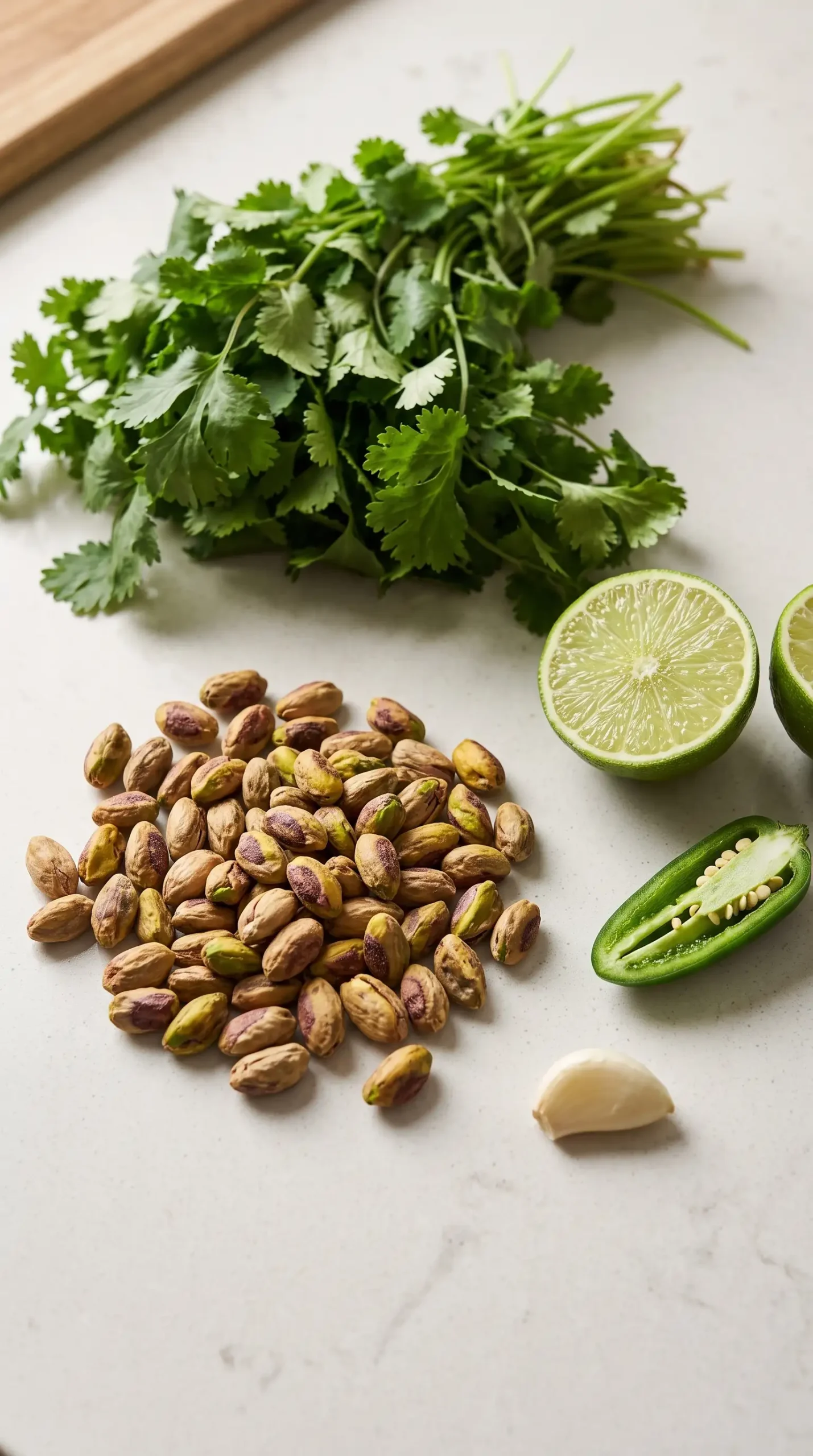
Successful cilantro pesto starts with cilantro that looks fresh and lively. Since the herb supplies most of the color and flavor, wilted or tired bunches can make the finished sauce less aromatic.
- Herb texture: Choose cilantro that blends easily without excessive dry or yellow leaves.
- Heat control: Keep the jalapeño mild by using the prepared pepper amount as written and adjusting only if desired.
- Nut quality: Roasted pistachios provide the toasted flavor that separates this sauce from simpler herb blends.
Small Blender Technique Controls Cilantro Pesto Texture
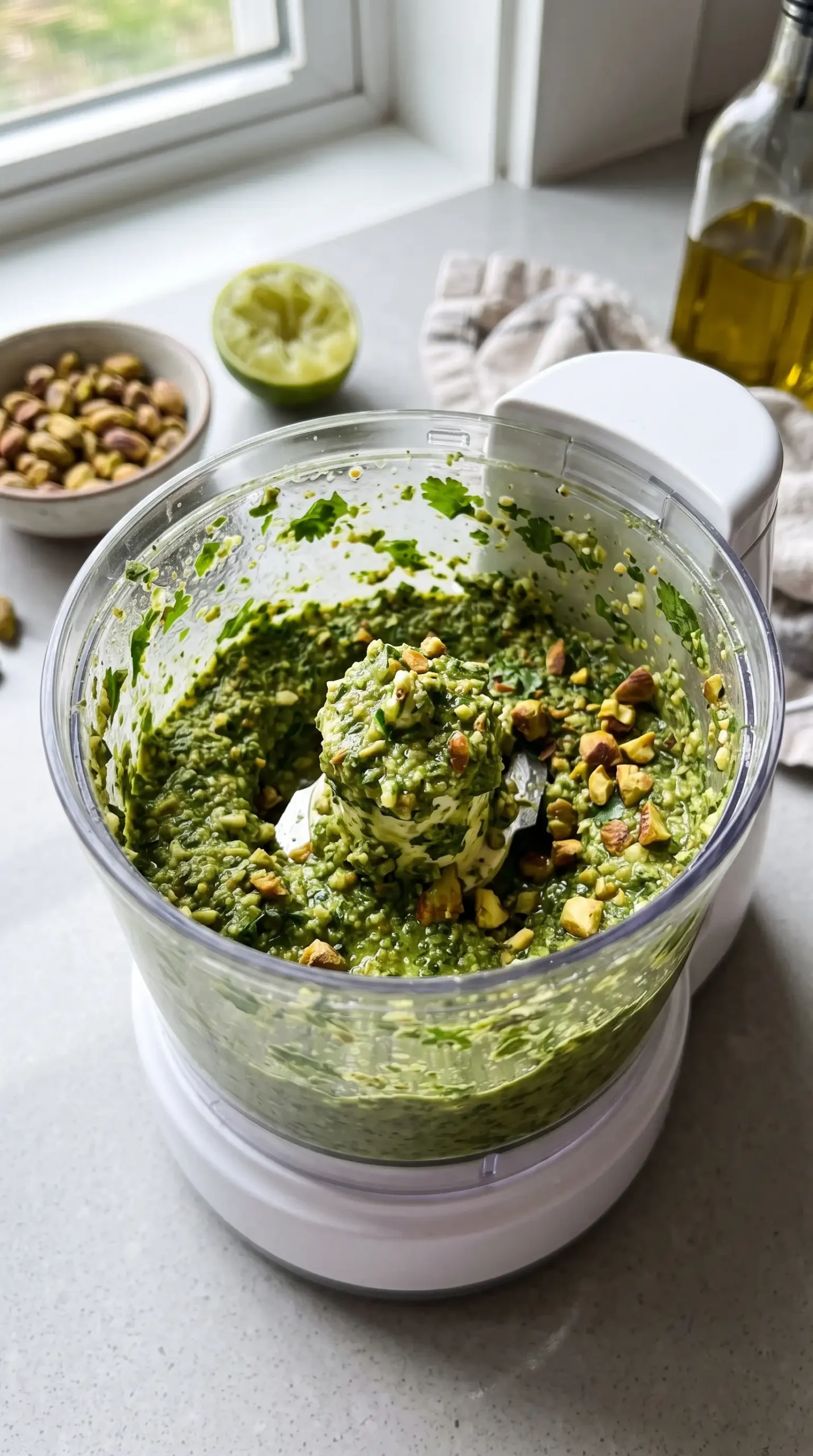
The texture of cilantro pesto is one of its defining qualities. A slightly chunky consistency allows the pistachios and herbs to remain noticeable, creating a sauce with more character than a completely smooth puree.
A thick herb-and-nut sauce benefits from processing in stages and scraping down the bowl sides so the ingredients combine evenly.
Blending works best when the equipment can properly move the ingredients together. Smaller processors or compact blenders can handle thick mixtures more effectively because the ingredients stay close to the blades.
Scraping down the sides during blending helps redistribute thicker portions back into the mixture. A small splash of water can help the blades continue moving if the sauce becomes difficult to process.
Serving Ideas Expand Homemade Cilantro Pesto Sauce
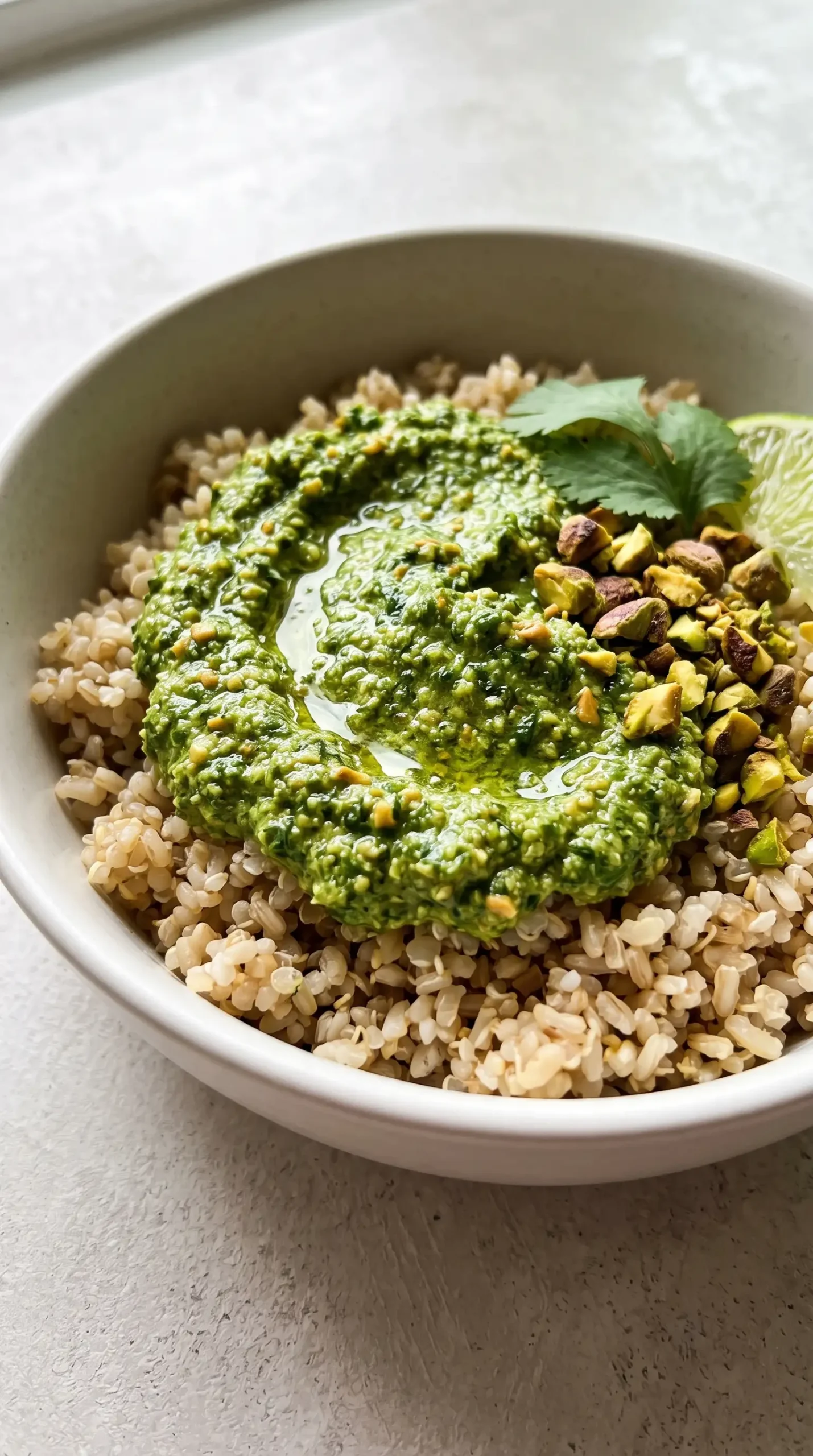
Homemade cilantro pesto sauce is especially useful because a small amount can change the direction of a meal. Its combination of citrus, herbs, and nuts makes it suitable for dishes that need freshness and a savory finishing touch. For salads and bowls, a creamy cilantro dressing for salads can bring a smoother texture while keeping the bright cilantro and lime character at the center.
- Bowls and grains: Spoon the sauce over warm bowls for a bright contrast.
- Pizza and flatbreads: Add it after baking to preserve the fresh flavors.
- Breakfast plates: Pair it with eggs for a herbaceous accent.
- Sandwiches and wraps: Spread it as a flavorful alternative to heavier sauces.
The sauce can also complement soups by adding a concentrated layer of cilantro and lime near the moment of serving.
Lime Cilantro Pesto Adds Brightness to Everyday Meals
Lime cilantro pesto works particularly well when a dish needs a fresh element. The citrus notes make rich or hearty foods feel lighter, while the pistachios bring enough richness to keep the sauce satisfying.
Its versatility comes from the balance between bold and refreshing flavors. A small spoonful can provide garlic, herb, nut, and citrus notes at the same time without requiring multiple toppings or garnishes.
Avoid These Cilantro Pesto Texture and Flavor Mistakes
Cilantro pesto can lose its appeal when the texture becomes uneven or the flavors are not balanced. The most common issues come from ingredient proportions, blending conditions, or choosing the wrong consistency.
- Over-processing the sauce: Blending too far can remove the appealing texture of the pistachios and herbs. Stop when the consistency matches your preference.
- Using too little cilantro: A small herb amount may leave the sauce without enough body or its recognizable flavor.
- Ignoring blender movement: Thick mixtures can stall, so scraping the sides or adding a little water can help the ingredients combine.
- Adding too much heat: Jalapeño can quickly dominate the fresh flavors if increased without considering the rest of the sauce.
Storage Habits Keep Cilantro Pesto Fresh
Proper storage helps preserve the bright character of cilantro pesto after preparation. Keeping it in an airtight container limits exposure to air and helps maintain the sauce’s fresh flavor.
The sauce is best enjoyed while its herb and citrus notes are prominent. Refrigeration keeps it ready for quick meals, toppings, and finishing touches throughout the week.
Cilantro Pesto Adapts to Different Kitchen Uses
The sauce can be adjusted for different meals while keeping its core identity. A thicker texture works well as a spread, while a looser consistency can make it easier to drizzle over larger dishes.
Additional experimentation should preserve the original balance of cilantro, lime, pistachio, garlic, and jalapeño. Changes that overpower the herb or citrus character can move the sauce away from its intended fresh profile.
Simple Preparation Decisions Improve Cilantro Pesto Results
Cooking control for cilantro pesto comes from paying attention during blending instead of relying on a perfectly smooth finish. Watching how the mixture moves and stopping at the right moment creates a sauce with better texture.
Equipment size matters because a thick mixture needs enough volume and movement to process efficiently. Choosing the right container allows the pistachios and herbs to combine without unnecessary adjustments.
Cilantro Pesto Brings Fresh Contrast to Complete Meals
A flavorful condiment does not need complicated preparation to make an impact. Cilantro pesto combines a handful of ingredients into a sauce that can add brightness, texture, and personality to familiar dishes.
The strongest results come from respecting the sauce’s rustic nature. Keeping some texture, maintaining the citrus lift, and allowing the cilantro to remain the leading flavor creates a versatile finishing sauce.
Cilantro Pesto Delivers the Right Balance Through Texture and Freshness
Cilantro pesto reaches its best expression when the herb remains vivid, the pistachios provide structure, and the lime keeps every bite lively. The slightly textured blend makes the sauce adaptable while preserving the qualities that make it different from other pesto styles.
The preparation choices are simple, but the result depends on recognizing when the ingredients have reached the right consistency. A fresh blend with controlled heat and balanced acidity becomes a dependable addition to many meals.
Cilantro Pesto Questions About Texture, Storage, and Uses
Can cilantro pesto be made less spicy?
Yes. Keeping the jalapeño amount controlled is the easiest way to maintain a mild sauce. Removing the ribs and seeds already reduces heat while allowing the pepper flavor to remain.
Why does my cilantro pesto seem too thick?
A thick texture can happen because pistachios and herbs create a dense mixture. Scraping the blender sides and adding a small splash of water can help the ingredients move more easily.
Can I use cilantro stems in cilantro pesto?
Tender cilantro stems can blend well and contribute flavor. Very thick or tough stems are less desirable because they may affect the final texture.
What foods pair best with cilantro pesto?
Cilantro pesto pairs well with bowls, soups, pizza, eggs, sandwiches, and wraps. Its lime and herb flavors make it especially useful when a meal needs a fresh finishing element.
How can I keep cilantro pesto tasting fresh?
Store the sauce in an airtight container in the refrigerator and use it while the cilantro and lime flavors are still vibrant. Limiting air exposure helps protect its fresh character.
Cilantro Pesto with Roasted Pistachios and Lime Juice
Ingredients
Method
- Add all ingredients to a small food processor, chopper, or blender.
- Blend until the pesto reaches the preferred consistency, keeping it slightly textured if desired.
- Scrape down the sides as needed while blending so the mixture combines evenly.
- Serve and enjoy with your preferred dishes.