
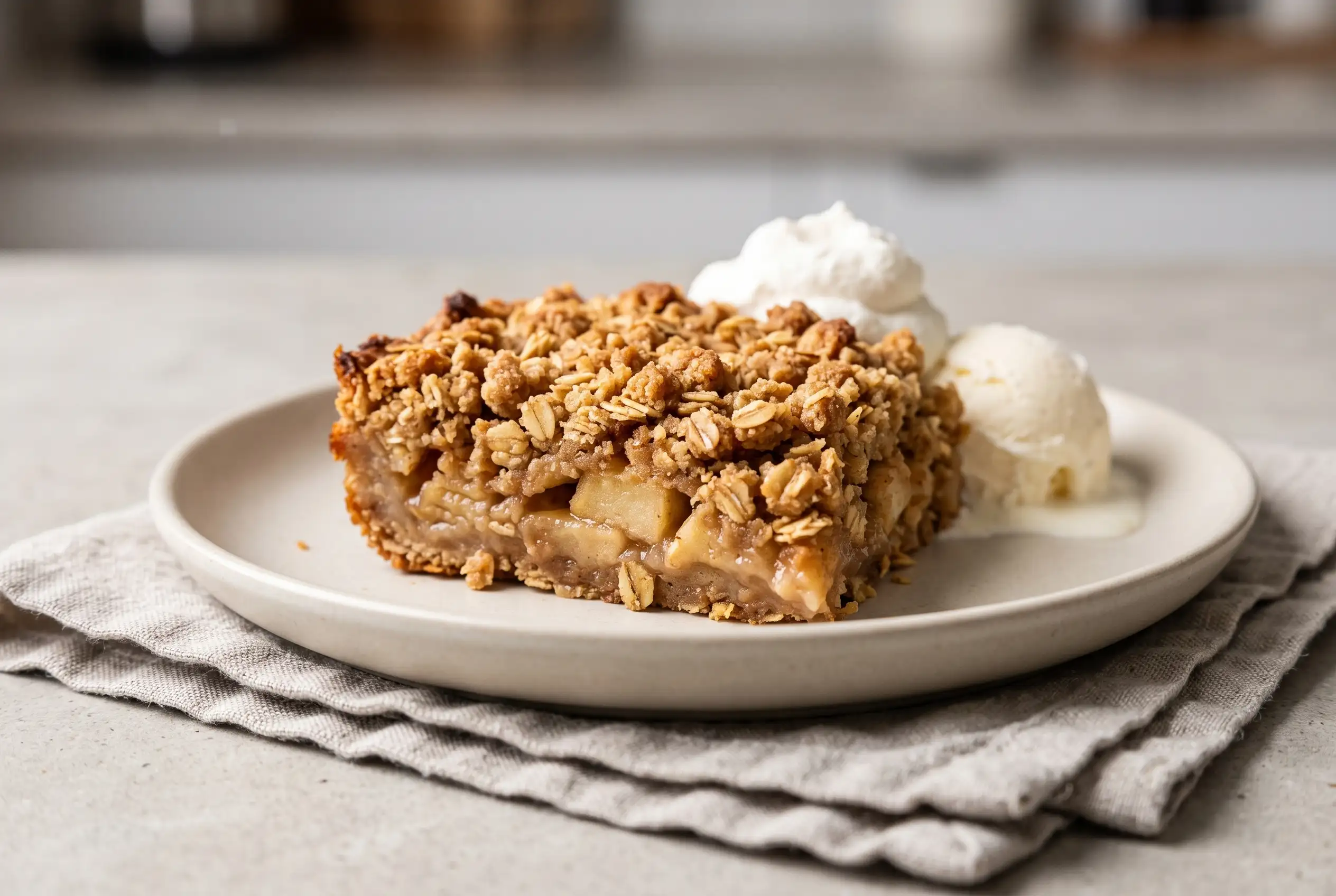
Apple crisp is a timeless dessert built around a simple contrast: tender baked apples beneath a buttery oat topping. A classic apple crisp recipe depends on a few careful choices that shape the final texture, from selecting apples that soften well to creating a topping that becomes crisp without losing its comforting chew.
Unlike many fruit desserts that rely on pastry, this baked apple crisp highlights the natural flavor of the apples while using pantry-friendly ingredients for the topping. The combination of fruit, brown sugar, oats, and butter creates a dessert that feels familiar while still leaving room for thoughtful technique.
What Makes Classic Apple Crisp Work
Classic apple crisp succeeds because each layer has a clear purpose. The apple mixture provides moisture and sweetness as it bakes, while the oat topping creates contrast with a lightly crisp surface and a richer texture from the butter and brown sugar.
Balance matters throughout the dish. Too much moisture in the fruit layer can make the topping soften, while an uneven topping layer can create areas that brown differently. Keeping the apples and topping in proportion helps every serving contain both tender fruit and a satisfying crumble.
Simple desserts often depend on small details, and apple crisp is a good example. The sliced or diced apples should have enough space to cook evenly, and the topping should cover the fruit without being packed down so tightly that it loses its texture.
Apple Choices That Shape Classic Apple Crisp
The apples selected for classic apple crisp influence sweetness, softness, and the overall character of the dessert. Apples that hold some structure during baking work well because they soften into a tender filling while still providing noticeable pieces instead of disappearing completely.
The Oat Topping Texture Depends on Balance
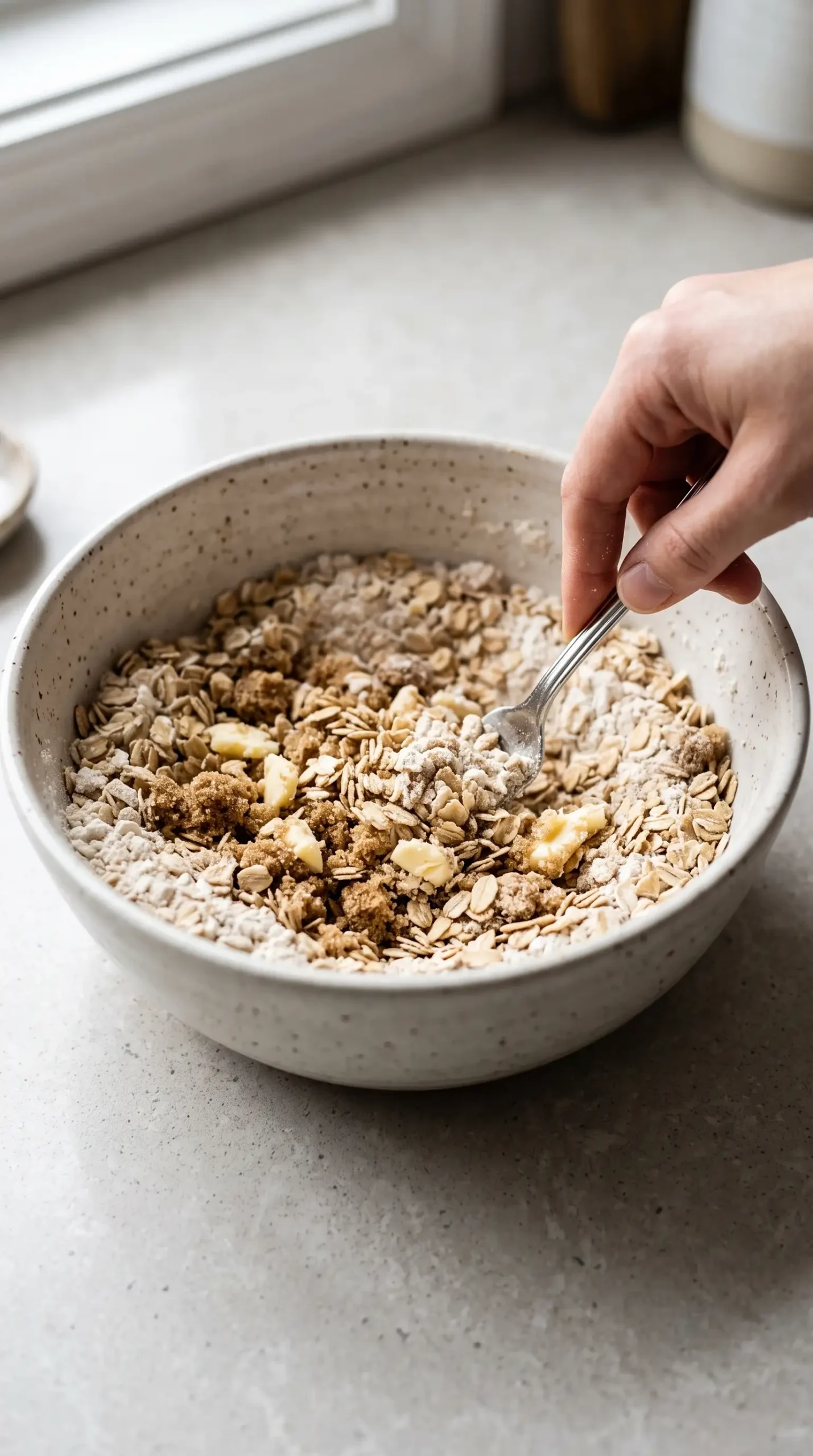
The topping is where apple oatmeal crisp gets much of its signature appeal. Oats add a hearty texture, flour helps bind the mixture, and butter brings the richness needed for a crisp, golden layer over the fruit. Adding nuts to the crumble layer can introduce extra crunch; apple crisp with pecans and oats uses pecans as part of the topping combination while keeping the fruit layer central.
Brown sugar plays an important role in the topping by adding sweetness and a deeper flavor that pairs naturally with baked apples. The mixture should stay crumbly when scattered over the fruit, allowing heat to move through the topping as it cooks.
Experienced bakers often pay attention to texture before the dish even reaches the oven. A topping that looks evenly distributed and loose will usually bake into a more consistent layer than one pressed firmly into place.
Preparing Apples for Even Baking
Apple pieces with similar sizes cook at a similar pace, which helps create a filling where softer pieces blend with firmer ones instead of producing a mixture with uneven textures. Coating the apples with the flour and sugar mixture before baking helps the fruit layer develop a more cohesive consistency.
Baking Control for a Reliable Apple Crisp
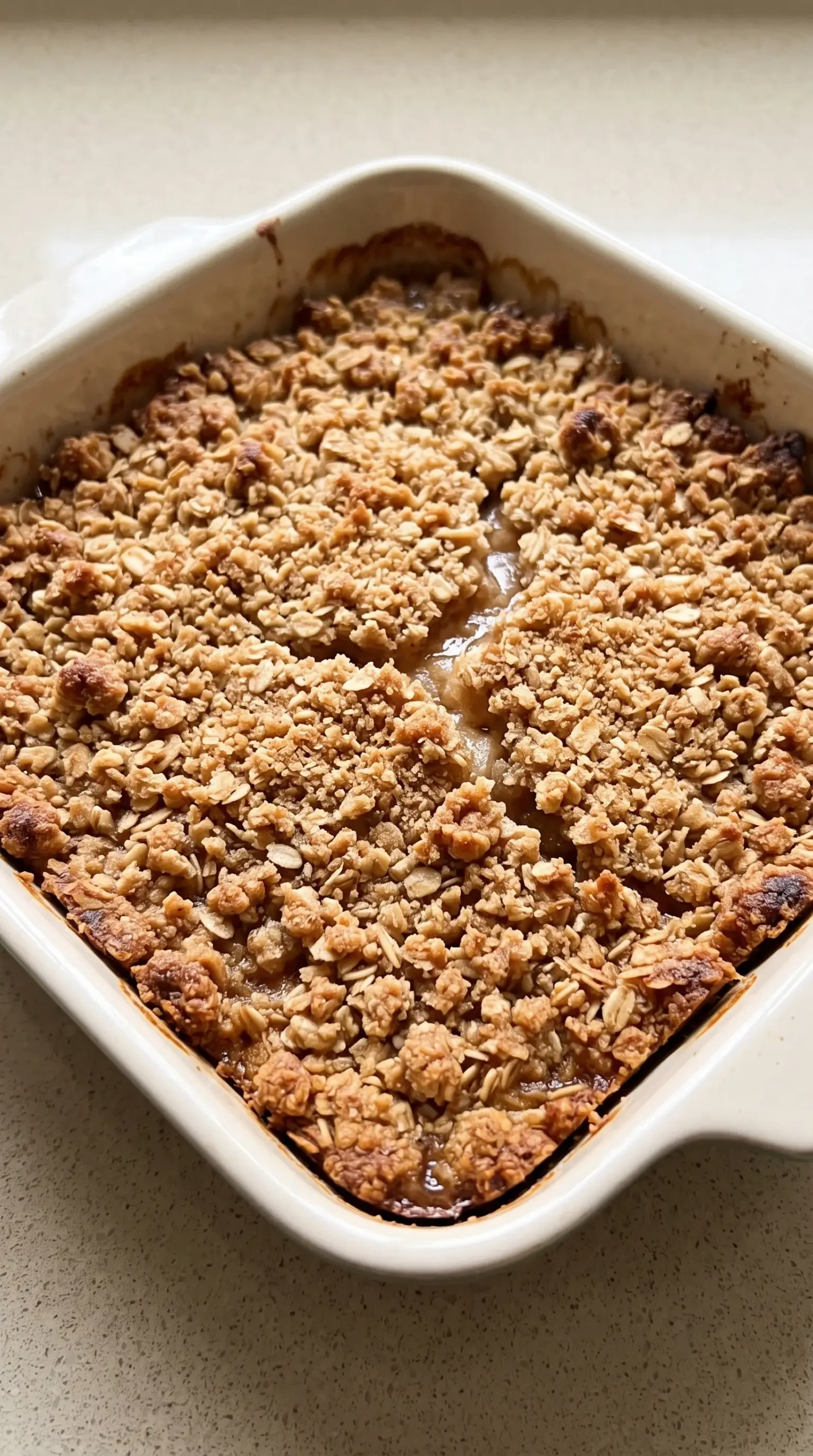
The oven transforms separate ingredients into the familiar contrast that defines apple crisp. A steady baking temperature allows the apples to soften while the topping develops color and texture across the surface.
Placement in the baking dish affects the result as well. A greased dish helps the dessert release more easily after baking, while spreading the topping evenly encourages consistent browning from edge to edge.
Several visual cues can help during baking. The topping should appear lightly browned, and the apple layer should be tender enough to serve comfortably with a spoon. These apple crisp doneness cues are more useful than relying only on appearance because the fruit and topping change in different ways during cooking.
- Apple texture: Look for softened fruit pieces that still maintain some shape.
- Topping appearance: Watch for a lightly browned surface with a crumbly finish.
- Serving temperature: Pair warm portions with toppings that complement the baked fruit.
Classic Apple Crisp Mistakes to Avoid
Small preparation choices can affect the finished dessert, and knowing common pitfalls makes it easier to adjust before baking. Classic apple crisp is straightforward, but a few issues can change the texture people expect.
Uneven apple pieces are one possible problem because smaller pieces may soften faster than larger ones. Cutting or slicing the fruit consistently helps create a filling with a more uniform bite.
Another mistake is spreading the topping unevenly. Thick sections may stay softer in the center, while very thin areas can brown more quickly. A loose, even layer gives the topping a better chance to crisp while covering the apples fully.
| Potential issue | Likely result | Helpful adjustment |
|---|---|---|
| Large differences in apple size | Uneven softness | Cut pieces more consistently |
| Pressed-down topping | Less crumbly texture | Scatter topping lightly |
| Uneven topping coverage | Mixed browning | Spread the crumble across the surface |
Serving Choices That Change the Experience
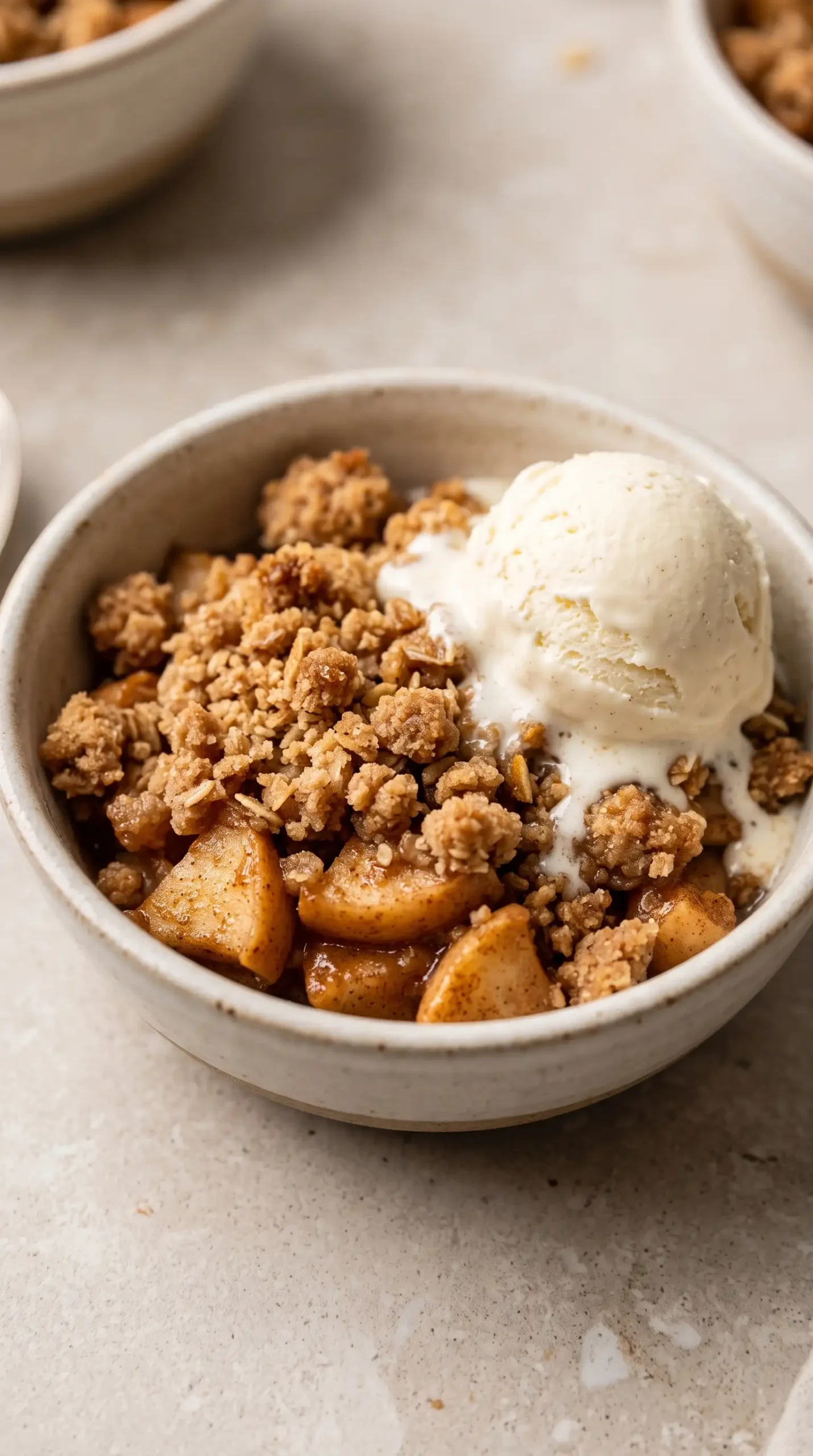
Warm apple crisp can be served with whipped cream, ice cream, or a drizzle of caramel or honey. These additions complement the baked apples and topping while changing the dessert from simple and cozy to richer and more indulgent.
Storing and Reheating Leftover Crisp
Apple crisp keeps well when stored properly after serving. Refrigerating leftovers helps preserve the fruit and topping for another portion later, especially because the baked apples continue to hold moisture after cooling.
Reheating can bring back some of the appeal of a warm serving. Gentle warming allows the apples to become soft again and makes it easier to enjoy the dessert with cold toppings that melt slightly over the surface.
Cold leftovers also have their own texture. The topping may become less crisp after refrigeration, but the flavors of the apples, brown sugar, and oats remain blended together for a satisfying dessert.
- Cool carefully: Allow the dessert to stop steaming before covering and storing.
- Store covered: Keep leftovers protected in the refrigerator.
- Warm portions: Reheat only what you plan to serve for the best texture.
Simple Ways to Customize the Apple Oatmeal Crisp
Variations can focus on serving style and presentation while keeping the core structure intact. A classic apple crisp can be enjoyed with different toppings or finishing touches without changing the balance of apples and oat crumble that defines it.
Comparing Apple Crisp Styles for the Right Texture
Different apple desserts create different experiences, and understanding those differences can help you choose the style that matches your preference.
| Dessert style | Main texture | Defining feature |
|---|---|---|
| Classic apple crisp | Tender apples with crumbly topping | Oat-based crumble layer |
| Apple pie | Soft fruit inside pastry | Structured crust |
| Apple crumble | Fruit with a flour-based topping | Less emphasis on oats |
A Warm Apple Crisp Finish Comes From Texture Control
A warm apple crisp depends on the relationship between tender fruit and a textured topping. The apples should soften enough to become a cohesive filling, while the oat mixture should remain distinct enough to provide contrast in every serving.
Careful apple preparation, an evenly scattered topping, and attention to baking cues create the qualities that make this dessert memorable. Each choice supports the same result: a comforting baked apple dessert with a crisp surface and a soft center.
Apple Crisp Questions About Texture and Storage
Can apple crisp be made ahead of serving?
Apple crisp can be prepared in advance and stored after baking. Keeping it refrigerated until needed helps maintain the baked fruit layer, and reheating portions can restore the warmth that pairs well with whipped cream or ice cream.
Why is my apple crisp topping not crispy?
A softer topping can happen when moisture from the apples affects the crumble layer during storage or when the topping is packed too tightly. Keeping the topping loose before baking helps preserve its crumbly texture.
What apples work best for classic apple crisp?
Apples that maintain some structure during baking are a good choice because they soften into a tender filling while still leaving recognizable pieces. The ideal selection depends on whether you prefer a sweeter or more balanced fruit flavor.
How should leftover apple crisp be stored?
Leftover apple crisp should be refrigerated to help maintain quality after baking. Covering the dessert protects the fruit and topping while keeping it ready for another serving.
Can apple crisp be served without ice cream?
Yes, apple crisp can be enjoyed on its own or paired with whipped cream, caramel, or honey. These additions are optional ways to highlight the baked apple flavor and oat topping.
Classic Apple Crisp with Oat Topping and Brown Sugar
Ingredients
Method
- Preheat the oven to 350°F (177°C). Combine the apples, flour, and sugar, then spread the mixture in a greased 8×8 baking dish.
- Mix together the remaining ingredients and distribute the topping evenly over the apple mixture.
- Bake for 30 minutes at the preheated temperature.
- Serve warm with whipped cream or ice cream, or add a drizzle of caramel or honey. Refrigerate any leftovers.