
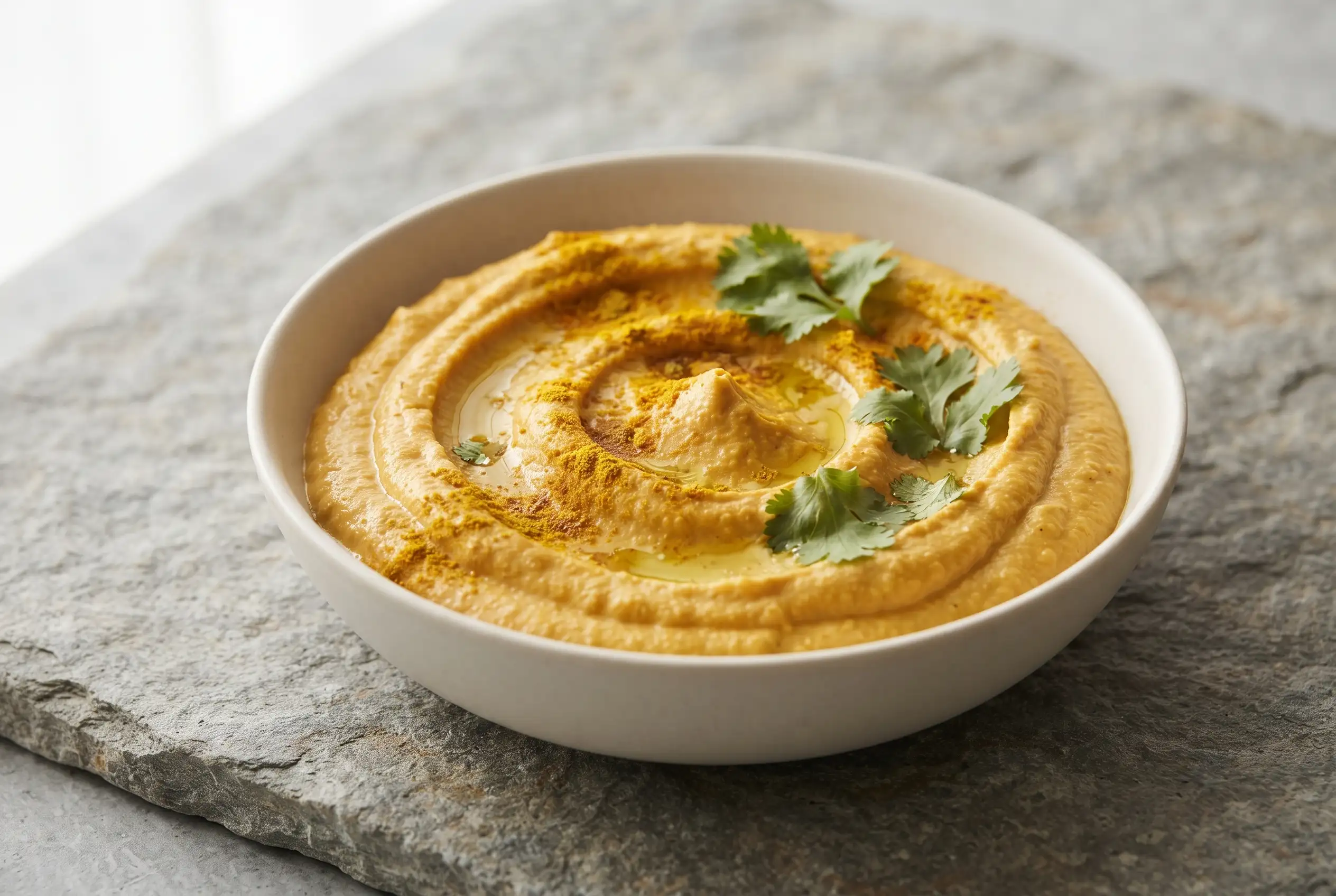
Curry Hummus Creates a Creamy Curry-Inspired Dip
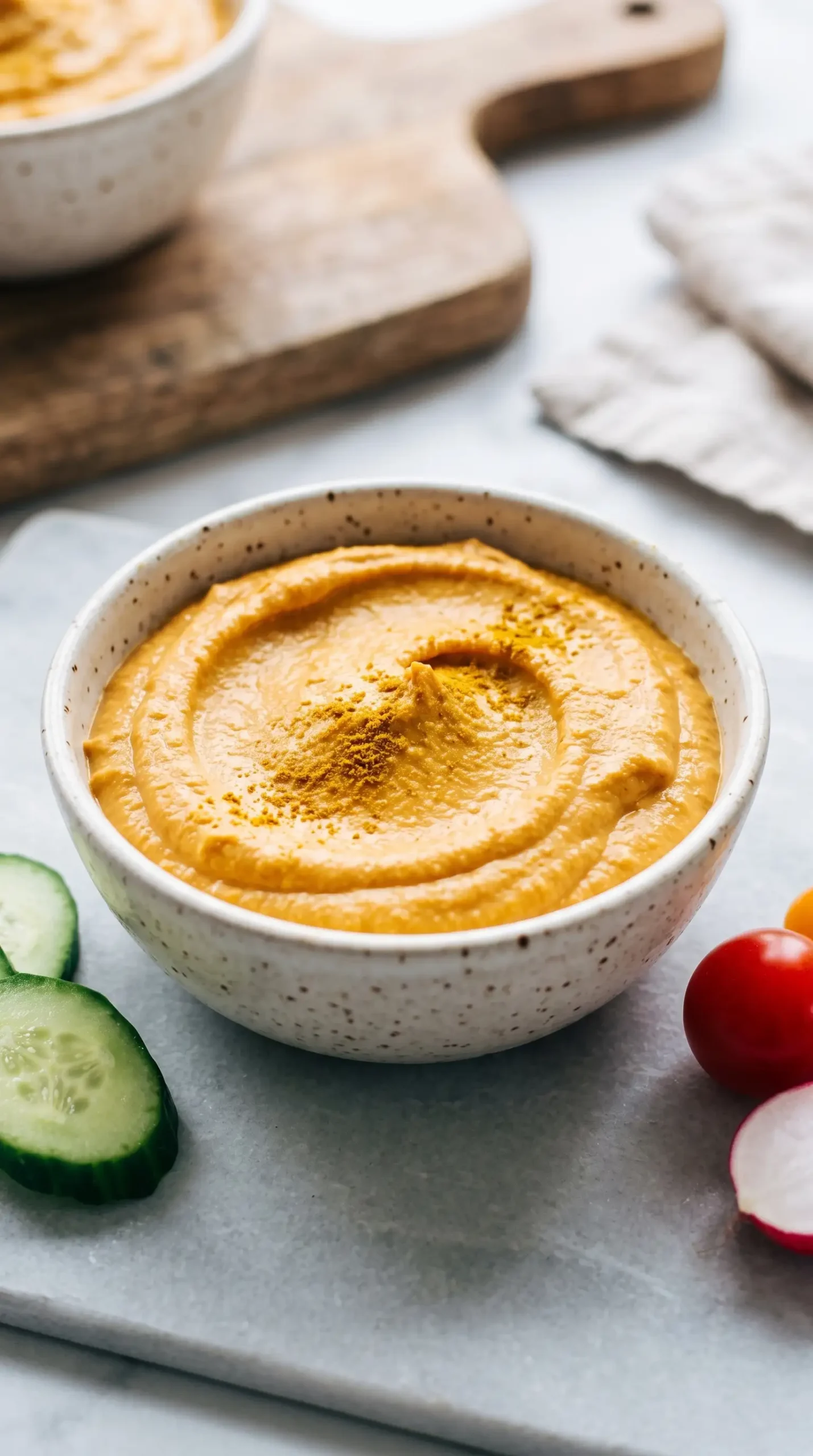
Curry hummus transforms familiar chickpeas into a bold spread with warm spices, creamy coconut richness, and the savory depth of red curry paste. The combination creates a dip that feels both comforting and fresh, bringing together Middle Eastern hummus traditions with flavors often found in Southeast Asian cooking.
Unlike a plain chickpea spread, curry hummus has layers that develop from a small number of carefully chosen ingredients. The coconut milk softens the spice, while garlic and curry powder reinforce the aromatic profile. A smooth texture makes it useful for snacks, lunches, appetizers, and simple meals.
Red Curry Paste Shapes the Spiced Flavor Profile
Red curry paste determines much of the personality in this dish because it carries concentrated spices and savory notes in a compact form. The amount used creates a noticeable curry character without overwhelming the chickpeas, allowing the creamy elements to remain present.
Careful selection matters when choosing curry paste because many prepared varieties contain shrimp paste. Anyone seeking vegan curry hummus should check labels closely or choose a curry paste made without animal ingredients. A suitable option keeps the same vibrant flavor while matching dietary needs.
Additional seasonings work with the curry paste instead of replacing it. Curry powder adds another layer of spice complexity, and garlic brings a sharp note that helps balance the mellow chickpea base. These elements create a rounded flavor that tastes complete even with minimal preparation.
Chickpeas Give Curry Hummus Its Creamy Base
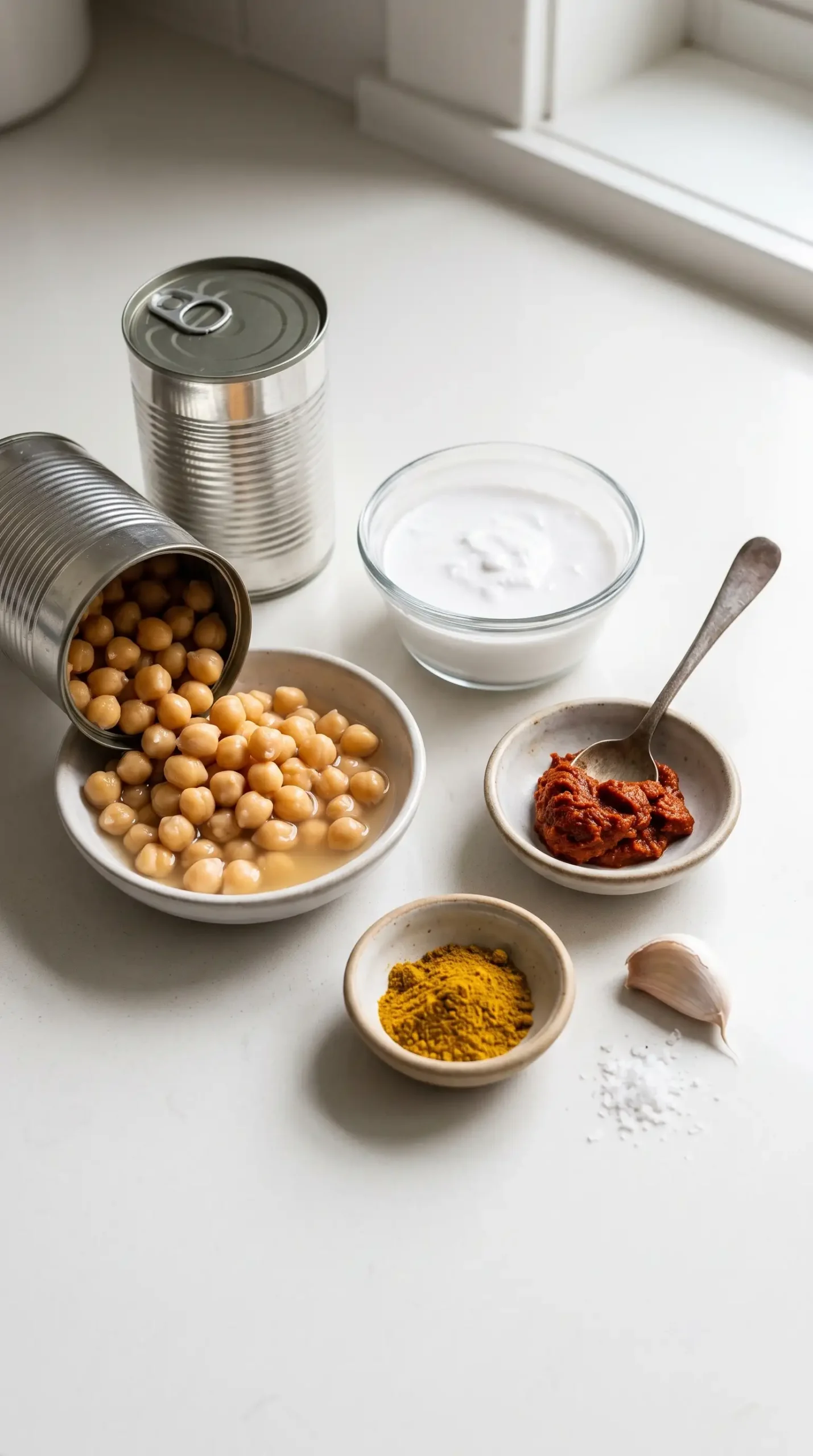
Rinsed chickpeas provide the structure that allows curry hummus to become thick, smooth, and satisfying. Their mild flavor gives the spices room to stand out, while their natural starches help create a cohesive texture when blended.
Coconut Milk Balances the Spiced Blend
Creamy coconut milk changes the texture and flavor direction by adding richness without making the dip heavy. It helps mellow the sharper edges of curry paste and garlic, creating a softer finish that works well with fresh vegetables, breads, and grain bowls.
Adjustments depend on the texture you prefer. A smaller amount keeps the spread thicker for dipping, while additional coconut milk loosens it into a smoother consistency that can be drizzled or used as a sauce.
Balanced richness comes from combining the coconut element with the chickpeas instead of allowing one ingredient to dominate. The result is a coconut curry hummus with enough body to spread easily and enough spice to remain interesting.
| Texture Preference | Adjustment Choice | Best Use |
|---|---|---|
| Thick and scoopable | Use less added liquid | Vegetable dipping and crackers |
| Soft and spreadable | Add more coconut milk gradually | Sandwiches and wraps |
| Looser consistency | Blend with extra liquid until smooth | Bowls and drizzled sauces |
Blending Control Keeps the Texture Smooth
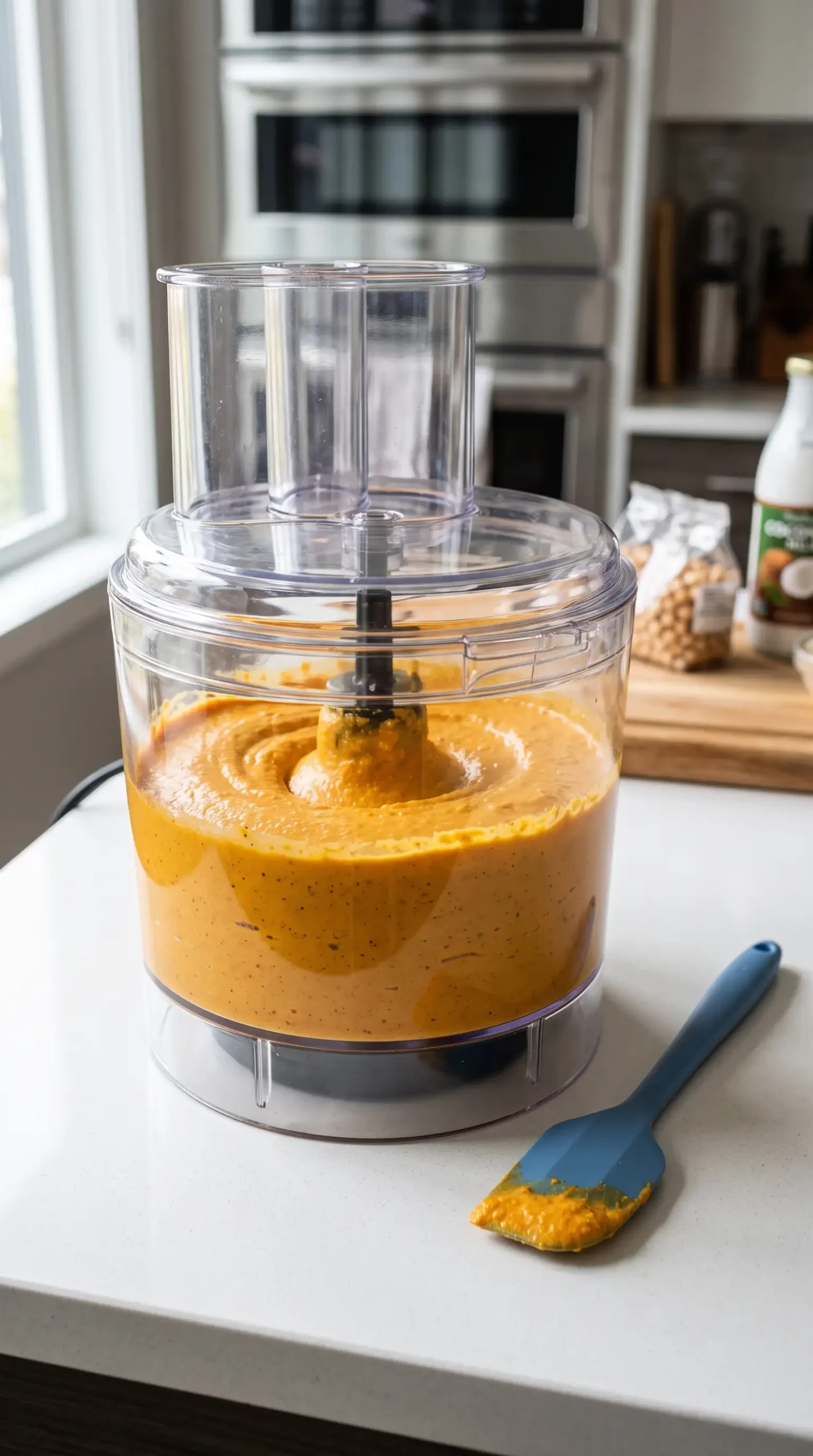
Proper blending determines whether curry hummus feels silky or slightly coarse. A food processor gives the chickpeas enough time to break down and create a smooth hummus texture while allowing the added liquids and seasonings to combine evenly.
Small adjustments during blending can make a significant difference. Adding liquid gradually helps prevent an overly thin result, while scraping down the sides keeps thicker portions from hiding beneath smoother sections.
Texture decisions should match the way the dip will be served. A thicker blend works well when scooped with vegetables or chips, while a smoother version can coat roasted vegetables, pasta alternatives, or grain bowls.
Curry Hummus Mistakes That Change the Final Dip
Common curry hummus mistakes usually come from ignoring balance between spice, creaminess, and texture. Because the ingredient list is simple, small changes can noticeably affect the finished spread.
Using too much curry paste at once can hide the chickpea flavor and create an unevenly spicy dip. Adding the paste gradually during preparation makes it easier to reach a comfortable level of heat and aroma.
Skipping texture adjustments can also lead to disappointment. A dip that feels too thick may need more liquid, while one that becomes too loose may require additional chickpeas or a short rest to regain body.
- Paste balance: Add curry paste carefully so spice supports the chickpeas.
- Liquid control: Increase coconut milk slowly for the texture you want.
- Flavor checks: Taste after blending before adding extra seasoning.
Serving Ideas Bring Curry Hummus to More Meals
Versatile curry hummus fits beyond a traditional snack plate. It can accompany crunchy vegetables, become a flavorful sandwich spread, or add creamy spice to everyday lunches without requiring complicated preparation.
Adjusting Heat and Acidity in Curry Hummus
Flavor adjustments allow curry hummus to suit different preferences while keeping its main character intact. A squeeze of lime can brighten the richness and add contrast to the coconut and curry flavors.
Extra heat can come from a pinch of cayenne when a stronger spicy finish is desired. Since the base is creamy and mild, a small amount of additional spice can create a noticeable change without requiring major alterations.
Different serving situations may call for different balances. A dip served with salty crackers may need less added seasoning, while a spread used with plain vegetables may benefit from a brighter or spicier finish.
Vegan Curry Hummus Works With Thoughtful Curry Paste Choices
Vegan curry hummus depends on selecting a curry paste that fits plant-based needs. Because some traditional curry pastes include shrimp paste, checking ingredients or preparing a suitable alternative helps maintain the intended flavor while meeting dietary preferences.
Storing Curry Hummus Preserves Its Fresh Texture
Freshly blended curry hummus can change slightly as it rests because the flavors continue to combine. Keeping it covered helps maintain its texture and protects the aromatic qualities of the spices.
Storage containers with a tight seal are useful because they prevent the spread from absorbing unwanted refrigerator odors. Before serving leftovers, a quick stir can help restore a smoother consistency if separation occurs.
Serving chilled hummus straight from storage gives it a firmer texture. Allowing it to sit briefly before eating can make the flavors feel more pronounced and the spread easier to use.
Red Curry Hummus Adds Variety to Everyday Snacks
Red curry hummus offers a different direction for anyone who enjoys traditional hummus but wants more spice and warmth. The curry notes create a memorable alternative for snack boards, quick lunches, and casual gatherings.
Curry Hummus Pairings Create Flexible Meal Options
Simple pairings help highlight the creamy spice of curry hummus. Fresh vegetables provide crunch, while breads and grains create a satisfying base for the rich spread. Crisp homemade flatbread crackers add texture and make the curry flavors easy to enjoy as part of an appetizer plate.
| Pairing | Flavor Contrast | Serving Approach |
|---|---|---|
| Cucumber and carrots | Fresh crunch against creamy spice | Classic dipping plate |
| Flatbread | Soft texture with warm curry notes | Spread or appetizer |
| Grain bowls | Rich sauce-like addition | Lunch or light meal component |
Creative uses can include spreading it beneath roasted vegetables or adding a spoonful beside simple meals that need extra flavor. Its creamy consistency makes it adaptable without requiring complicated combinations.
Curry Hummus Delivers Flavor Through Simple Decisions
Curry hummus succeeds because each choice has a clear purpose: chickpeas create the foundation, curry paste brings character, coconut milk provides balance, and blending determines the texture. Paying attention to these relationships creates a dip that feels intentional despite its straightforward preparation.
Small adjustments in spice, thickness, and serving style allow the same blend to fit many occasions. The most important cooking judgment is maintaining harmony between creamy richness and curry brightness so every bite keeps its distinctive flavor.
Curry Hummus Questions About Heat, Storage, and Swaps
Can curry hummus be made less spicy?
Reducing the amount of red curry paste is the easiest way to soften the heat. Extra coconut milk can also help mellow the spice while keeping the creamy texture intact.
What can replace coconut milk in curry hummus?
Unsweetened alternatives such as a mild plant-based cream or another neutral liquid can adjust consistency, though coconut milk provides a distinctive richness that supports the curry flavors.
How can curry hummus become extra smooth?
Longer blending and gradual liquid adjustments help create a smoother texture. Scraping the processor bowl during blending also encourages an even consistency throughout the dip.
Why does curry paste choice matter for vegan curry hummus?
Some curry pastes contain shrimp paste, which affects whether the finished dip fits vegan requirements. Selecting a suitable paste keeps the flavor while matching the desired ingredients.
Can curry hummus be used as more than a dip?
The creamy texture makes it useful as a sandwich spread, wrap filling addition, or flavorful topping for simple meals that need extra richness and spice.
Curry Hummus with Red Curry Paste and Coconut Milk
Ingredients
Method
- Combine all ingredients in a food processor and blend or pulse until the hummus reaches a smooth consistency.
- Adjust the texture by adding more coconut oil, olive oil, or water as needed until it reaches your preferred thickness.