
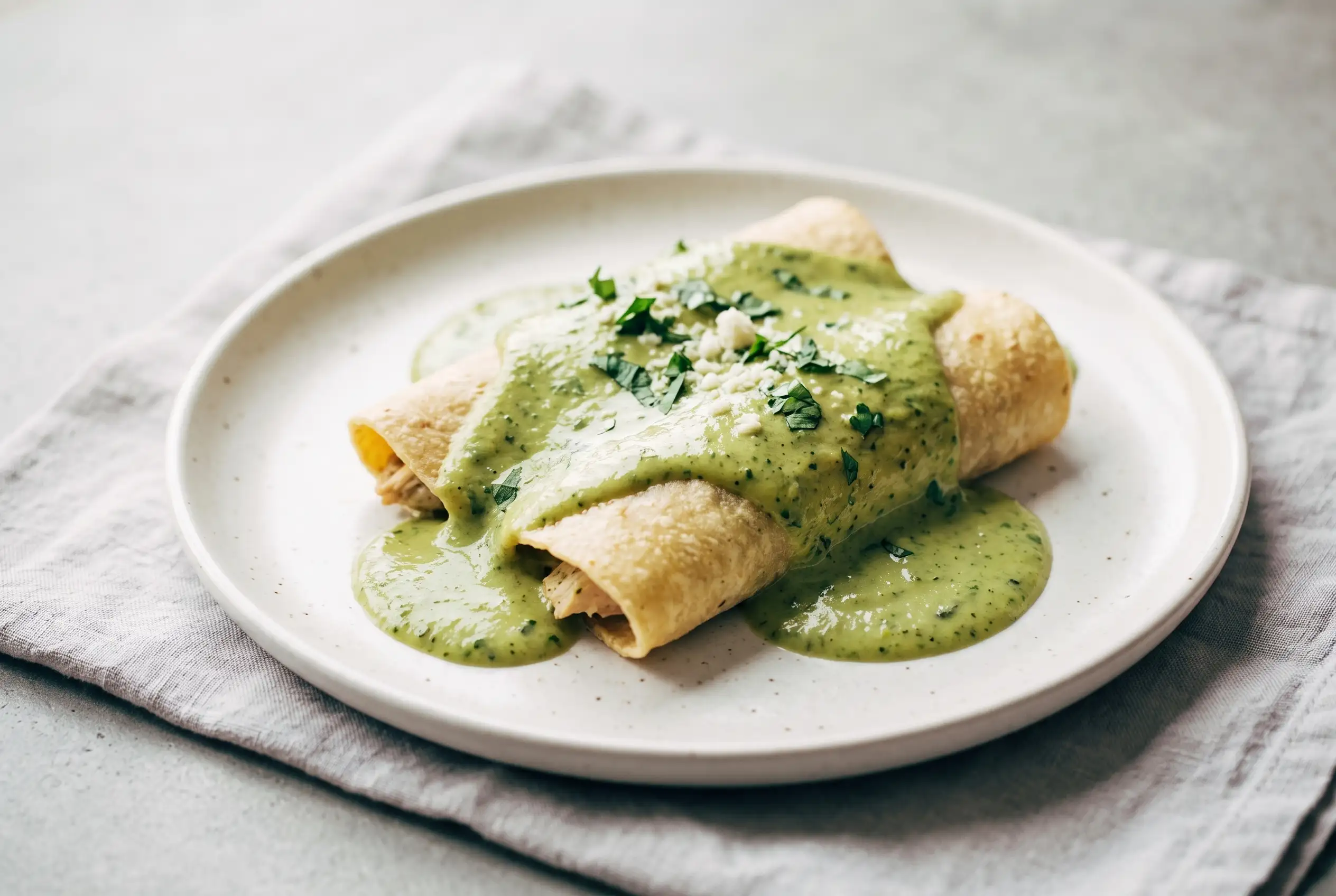
Poblano sauce brings roasted peppers, a velvety cream base, and fresh spinach together in a versatile blend that works across enchiladas, burritos, bowls, quesadillas, eggs, and breakfast dishes. The combination succeeds because roasting develops the vegetables before they meet the smooth flour-thickened sauce, creating a creamy spinach poblano sauce with both depth and brightness.
Roasted vegetables create the personality of the finished sauce, while the creamy foundation determines how those flavors move through every serving. The balance depends on controlling texture at several points, from softening the peppers in the oven to adjusting the consistency after blending.
Roasted Poblano Sauce Builds Flavor Through Oven Heat
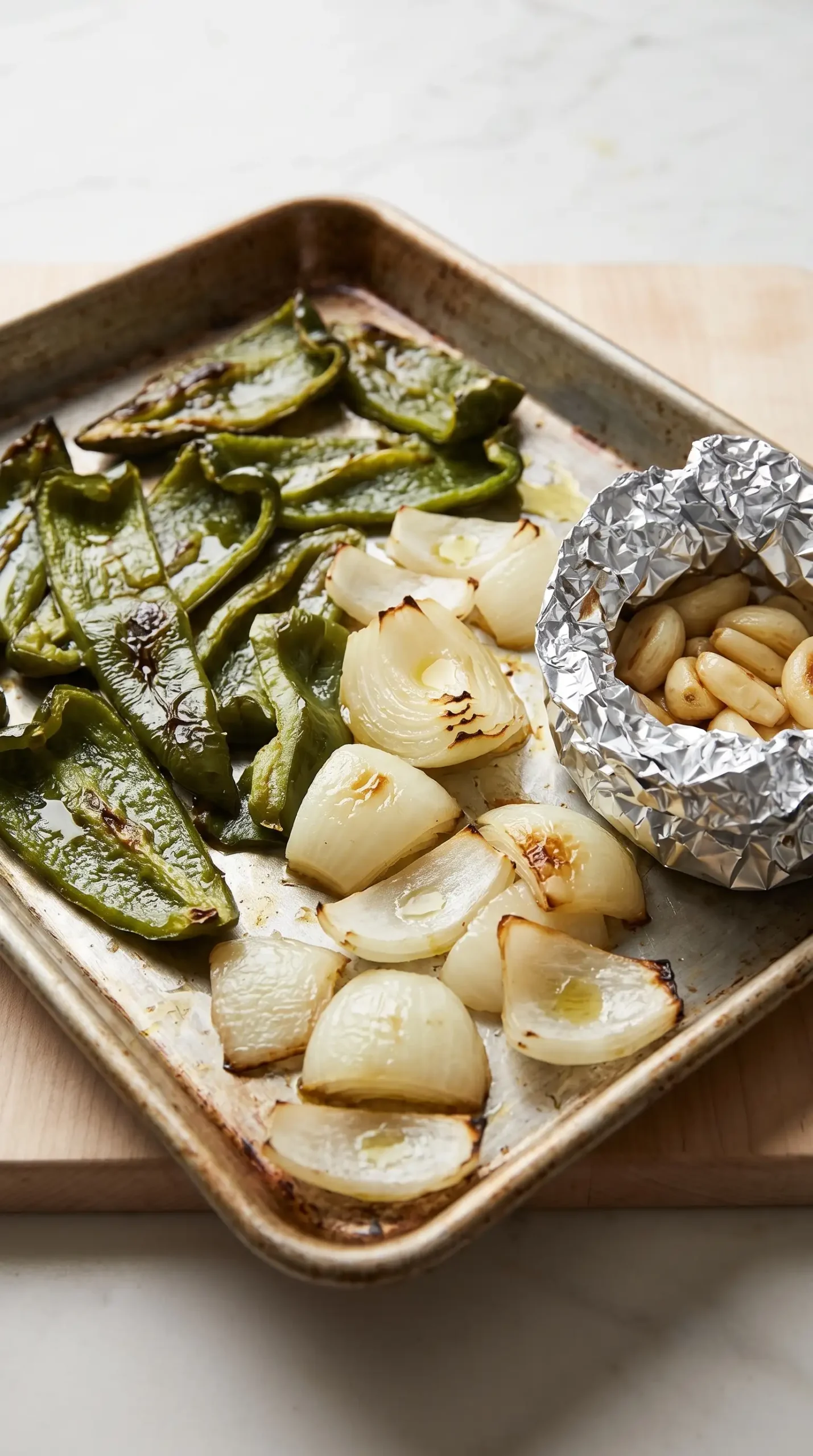
Oven roasting changes the character of the poblano peppers, onion, and garlic by softening their structure and concentrating their savory qualities. The peppers become easier to blend, while the roasted aromatics create a deeper background flavor than raw vegetables would provide.
The roasted peppers, onion, and garlic also gain deeper flavor through browning and caramelizing, which can intensify the savory qualities that make the finished poblano sauce more complex.
Careful roasting also affects the texture of the sauce. Soft vegetables combine more completely with the creamy base, helping the spinach poblano pepper sauce develop a cohesive consistency without large vegetable pieces interrupting the smooth finish.
During preparation, the vegetables need enough time in the oven to become tender. A partially softened pepper mixture will not blend as easily, leaving the sauce less unified and making it harder to achieve the silky texture expected from a roasted poblano sauce recipe.
Poblano Peppers Define the Sauce Texture and Depth
Poblano peppers are the ingredient choice that most strongly shapes this sauce because their roasted flavor supports both the creamy and vegetable elements. Their mild character allows the sauce to remain balanced while still giving it a recognizable pepper-forward identity.
Ingredient selection matters most when choosing peppers that roast evenly. Large strips expose more surface area to heat, helping the peppers soften alongside the onion and garlic while developing the flavor needed for the blended sauce.
- Roasting stage: Soft peppers create a smoother blend and a richer vegetable foundation.
- Vegetable balance: Onion and garlic support the pepper flavor without overpowering it.
- Spinach addition: Fresh leaves bring color and a lighter vegetable note to the finished sauce.
A Creamy Base Keeps Spinach Poblano Pepper Sauce Smooth
Flour and butter create the structure that allows the sauce to coat food evenly. The mixture forms a creamy base that carries the roasted vegetables and spinach throughout the finished poblano sauce.
Slow incorporation of warm milk and broth helps maintain a smooth texture because the liquid blends more naturally into the thickened base. Cold additions can make the mixture harder to combine and may interrupt the consistency that makes the sauce useful for many dishes.
Once the creamy foundation is combined with blended vegetables, the sauce gains enough body to cling to tortillas, roasted vegetables, grains, and other foods. The texture should feel smooth while remaining flexible enough for different serving purposes.
Warm Liquids Control the Sauce Emulsion
Warm liquids play an important role in keeping the sauce base consistent during cooking. Adding milk and broth at the proper temperature supports easier whisking and helps the flour mixture transform into a smooth coating.
| Cooking choice | Effect on sauce | Useful adjustment |
|---|---|---|
| Warm milk and broth | Smoother thickened base | Add gradually while whisking |
| Longer simmering | Thicker consistency | Add broth or water if needed |
| Shorter simmering | Looser sauce texture | Continue cooking for more body |
Blending Choices Shape the Finished Poblano Sauce
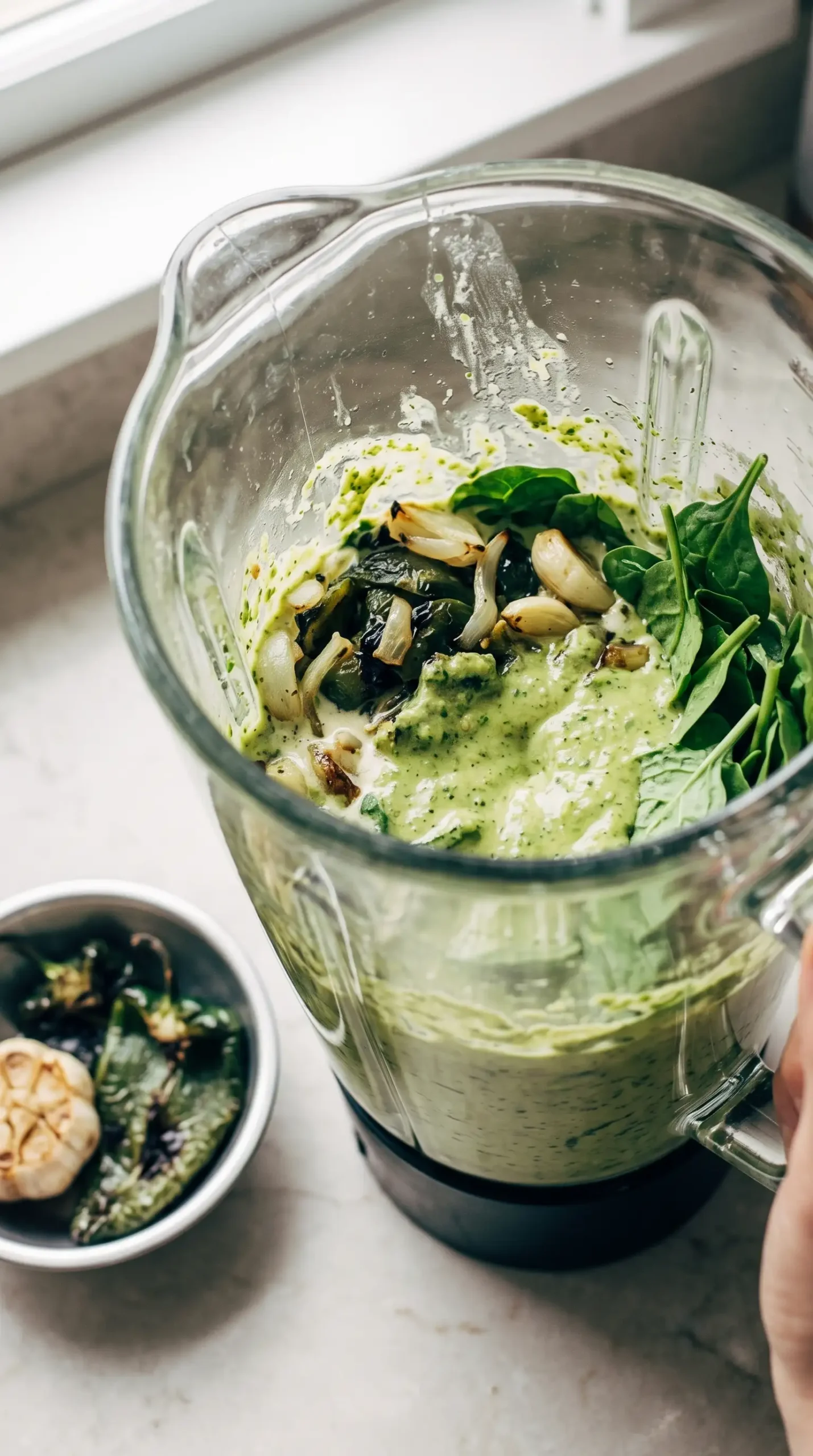
Blending determines how the roasted vegetables become part of the sauce. Processing half of the creamy mixture with the roasted ingredients allows the vegetables to integrate while leaving enough sauce base to create a balanced texture.
Different blending times create different experiences. A mostly smooth blend produces a polished sauce, while a shorter pulse leaves more noticeable vegetable character. Both approaches depend on properly softened roasted ingredients.
Final seasoning happens after blending because the roasted vegetables and creamy base combine into a new flavor profile. Adjusting salt, pepper, or other seasonings at this stage allows the finished sauce to match the dish it will accompany.
Mistakes That Flatten Creamy Spinach Poblano Sauce Flavor
Common mistakes with creamy spinach poblano sauce usually come from texture decisions or rushed preparation. Small changes in handling can affect whether the sauce feels smooth, balanced, and easy to use.
- Under-roasted vegetables: Firm peppers and onions can create a less developed flavor and uneven blending.
- Cold liquid additions: Chilled milk or broth can make the creamy base more difficult to smooth out.
- Overlooking consistency: A thick sauce may need extra liquid when used as a pourable topping.
Uneven blending can also change the final result. If larger vegetable pieces remain, the sauce may work well as a hearty topping but may not deliver the smooth texture expected for enchiladas or bowls.
Spinach Timing Preserves Color in the Sauce
Fresh spinach enters during blending, which allows the leaves to combine with the roasted vegetables and creamy mixture. This timing keeps the spinach integrated throughout the sauce instead of creating separate layers.
Green color depends on how the spinach is handled alongside the roasted vegetables. The leaves add a fresh appearance that contrasts with the deeper roasted pepper flavor and helps define the spinach poblano pepper sauce style.
Poblano Sauce Adapts Across Favorite Meals
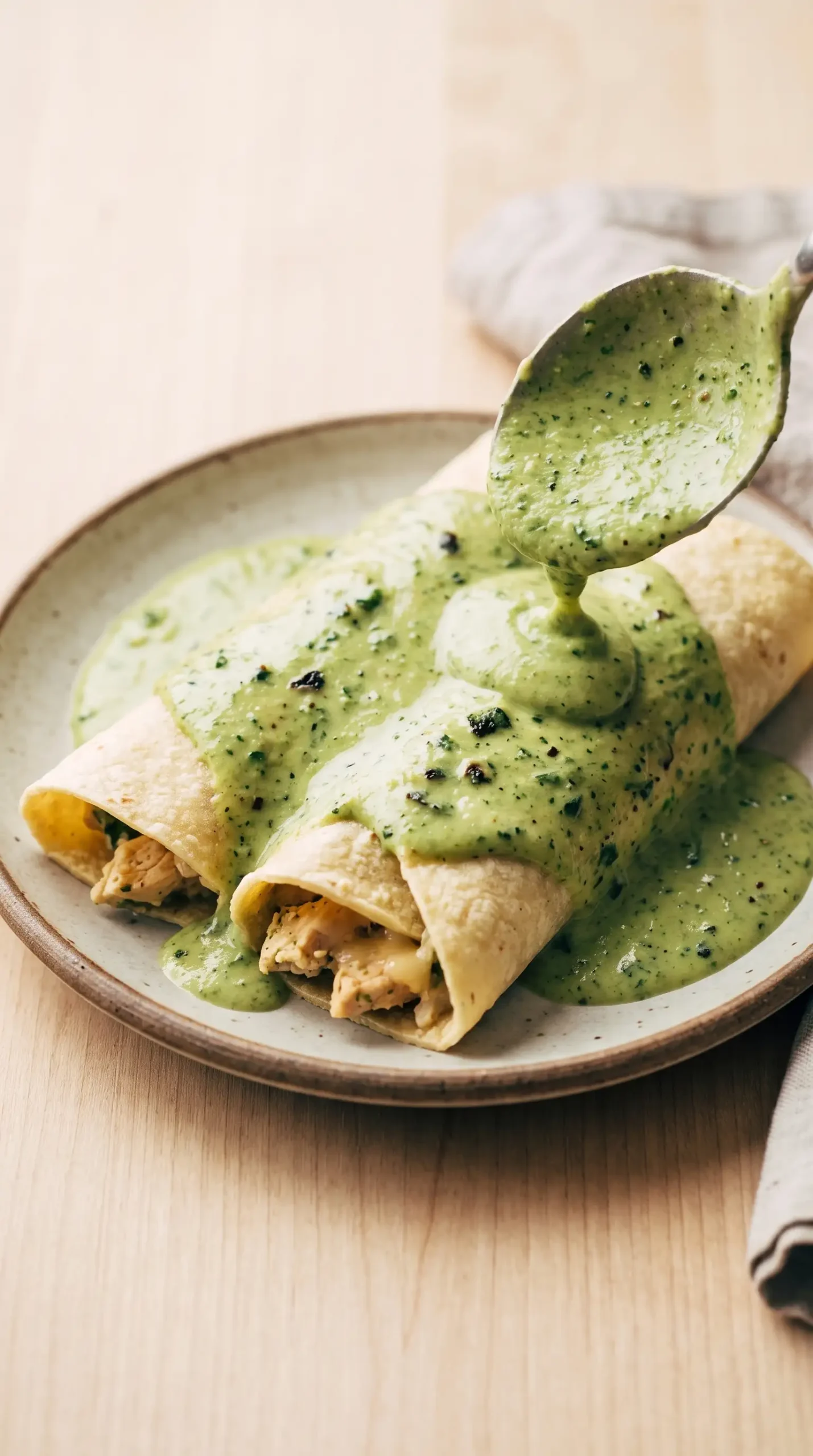
Versatility is one of the strongest qualities of poblano sauce because the creamy texture works with many foods. The sauce can become a finishing element, a filling companion, or a way to add flavor to simple meals.
Popular uses include enchiladas, burritos, veggie bowls, quesadillas, eggs, and breakfast hash. The sauce adds moisture and richness to tortilla-based meals, including veggie enchiladas with roasted vegetables and black beans, where a creamy pepper topping complements roasted fillings.
| Serving idea | Texture role | Flavor connection |
|---|---|---|
| Enchiladas | Coats and softens tortillas | Pairs with roasted fillings |
| Veggie bowls | Adds creamy contrast | Balances grains and vegetables |
| Egg dishes | Creates a smooth topping | Complements savory breakfast flavors |
Storage and Texture Adjustments Protect Leftover Sauce
Stored sauce naturally becomes thicker as it rests, changing how it behaves when poured or spread. A simple texture adjustment can restore the consistency needed for a specific use.
Additional broth or water can loosen the sauce when it becomes too dense. The amount depends on whether the sauce is being used as a coating, topping, or thinner pour over a finished dish.
Serving Pairings Highlight the Roasted Poblano
Roasted flavors become more noticeable when the sauce is paired with foods that provide contrast. Crisp vegetables, warm tortillas, eggs, and grain-based bowls all give the creamy texture a clear role.
Balanced pairings allow the pepper flavor to remain recognizable while the creamy ingredients provide a satisfying finish. The sauce works best when it enhances the main dish without hiding the textures around it.
Kitchen Tools Improve Sauce Preparation
Simple equipment choices make preparation easier because each tool supports a specific texture decision. A baking sheet helps roast the vegetables evenly, while a blender or food processor creates the smooth consistency associated with the finished sauce.
Seasoning Decisions Refine the Finished Sauce
Seasoning adjustments are most effective after the roasted vegetables and cream base have combined. At that point, the sauce reflects all major flavors and can be tuned for the meal it will accompany.
Small changes in salt or pepper can influence the balance between the roasted peppers, spinach, and creamy elements. Careful tasting helps maintain the distinct character of the sauce without masking its vegetable foundation.
Poblano Sauce Captures Creamy Roasted Vegetable Balance
Roasted peppers create the foundation that allows poblano sauce to combine smoky vegetable flavor with a smooth cream texture. The most important cooking judgment comes from managing the transition between roasted vegetables and the blended sauce base.
A well-balanced sauce depends on softened vegetables, a carefully prepared creamy mixture, and thoughtful texture adjustments after blending. Those choices create a flexible finish that can move from enchiladas to breakfast dishes while keeping the roasted pepper character clear.
Poblano Sauce Questions About Thickness and Uses
How can the sauce become thinner for enchiladas?
Additional chicken broth or water can loosen a thicker sauce until it reaches a pourable consistency. Add small amounts while stirring so the texture matches the dish being prepared.
Can the roasted poblano sauce be used beyond Mexican-inspired dishes?
Yes, the sauce can complement eggs, breakfast hash, vegetable bowls, and other savory meals where a creamy roasted vegetable topping fits the flavors.
Why does the sauce become thicker after resting?
The creamy base continues to hold its structure as it cools, which naturally makes the sauce denser. A small amount of liquid can bring it back to the desired texture.
What helps prevent a grainy sauce texture?
Using warm milk and broth while building the creamy base helps the flour mixture combine smoothly. Properly softened roasted vegetables also improve the blending process.
How much spinach flavor should stand out?
The spinach contributes color and freshness while the roasted peppers remain the main flavor. The balance keeps the sauce vegetable-forward without becoming dominated by leafy greens.
Poblano Sauce with Creamy Spinach and Roasted Peppers
Ingredients
Method
- Preheat the oven to 375°F (190°C). Wrap the garlic in foil with a small amount of oil. Coat the poblano peppers and onion with the remaining oil.
- Arrange the garlic, poblano peppers, and onion on a baking sheet. Roast for 30 minutes, or until the vegetables are very soft.
- Melt the butter in a saucepan, then whisk in the flour to create a thick mixture. Cook for a few minutes.
- Gradually whisk in the warm milk and chicken broth. Continue whisking and simmering until the sauce is smooth and thickened, 5-10 minutes.
- Add half of the creamy sauce mixture to a blender or food processor along with the roasted vegetables and spinach. Blend until mostly smooth.
- Return the blended mixture to the saucepan and stir it together with the remaining creamy sauce base. Adjust the seasoning with additional salt, pepper, or other seasoning as desired.
- Use the sauce as a topping or accompaniment for enchiladas, burritos, veggie bowls, quesadillas, eggs, breakfast hash, or other dishes.