
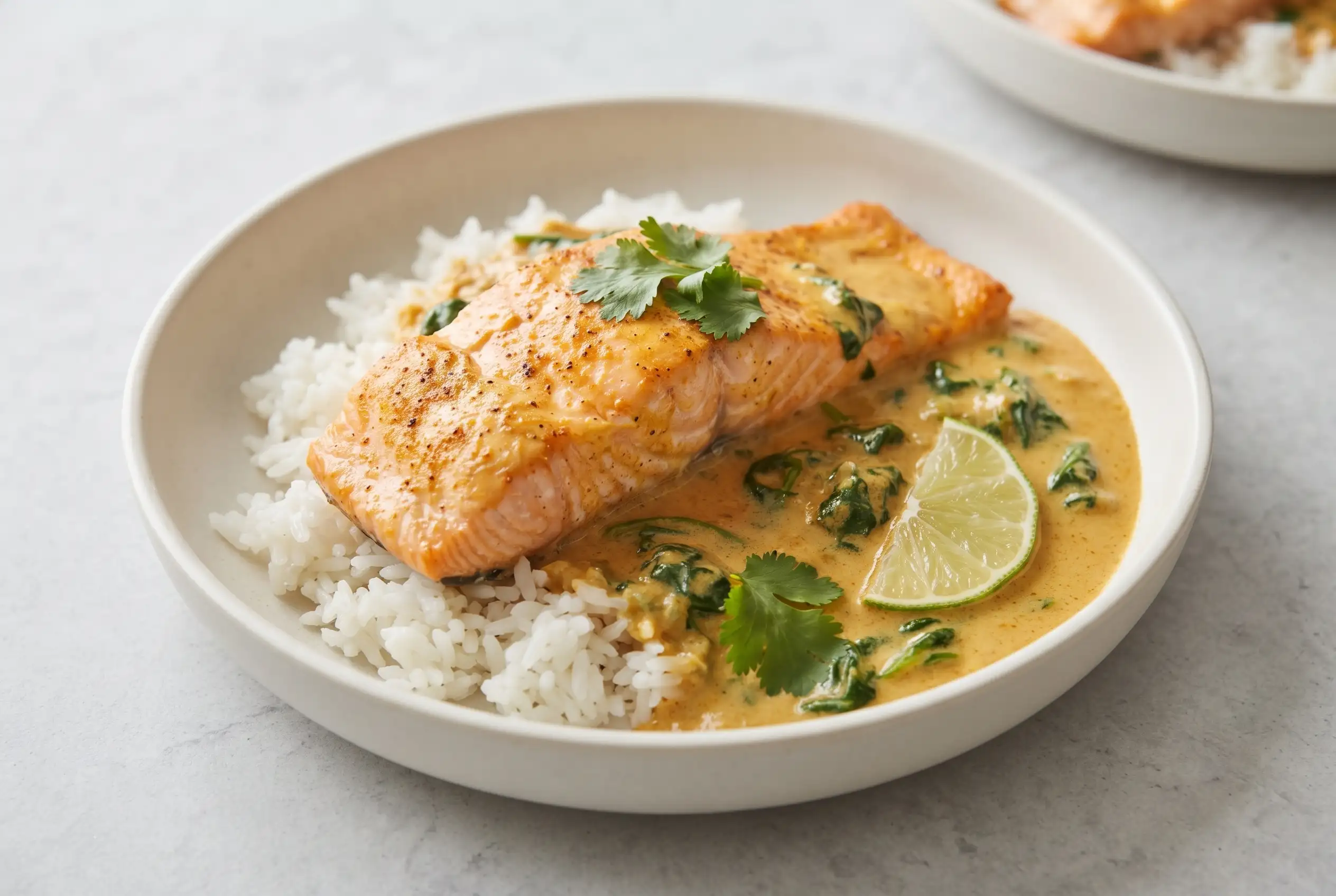
Coconut curry salmon brings together oven-baked fish, a fragrant coconut curry sauce, and bright lime flavors for a meal that balances richness with freshness. The combination works because the salmon carries a savory spice coating while the sauce layers coconut milk, red curry paste, aromatics, spinach, and herbs into a smooth finish.
The dish stands apart from many salmon preparations because the fish and sauce are designed to meet at the table. A seasoned salmon surface provides depth, while the coconut curry sauce creates a creamy element that connects naturally with rice. Small choices in seasoning, heat management, and finishing touches have a noticeable effect on the finished plate.
Coconut Curry Salmon Creates a Rich Tropical Balance
Flavor in coconut curry salmon comes from contrast. The salmon offers a rich, buttery base that pairs with the sweetness of coconut milk and brown sugar, while lime juice and zest add acidity to keep the sauce lively. Red curry paste introduces warmth and complexity without requiring a long list of separate spices.
The salmon receives its own seasoning before meeting the sauce, allowing the fish to develop a distinct character. A coating made with curry powder, garlic powder, onion powder, salt, brown sugar, and olive oil creates a seasoned surface that complements the creamy sauce underneath.
Serving the fish over rice gives the sauce a practical place to collect. Each portion combines flaky salmon, aromatic curry sauce, wilted spinach, and fresh herbs in a way that makes the different textures work together.
Curry Seasoned Salmon Builds a Flavorful Crust
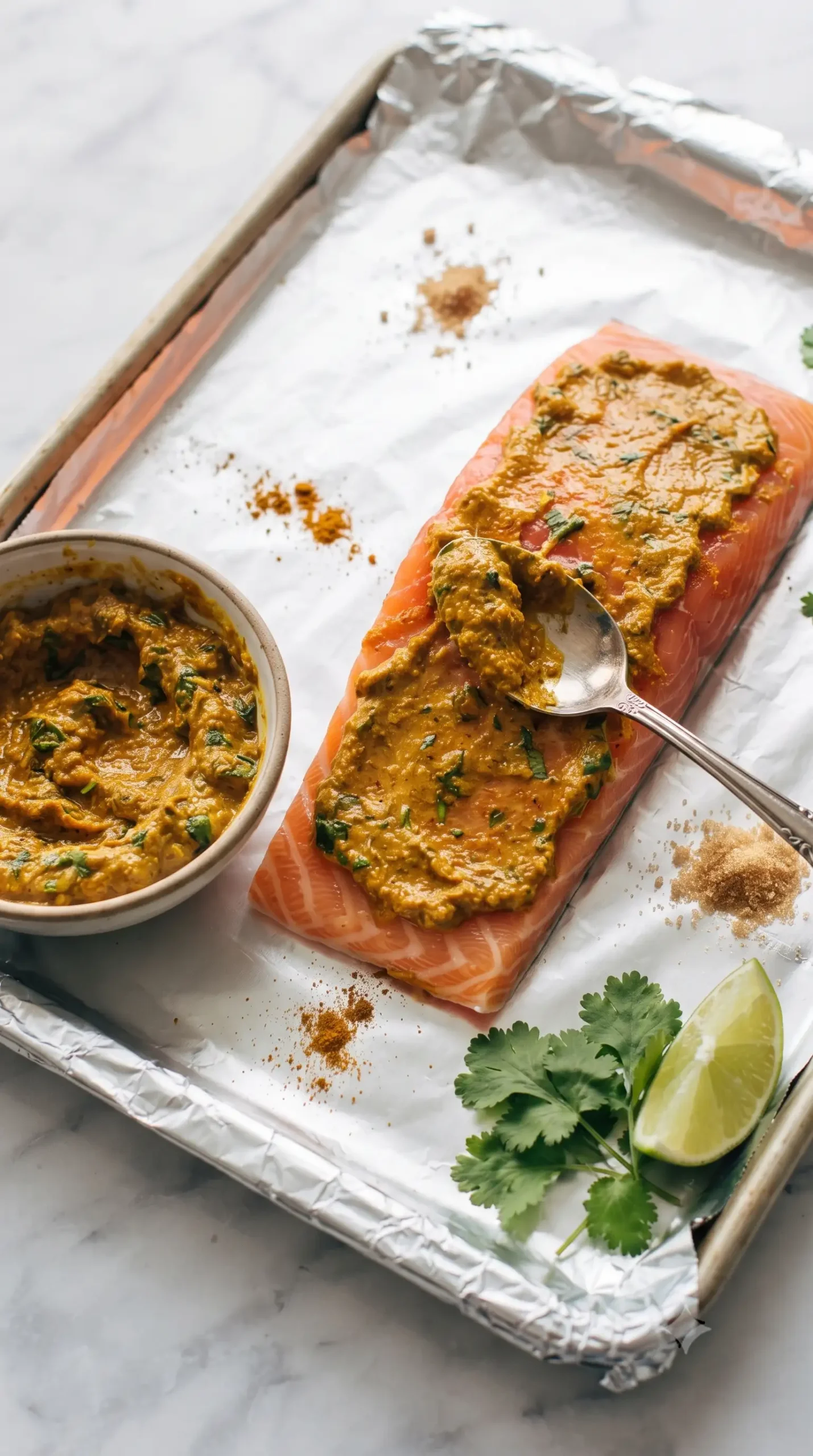
The salmon topping is an important part of the dish because it creates a concentrated layer of flavor on the fish itself. Mixing the spices with olive oil helps the seasoning spread evenly across the surface and encourages the coating to adhere during baking.
Brown sugar in the seasoning mixture changes the character of the salmon by adding a subtle sweetness that matches the coconut sauce. The balance depends on keeping the coating thin enough to season the fish while allowing the salmon’s natural flavor to remain noticeable.
For the best baked coconut curry salmon texture, the fish should be placed skin side down on a prepared baking sheet. The high oven temperature helps the surface cook efficiently while the center remains tender, making the thickness of the salmon piece an important factor when judging doneness.
Coconut Curry Sauce Gains Depth From Aromatics and Lime
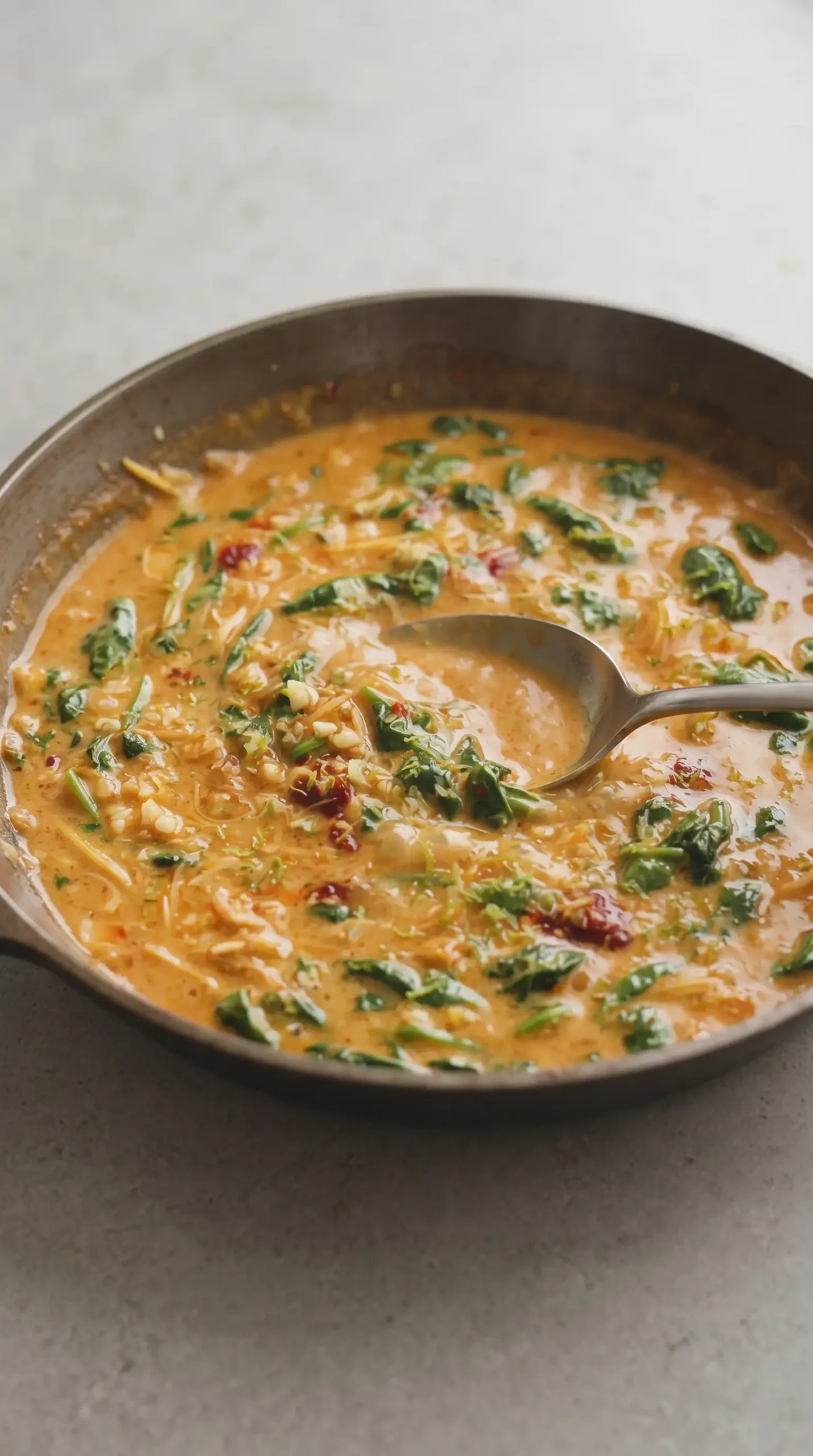
The sauce develops its personality from the combination of garlic, ginger, and lemongrass cooked with oil before the coconut milk is added. This step allows the aromatics to soften and release their flavors into the base of the sauce.
Red curry paste and brown sugar create the foundation of the sauce, while fish sauce or soy sauce contributes savory depth. Lime juice and zest bring brightness that connects the sauce with the seasoned salmon and prevents the coconut flavor from feeling heavy.
Fresh spinach is stirred into the finished sauce until it wilts, adding color and a tender texture. Herbs such as cilantro, basil, or mint provide a fresh finish that works especially well with the creamy coconut base.
Salmon Selection Shapes the Finished Dish
The type and size of salmon used can influence how the meal cooks and feels when served. A thicker piece of salmon will need more attention during baking than a thinner portion because the center takes longer to heat through.
| Salmon factor | Cooking consideration | Effect on the dish |
|---|---|---|
| Thickness | Requires attention during baking | Changes how quickly the center cooks |
| Skin-on fillet | Placed skin side down | Helps support the fish while cooking |
| Larger piece | May need additional seasoning | Provides more surface area to balance |
A salmon piece with enough surface area allows the curry seasoning to create a flavorful contrast with the sauce. Keeping the fish intact until serving also helps preserve its texture when it is placed over rice.
Heat Control Protects Baked Coconut Curry Salmon Texture
Cooking control matters because salmon can move quickly from tender to overdone when exposed to strong heat. Watching the thickness of the fish and adjusting the cooking time based on appearance helps preserve a moist texture.
For a reliable doneness check, salmon is considered safely cooked when it reaches internal temperature of 145°F as measured with a food thermometer.
The oven setting creates the main cooking environment, but the position of the rack also affects how the surface behaves. A salmon fillet placed close to the upper heating area can develop more surface color, yet extra caution is needed because the sugar in the coating can brown rapidly.
- Seasoning spread: Coat the top surface evenly so each portion receives the same curry flavor.
- Fish position: Keep the salmon skin side down to support the fillet while it cooks.
- Sauce timing: Prepare the coconut curry sauce separately so the salmon keeps its distinct texture.
Common Coconut Curry Salmon Mistakes to Avoid
Several mistakes can change the balance of coconut curry salmon. One common issue is placing sugar-coated salmon too close to a strong broiler heat source without watching it carefully. The sweet coating can darken quickly, and excessive exposure may cause burning.
Another problem occurs when the sauce is treated as a heavy topping instead of a balanced companion. Too much curry paste or insufficient lime can make the coconut base feel one-dimensional. Adjusting the seasoning with acidity and savory ingredients helps maintain a layered flavor.
Rushing the aromatic stage can also affect the sauce. Garlic, ginger, and lemongrass need time in the pan before the coconut milk joins them, allowing their flavors to become part of the sauce instead of remaining sharp or separate.
Rice and Herb Pairings Complete Salmon with Coconut Curry Sauce
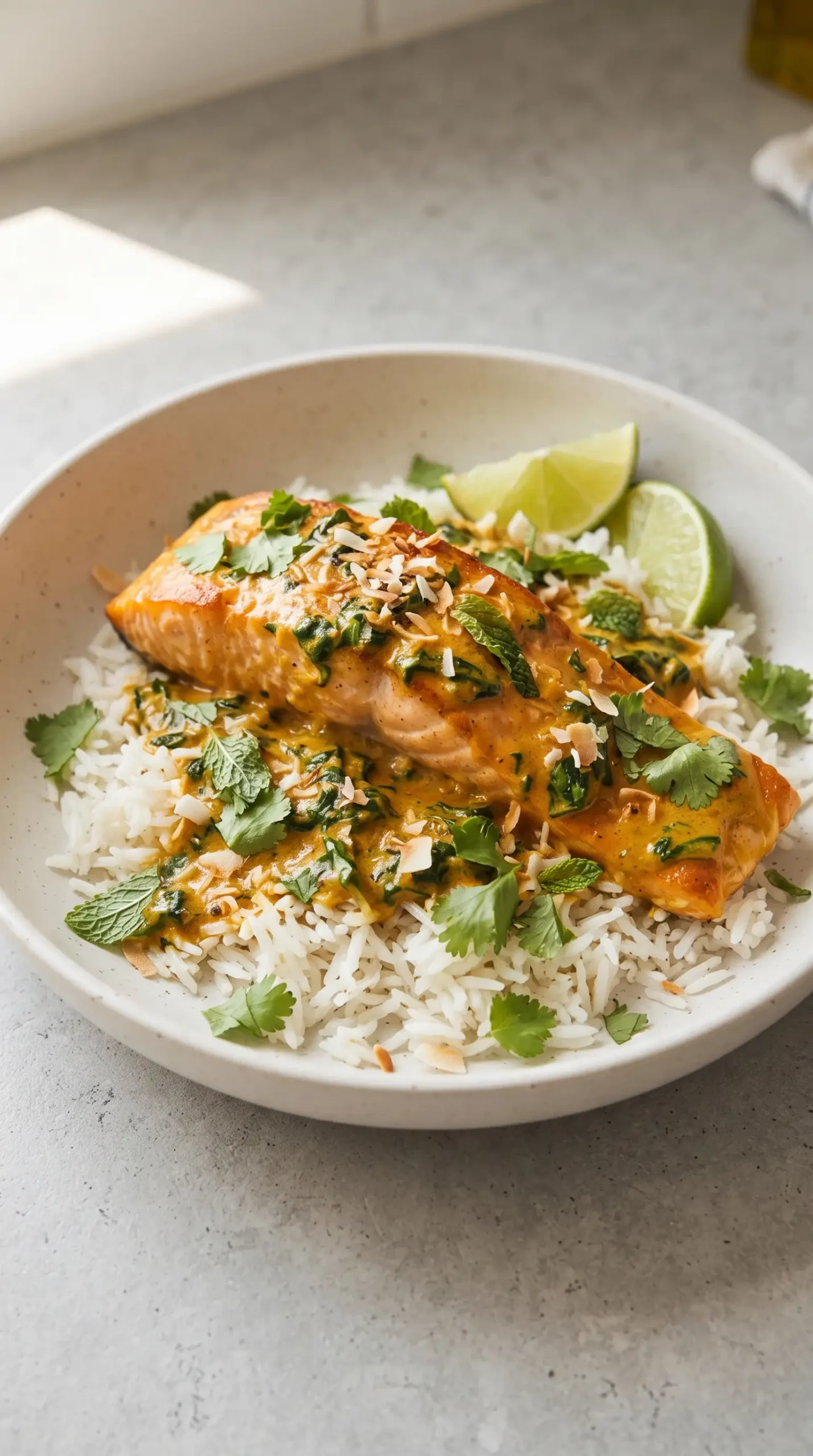
Rice is more than a side element for salmon with coconut curry sauce. Its mild flavor absorbs the creamy sauce and creates a foundation that lets the fish and herbs stand out. A seafood meal such as tomato risotto with pan fried barramundi shows how rice-based dishes can support delicate fish while carrying flavorful components.
Fresh herbs should be added near serving because their bright character contrasts with the richness of coconut milk. Cilantro, basil, and mint each bring a slightly different direction while keeping the dish connected to its tropical-inspired flavor profile.
Additional lime at the table gives diners control over the brightness of each serving. The citrus finish is especially useful when the sauce has a rich coconut character.
Adjusting Coconut Curry Salmon for Different Preferences
Coconut curry salmon can be adapted while keeping its main structure intact. The sauce base remains flexible because the balance comes from the relationship between coconut milk, curry paste, lime, and savory seasoning.
- For a milder flavor: Reduce the amount of red curry paste while keeping the coconut milk and lime elements.
- For extra freshness: Add more herbs or lime at serving time.
- For a different base: Pair the salmon and sauce with another simple grain that can absorb the creamy mixture.
Small adjustments are most successful when they preserve the contrast between creamy sauce, seasoned fish, and fresh finishing ingredients.
Storing and Reheating Coconut Curry Salmon Properly
Leftover coconut curry salmon needs gentle handling to maintain the quality of the fish. Storing the salmon with some sauce helps protect the surface from drying out while keeping the flavors together.
Reheating works best with moderate heat because salmon can become firm when exposed to excessive temperature. Warming the fish and sauce carefully helps retain the texture that makes the original serving appealing.
The rice can also absorb the curry flavors during storage, creating a different but still enjoyable combination. Keeping the components covered helps maintain moisture and freshness.
Understanding Broiling Risks in Curry Coated Salmon
Broiling can create additional browning on salmon, but the sugar in the curry coating requires attention. Direct heat from the broiler can act quickly on sweet ingredients, especially when the fish is positioned near the heating element.
A safer approach is to rely on the regular oven method when there is concern about the coating becoming too dark. The salmon still develops a flavorful surface while reducing the chance of the sugar mixture scorching.
Awareness of heat placement makes the difference between controlled browning and unwanted burning. The same seasoning that creates a flavorful crust also requires thoughtful handling under intense heat.
Coconut Milk Technique Keeps Sauce Balanced
Coconut milk creates the creamy structure of the sauce, but its role depends on how it is combined with the other flavors. Adding lime, curry paste, and savory seasoning after the coconut base forms allows the cook to adjust the overall balance.
The sauce should coat the salmon and rice without overwhelming either component. Spinach and herbs help maintain contrast by adding lighter flavors and fresh texture alongside the creamy mixture.
This attention to balance is what separates a simple coconut sauce from a complete coconut curry salmon recipe. Each element has a place, and the finished dish depends on keeping those relationships clear.
Coconut Curry Salmon Conclusion Comes From Balanced Layers
Coconut curry salmon succeeds when the seasoned fish, creamy sauce, and fresh finishing ingredients remain distinct while working together. The curry-coated salmon provides depth, the coconut milk sauce creates richness, and lime with herbs keeps every serving bright.
The most important cooking judgment is maintaining that balance through heat control and seasoning adjustments. When the salmon stays tender and the sauce carries both richness and acidity, the dish becomes a complete meal built around contrast.
Coconut Curry Salmon Broiling Problems Questions and Answers
Can I avoid broiling problems with coconut curry salmon?
Yes. Keeping the salmon in the regular oven environment is the simplest way to reduce the risk of the sugar coating becoming too dark. If broiling is used, the fish should be watched closely because the sweet seasoning can react quickly to intense heat.
Can I use frozen salmon for this dish?
Frozen salmon can work if it is properly thawed before cooking. Removing excess moisture helps the seasoning mixture adhere better and allows the salmon surface to cook more evenly.
How can I make the coconut curry sauce brighter?
Additional lime juice or zest can increase the fresh citrus character of the sauce. Fresh herbs added at serving also create a lighter contrast against the coconut milk base.
What should I serve with coconut curry salmon besides rice?
A simple grain or another mild base that can absorb the sauce can complement the salmon. The best pairing is one that allows the curry sauce and fish to remain the main focus.
Why does my coconut curry sauce taste too rich?
A sauce that feels heavy may need more acidity or savory balance. Lime juice, lime zest, and fish sauce or soy sauce help sharpen the flavors and create more definition.
Coconut Curry Salmon with Coconut Curry Sauce and Lime
Ingredients
Method
- Preheat the oven to 475°F (246°C). Line a baking sheet with foil and position an oven rack near the top, about 6 inches away.
- Cook the rice according to the package instructions.
- Combine the spices and olive oil to form a paste.
- Place the salmon skin side down on the foil-lined baking sheet. Spread the seasoning paste over the top of the salmon.
- Bake the salmon for 6-12 minutes, depending on the thickness of the fish and desired doneness. Use the notes and FAQs for guidance on broiling concerns and alternate methods.
- Warm the olive oil over medium heat. Add garlic, ginger, and lemongrass, then sauté for 5 minutes.
- Add brown sugar and curry paste, and cook for 3 minutes.
- Pour in the coconut milk. Adjust the sauce with fish sauce, lime juice, and lime zest to taste.
- Add spinach and stir until it wilts into the sauce.
- Serve the salmon over rice and top with the coconut curry sauce, lime juice, and fresh herbs.