
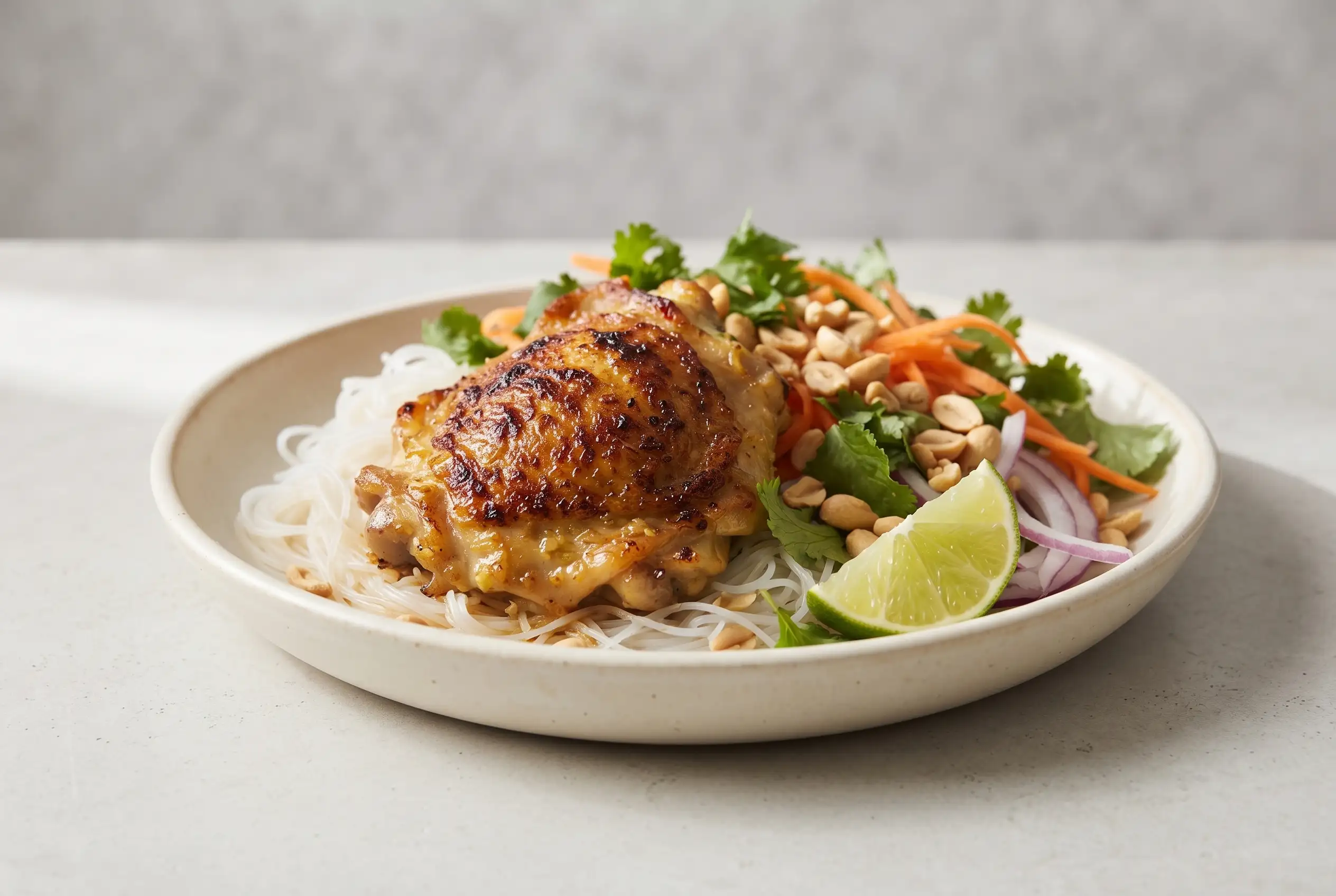
Coconut lime chicken brings together a creamy citrus marinade, roasted bone-in chicken, and fresh toppings for a meal built around bright tropical flavors and balanced textures. The combination of coconut milk, lime, garlic, ginger, and brown sugar creates a baked dish where the savory chicken remains the center while the finishing ingredients add freshness and contrast.
The appeal of coconut lime chicken comes from how the marinade works with the natural richness of chicken pieces. Lime keeps the coconut flavor lively, aromatics create depth, and high-heat roasting develops browned edges that pair well with rice noodles, herbs, vegetables, and crunchy toppings.
Coconut Lime Chicken Builds a Bright Citrus Marinade
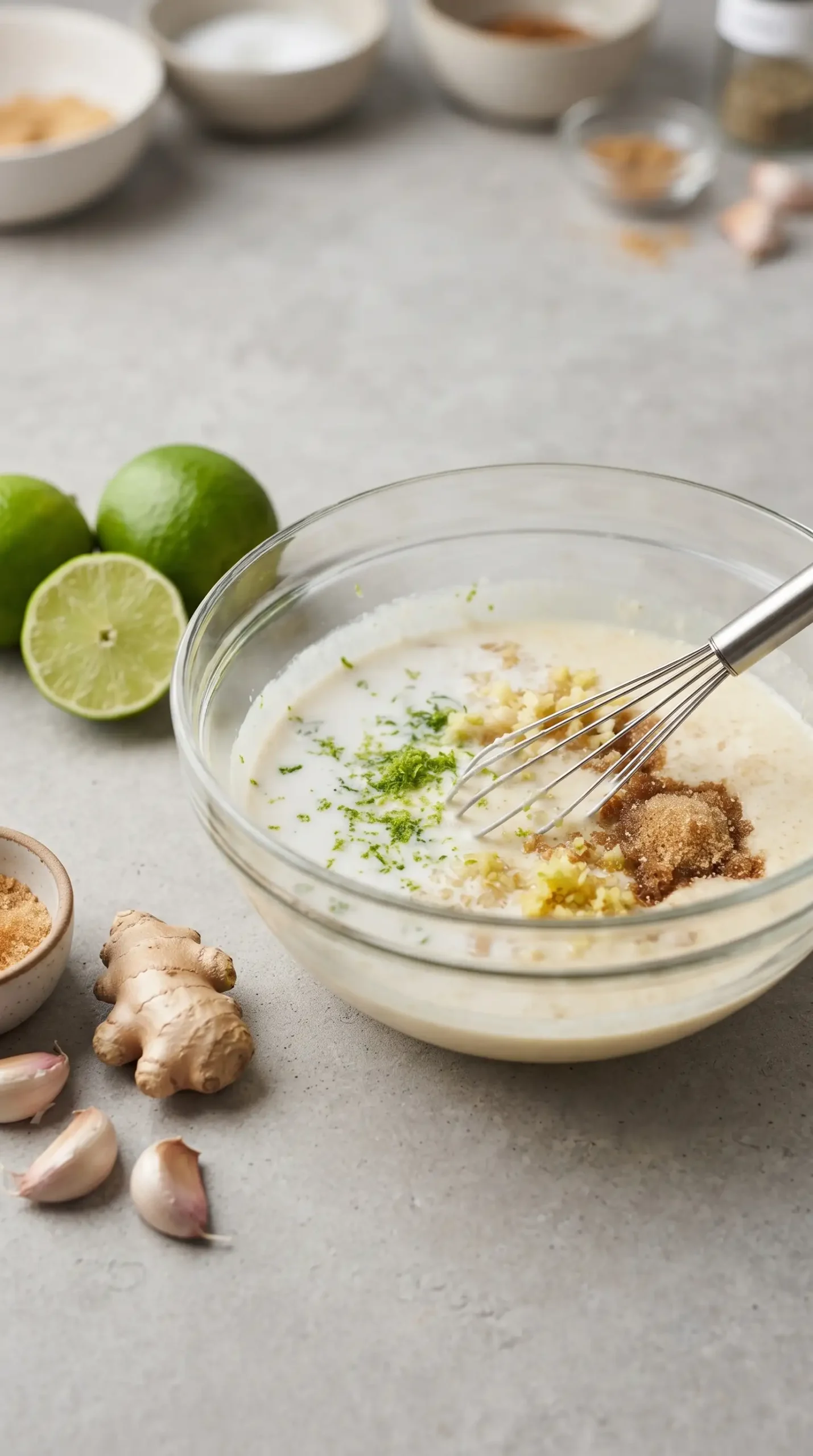
The marinade sets the character of the dish before the chicken reaches the oven. Lime juice and zest provide acidity and fragrance, while coconut milk creates a smooth coating that carries the garlic, ginger, and sweetness from brown sugar across the surface of each piece. A coconut lime grilled chicken preparation can highlight how these flavors develop when the chicken is cooked with direct heat and a flavorful coating.
A balanced coconut lime chicken marinade depends on allowing the ingredients to work together instead of emphasizing one flavor alone. The citrus should remain noticeable, but the creamy coconut base helps soften the sharpness and creates a richer roasted result.
Bone-in chicken pieces are especially suited to this style because the skin and surrounding meat can develop a deeper roasted flavor while the marinade seasons the exterior. The finished chicken pairs naturally with noodles and fresh toppings because the plate contains both rich and bright elements.
Coconut Milk and Lime Shape the Marinade Balance
The most important ingredient decisions for coconut lime chicken come from understanding how the marinade components behave. Light coconut milk provides a creamy foundation without overpowering the citrus, while lime zest adds aromatic intensity that juice alone cannot provide.
Garlic and ginger create the savory backbone of the mixture, helping the roasted chicken taste layered instead of simply sweet or acidic. Brown sugar supports browning during cooking and helps connect the coconut and lime flavors.
| Marinade element | Role in the chicken | Cooking consideration |
|---|---|---|
| Lime juice and zest | Adds citrus brightness | Balances the richness of coconut milk |
| Coconut milk | Creates a creamy coating | Helps carry aromatics across the chicken surface |
| Garlic and ginger | Adds savory depth | Works best when evenly distributed in the marinade |
| Brown sugar | Provides gentle sweetness | Supports roasted color during high heat cooking |
Bone-In Chicken Pieces Hold Up During Roasting
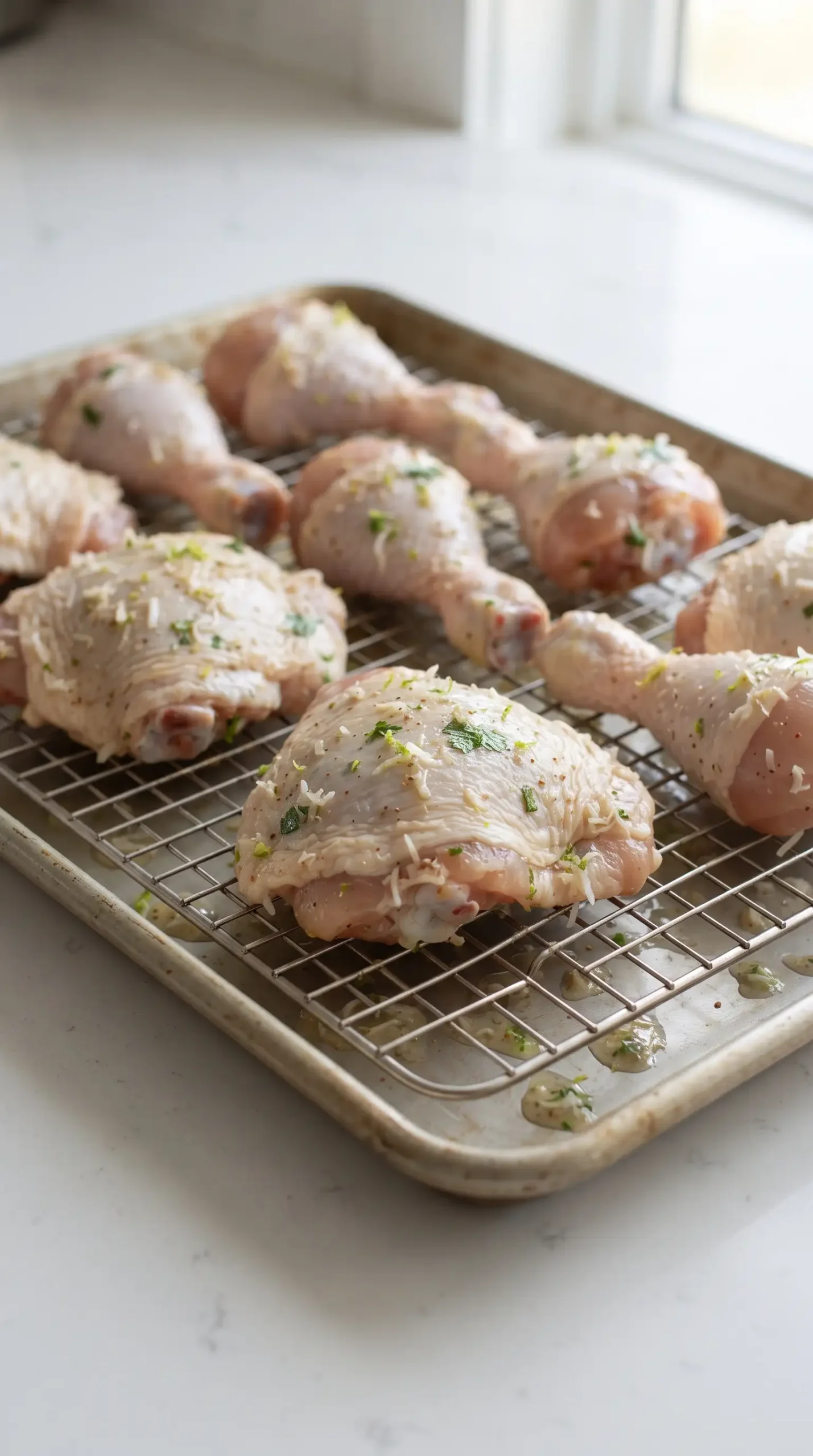
Chicken pieces with skin and bones provide the structure needed for a high-temperature roast. The meat stays substantial while the exterior develops color, making the chicken suitable for serving over noodles or alongside fresh vegetables.
Rice Noodles Complete the Coconut Lime Chicken Plate
Coconut lime chicken with rice noodles works because the noodles provide a neutral base that absorbs the flavors from the roasted chicken and serving juices. Their soft texture contrasts with crisp carrots, fresh cilantro, and chopped peanuts.
The toppings are more than decoration because each one changes the eating experience. Lime wedges add extra acidity, peanuts introduce crunch, and herbs bring a fresh note that keeps the creamy marinade from feeling heavy.
A simple serving arrangement allows each element to remain recognizable. The chicken can sit above the noodles with vegetables and garnishes placed around it, creating a plate where the roasted flavors and fresh additions stay distinct.
Roasting Control Creates Even Baked Coconut Lime Chicken
High oven heat is the key execution detail for baked coconut lime chicken. A rimmed baking sheet helps contain drippings, and arranging the pieces with enough space allows the exterior to roast instead of remaining surrounded by moisture.
Small adjustments during roasting can protect the chicken skin from becoming too dark before the center is finished. Watching the surface color and rotating the pan when needed helps maintain even cooking.
- Surface moisture: Let excess marinade drip away before placing chicken on the baking sheet so the exterior can brown.
- Pan setup: A wire rack can lift the chicken above the pan surface and allow drippings to collect below.
- Color checks: Adjust the pan position or heat exposure if the skin darkens too quickly.
A Wire Rack Changes the Chicken Surface
Using a wire rack creates more airflow around the chicken pieces during roasting. This setup is useful when a crispier surface is preferred because the chicken is less likely to sit directly in collected drippings.
Coconut Lime Chicken Mistakes That Affect the Finish
Several problems can change the texture and flavor of coconut lime chicken, but they can usually be avoided by paying attention to the preparation details. The marinade, oven setup, and serving balance all influence the final plate.
| Common mistake | What may happen | Better approach |
|---|---|---|
| Leaving too much marinade on the chicken surface | The exterior may brown less effectively | Allow excess coating to drip away before roasting |
| Ignoring surface color during roasting | The skin may become too dark | Check the chicken periodically and adjust pan placement |
| Skipping fresh toppings | The plate may feel overly rich | Add lime, cilantro, carrots, or peanuts for contrast |
Another common issue is expecting the marinade to create all of the flavor on its own. The roasted chicken benefits from the fresh finishing ingredients because they introduce textures and flavors that develop after cooking.
Marinade Timing Protects Texture and Flavor
Allowing the chicken to rest in the coconut lime chicken marinade gives the flavors time to spread across the pieces. Keeping the chicken covered while you marinate chicken in the refrigerator helps maintain a clean preparation process before roasting.
Serving Details Bring Fresh Contrast to the Dish
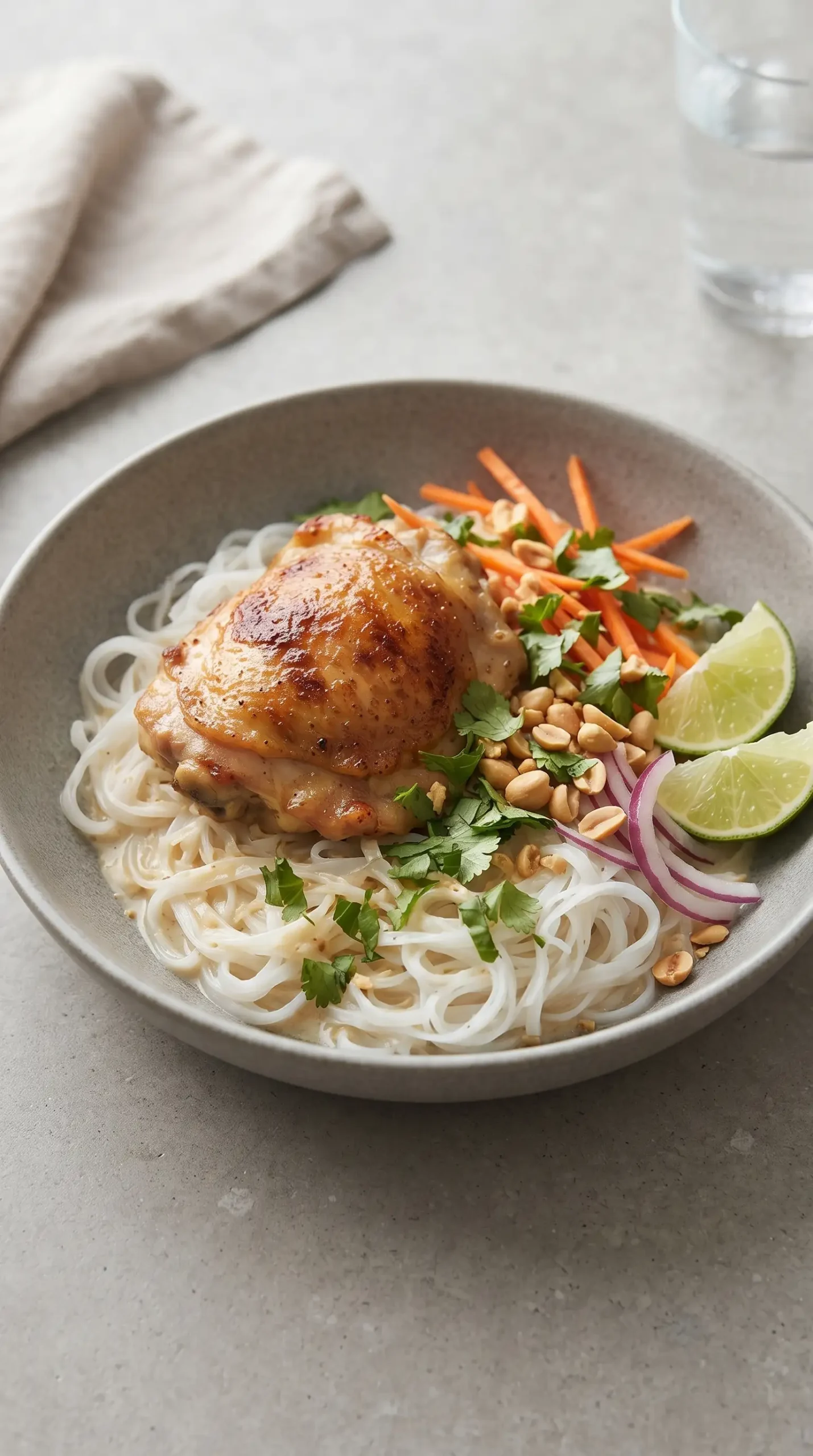
The finished plate depends on contrast between the roasted chicken and the fresh ingredients added at serving time. Cilantro, carrots, onions or shallots, peanuts, and lime wedges create different textures that highlight the creamy citrus profile.
Serving coconut lime chicken immediately after roasting allows the browned exterior and juicy interior to remain the focus. Fresh lime juice added over the plate can brighten the flavors further without changing the cooking process.
A generous noodle base makes the meal feel complete while allowing the chicken juices and toppings to mingle. The combination works well because each part contributes a different quality instead of competing for attention.
Leftover Coconut Lime Chicken Requires Careful Storage
Cooked chicken should be handled with attention after serving so its quality is preserved. Store leftovers in a covered container and refrigerate them promptly, keeping the chicken separate from fresh toppings when possible.
Fresh Toppings Highlight Coconut Lime Chicken with Rice Noodles
The finishing ingredients define the way coconut lime chicken with rice noodles is experienced. Carrots add color and crunch, cilantro contributes herbal freshness, and peanuts provide a toasted texture that contrasts with tender chicken and soft noodles.
Serving the components together also makes the dish adaptable at the table. Diners can add more lime, extra herbs, or additional toppings according to their preferred balance of creamy, bright, and savory flavors.
The simplicity of the garnish choices keeps attention on the roasted chicken. Each addition supports the main flavors while preserving the tropical character created by the coconut and lime combination.
Coconut Lime Chicken Benefits From Balanced Heat and Freshness
The strongest results come from managing the relationship between roasting, marinade flavor, and fresh toppings. The chicken needs enough heat to develop color, while the lime and herbs keep the finished dish lively.
Careful handling of the marinade and cooking surface creates a plate that feels layered without requiring complicated techniques. The creamy citrus coating, browned chicken exterior, and fresh noodle presentation all depend on small preparation choices made before serving.
Coconut Lime Chicken Becomes Balanced Through Roasted Texture and Citrus Flavor
The roasted chicken develops its best character when the creamy marinade has time to season the surface and the oven creates browned edges. Lime, coconut, garlic, and ginger work together most effectively when the richness of the chicken is matched by fresh toppings and a bright finish.
Coconut lime chicken succeeds because the cooking decisions support the ingredients instead of overwhelming them. Managing moisture before roasting and adding contrast at the table creates a dish where every part of the plate has a clear purpose.
Coconut Lime Chicken Marinade Timing Questions and Answers
Can coconut lime chicken be marinated overnight?
Yes, the chicken can be prepared ahead and kept refrigerated while it absorbs the coconut, lime, garlic, and ginger flavors. Keep the chicken covered and avoid leaving it at room temperature during marinating.
Why should excess marinade be removed before roasting?
Reducing excess moisture on the outside helps the chicken surface develop better roasted color. The remaining marinade flavor will still contribute during cooking without creating a wet exterior.
Can coconut lime chicken be served without rice noodles?
Yes, the roasted chicken can be paired with other simple sides, but rice noodles work especially well because they provide a mild base for the citrus and coconut flavors.
How can the chicken skin avoid becoming too dark?
Monitor the surface while roasting and adjust the pan position if needed. Moving the chicken away from excessive heat exposure can help the outside finish evenly while the center cooks.
What toppings pair best with coconut lime chicken?
Cilantro, carrots, peanuts, onions or shallots, and lime wedges all complement the creamy citrus profile by adding freshness, crunch, or extra brightness.
Coconut Lime Chicken with Coconut Marinade and Ginger
Ingredients
Method
- Whisk together the lime juice, lime zest, brown sugar, garlic, ginger, and coconut milk in a large bowl.
- Add the chicken pieces to the marinade and season with salt. Cover and refrigerate for at least 4 hours.
- Remove the chicken from the marinade and place it on a plate briefly to allow excess moisture to drain.
- Preheat the oven to 475°F (246°C). Grease a rimmed baking sheet.
- Arrange the chicken pieces on the prepared baking sheet. Bake for 30 minutes, turning the pan or adjusting heat exposure as needed if the skin becomes too dark.
- If using a wire rack, place it on the baking sheet before arranging the chicken to allow drippings to collect underneath. Remove the chicken from the oven when it is browned outside and cooked through.
- Sprinkle the hot chicken with a little extra salt and serve with rice noodles, cilantro, carrots, peanuts, and a drizzle of lime juice.