
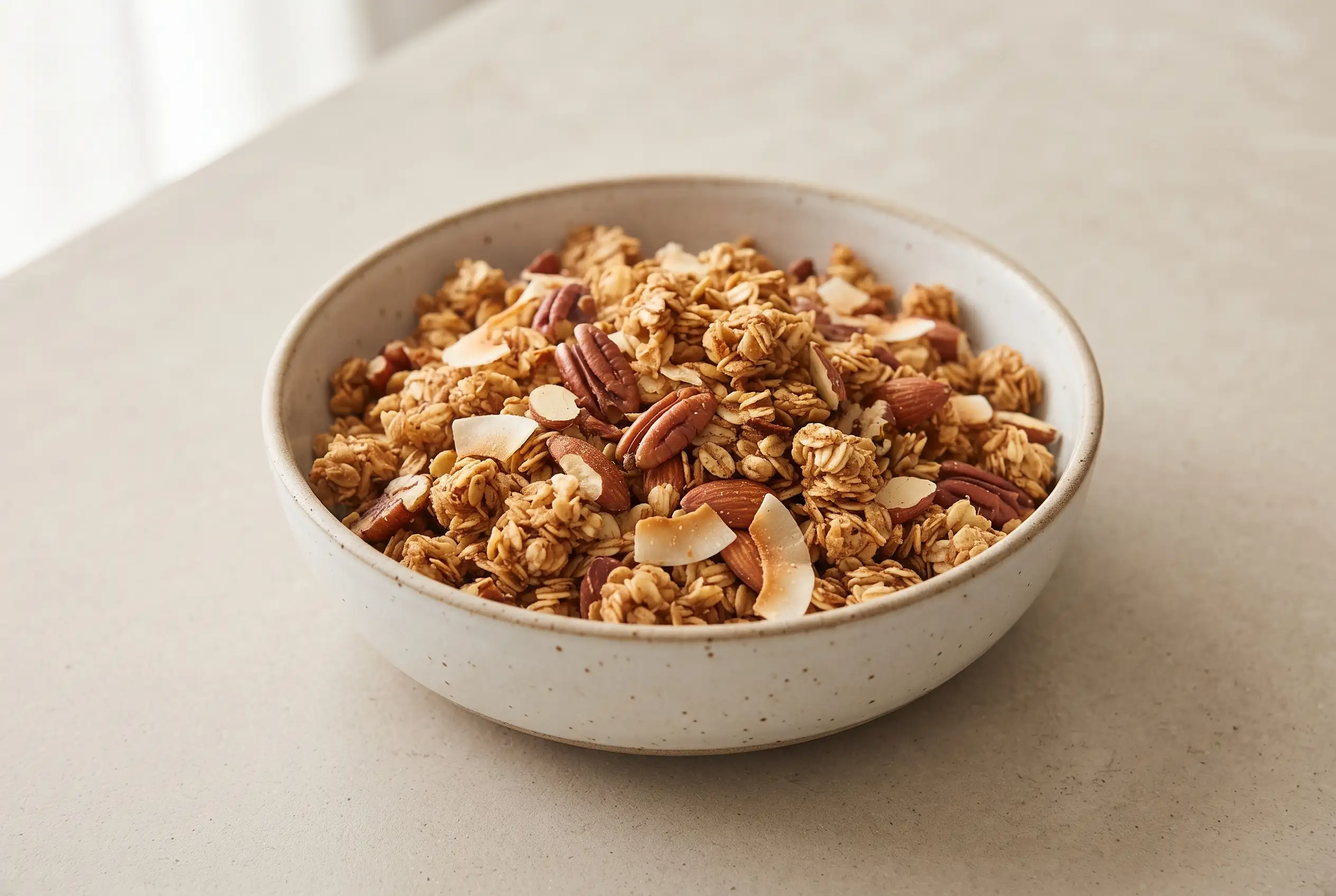
Coconut pecan granola brings together rolled oats, toasted nuts, honey, and coconut flakes in a thick-baked mixture designed for generous clusters and a deeply roasted flavor. The combination works because the oats create a sturdy base while almonds, pecans, and coconut create different textures throughout each handful. A careful balance of sweetness, oil, and baking time turns simple pantry ingredients into a homemade breakfast staple.
Coconut Pecan Granola Creates Deep Flavor Through Simple Layers
The appeal of coconut pecan granola comes from how each part of the mixture behaves during baking. Rolled oats absorb the honey and oil coating while developing a lightly toasted character. The nuts provide richness and crunch, and the coconut adds a delicate sweetness that becomes more pronounced as it browns.
Unlike loose toasted oat mixtures that rely only on individual ingredients for interest, this style of granola depends on the way the ingredients come together before they reach the oven. A well-moistened mixture creates pieces that hold together after cooling, giving each serving a combination of crisp edges and tender centers.
The thick layer in the baking pan is an important part of the finished texture. Keeping the mixture substantial allows the clusters to develop slowly, while spreading it too thin can encourage faster drying and harder pieces.
Rolled Oats and Nuts Shape the Granola Foundation
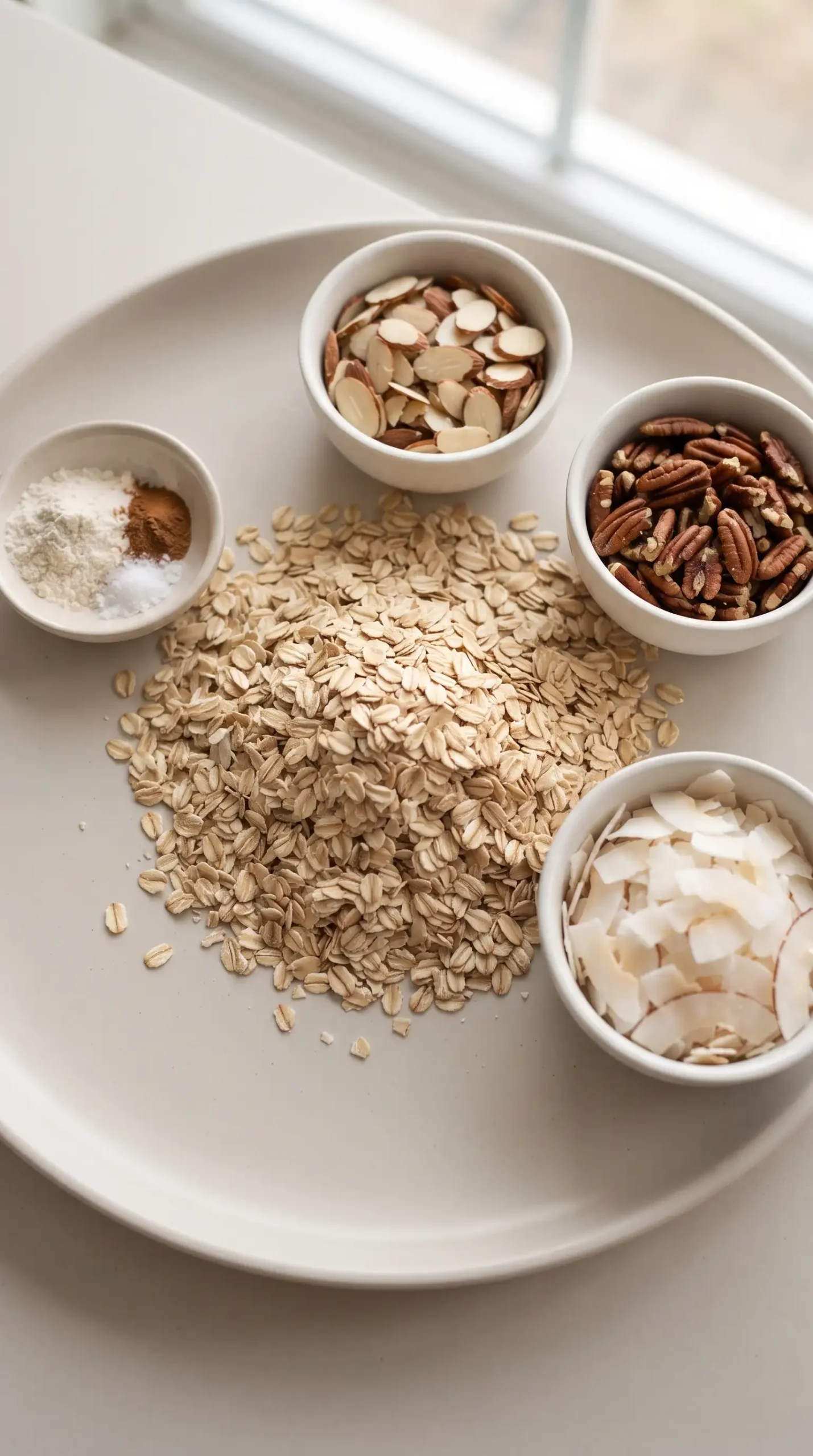
The most important ingredient decisions in coconut pecan granola center on choosing ingredients that can handle a longer bake without losing their character. Rolled oats provide structure because their larger flakes maintain texture after absorbing the honey and oil. The flour mixed into the oats helps bind the coating around the dry ingredients.
Almonds and pecans bring different forms of crunch. Slivered or sliced almonds add delicate pieces throughout the mixture, while chopped pecans contribute a richer nutty flavor and a softer bite. Their sizes influence how evenly each portion of granola feels, and pecan granola can highlight how nut selection shapes the final cluster texture.
- Rolled oats: create the main texture and support the cluster structure.
- Pecans: add buttery richness and larger bites of crunch.
- Almonds: provide lighter nut texture throughout the pan.
- Cinnamon: gives the mixture a warm background flavor.
Honey and Oil Control the Baked Coconut Granola Finish
The combination of honey and vegetable oil determines how the dry ingredients transform in the oven. Honey contributes sweetness while helping the mixture hold together, and oil helps coat the oats so they toast evenly instead of drying out immediately.
A thorough coating matters because uncovered dry spots can bake differently from the rest of the pan. Whisking the wet ingredients together before combining them with the oats creates a more consistent distribution across the mixture.
For coconut pecan oat granola, the balance between coating and dryness creates the difference between loose crumbs and satisfying clusters. The mixture should look evenly moistened before baking, with enough space between ingredients for heat to move through the thick layer.
| Ingredient choice | Effect during baking | Reader decision |
|---|---|---|
| Honey | Adds sweetness and helps bind clusters | Keep it evenly distributed through the oats |
| Vegetable oil | Coats ingredients for toasted texture | Combine thoroughly with honey before mixing |
| Turbinado sugar | Adds optional extra sweetness and texture | Use only if a sweeter granola is preferred |
Coconut Flakes Need Careful Timing for Browning
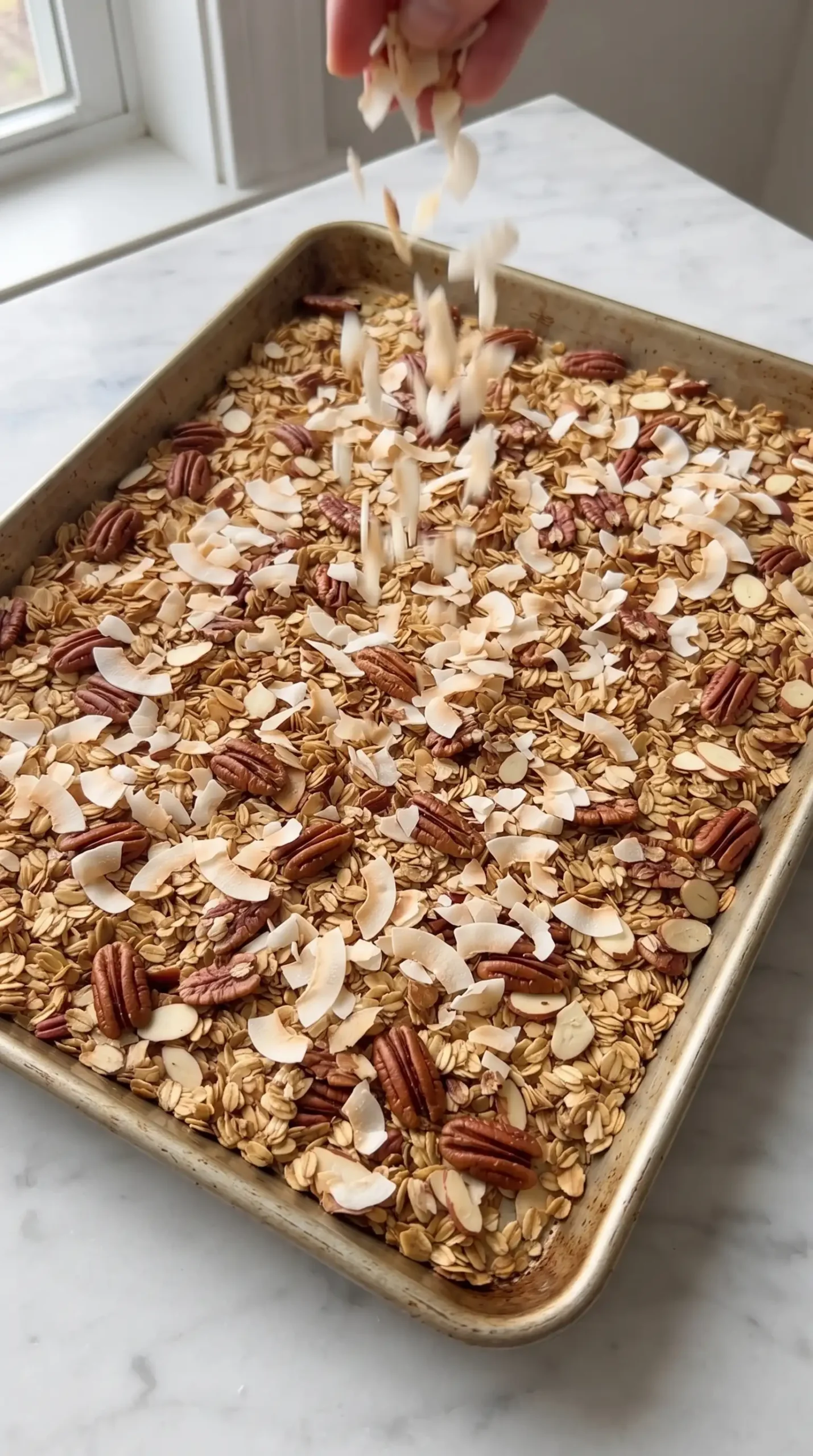
Unsweetened coconut flakes have a special role because they toast more quickly than the oats and nuts. Adding them later in the baking process allows them to become golden without overwhelming the rest of the mixture with darker toasted flavors.
The timing of the coconut addition also keeps the texture balanced. Coconut that browns gently develops a pleasant crispness, while coconut exposed too early may lose its softer contrast.
Baking Thickness Keeps Coconut Pecan Granola Tender
Successful coconut pecan granola depends heavily on controlling the environment inside the pan. A thick layer allows moisture from the honey and oil to work gradually through the oats, creating clusters instead of a collection of dry pieces.
Temperature adjustments can be useful when the surface appears to brown faster than the center. Lowering the oven temperature slightly gives the mixture more time to toast evenly without pushing the outer pieces too far.
Stirring during baking helps redistribute heat and color, but handling the granola immediately after it leaves the oven changes the texture. Letting it remain undisturbed while it cools allows the clusters to firm naturally.
The texture continues changing after baking because granola clusters continue crisping as they cool. Allowing the pan to rest before breaking the granola apart gives the coating time to set and helps preserve larger pieces.
Common Coconut Pecan Granola Mistakes Come From Handling
Small choices during preparation can affect the final texture of homemade coconut granola. Most problems come from changes that interfere with even coating, steady baking, or proper cooling.
- Spreading too thin: can make the mixture bake quickly and become overly crunchy.
- Adding coconut too soon: can lead to coconut that browns before the oats are ready.
- Stirring immediately: breaks apart clusters before they have time to set.
- Skipping the coating step: leaves portions of oats without the honey and oil mixture needed for even baking.
Watching the visual cues of the granola is more useful than chasing a perfectly identical appearance every time. The mixture should develop toasted color while maintaining pieces that can hold together after cooling.
Clusters Depend on Cooling More Than Extra Mixing
The texture of coconut pecan granola continues to develop after it leaves the oven. The cooling period allows the baked coating to firm around the oats and nuts, which creates the larger pieces many people look for in granola.
Breaking apart the mixture too early interrupts that process. A hands-off approach immediately after baking protects the structure created during the slow bake.
Turbinado Sugar Changes the Sweetness Direction
The optional sugar addition gives cooks control over the sweetness level. Turbinado sugar works especially well when included because its larger crystals add a subtle texture while complementing the toasted flavors from the nuts and oats.
Cooks who prefer a more honey-forward flavor can leave out the additional sugar and allow the natural sweetness of honey and coconut to stand out more clearly.
Storage Keeps Homemade Coconut Granola Ready for Everyday Use
Once completely cooled, coconut pecan granola can be stored in an airtight container to preserve its texture. Keeping moisture away from the baked clusters helps maintain the crisp quality created in the oven.
The granola works well as a make-ahead breakfast ingredient because the nut-and-oat combination stays versatile. It can be portioned for quick meals or used as a topping when a crunchy element is needed.
Serving Ideas Highlight the Coconut Pecan Balance
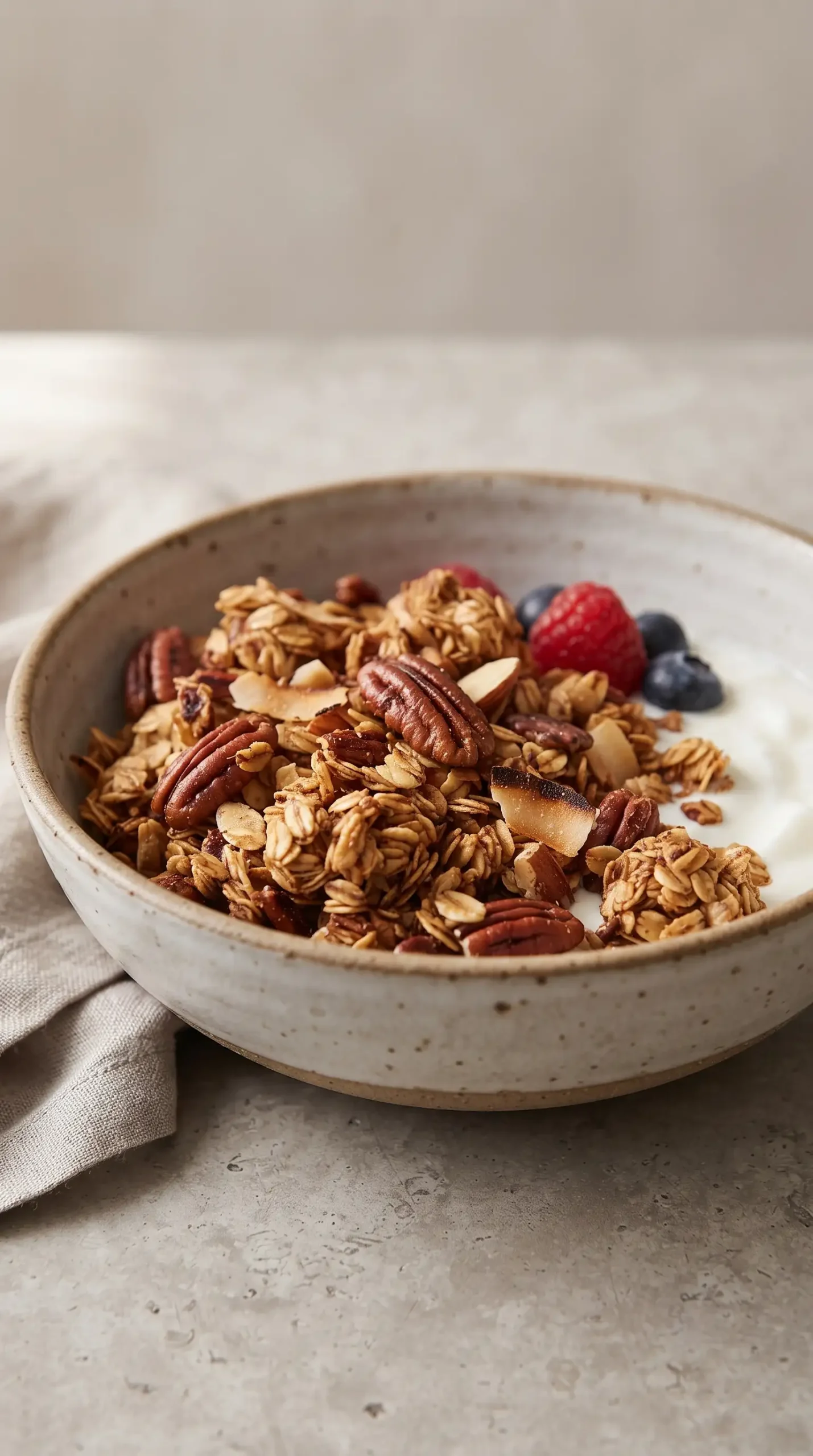
The finished granola has enough flavor to stand on its own, but it also pairs naturally with creamy and fruity additions. The toasted nuts and coconut provide contrast against softer foods.
- Breakfast bowls: spoon over yogurt or pair with fresh fruit.
- Snack portions: enjoy clusters directly for a crunchy option.
- Topping uses: add texture to simple desserts or chilled dishes.
Because the mixture contains both nuts and oats, small amounts can add satisfying texture without requiring additional preparation.
Coconut Pecan Oat Granola Adapts With Small Ingredient Choices
Coconut pecan oat granola can be adjusted while keeping its basic structure intact. Different nut cuts change the size of each bite, while optional sweetness changes the overall flavor balance.
Whole wheat flour may be explored as an alternative to regular flour, although the texture may shift slightly depending on the flour used. Changes should still support the thick, evenly coated mixture needed for good clusters.
Texture Choices Make Coconut Pecan Granola Worth Repeating
The best results come from paying attention to texture decisions before, during, and after baking. The thickness of the mixture, the timing of coconut, and the cooling period all work together to create a granola with defined clusters.
Small adjustments are possible without changing the character of the dish. A sweeter version can include optional sugar, while a less sweet version can rely more on honey and toasted ingredients.
Coconut Pecan Granola Stays Balanced Through Gentle Baking
Gentle baking preserves the contrast that makes coconut pecan granola memorable: crisp nuts, toasted oats, browned coconut, and clusters that hold together after cooling. The mixture succeeds when each ingredient receives enough time to develop flavor without becoming overly dry.
Careful attention to coating, pan thickness, and cooling creates a finished granola where texture is the result of deliberate choices instead of extra additions.
Coconut Pecan Granola Questions About Clusters and Storage
How do I keep coconut pecan granola clusters intact?
Allow the baked mixture to cool without stirring immediately. The coating firms as it rests, helping larger pieces stay together instead of breaking into small crumbs.
Can I make coconut pecan granola less sweet?
Yes. The optional sugar can be omitted, allowing the honey and natural flavors of the oats, nuts, and coconut to create the sweetness level.
Why does my granola become too hard?
Granola can become overly hard when it spreads too thin and bakes too quickly. Keeping a thicker layer in the pan helps the mixture develop a balanced texture.
When should coconut flakes be added?
Coconut flakes are added later in baking so they can brown gently while the oats and nuts continue developing their toasted flavor.
What is the best way to store leftover granola?
Store cooled granola in an airtight container away from moisture. Proper storage helps preserve the crisp texture and keeps the clusters enjoyable.
Coconut Pecan Granola with Honey and Coconut Flakes
Ingredients
Method
- Preheat the oven to 325°F (163°C).
- Combine the rolled oats, almonds, pecans, flour, cinnamon, salt, and optional sugar in a large bowl, stirring until evenly mixed.
- Whisk the vegetable oil and honey together, then add the mixture to the dry ingredients and stir until everything is coated and moistened.
- Spread the granola mixture in a single layer in a large jelly roll pan, keeping the layer thick rather than spreading it too thin.
- Bake for 20 minutes, stir once, then continue baking for 10 more minutes and stir again.
- Sprinkle the coconut flakes over the granola and bake for a final 5 minutes until the coconut is browned.
- Remove the pan from the oven and allow the granola to rest undisturbed on the pan before breaking it apart.