
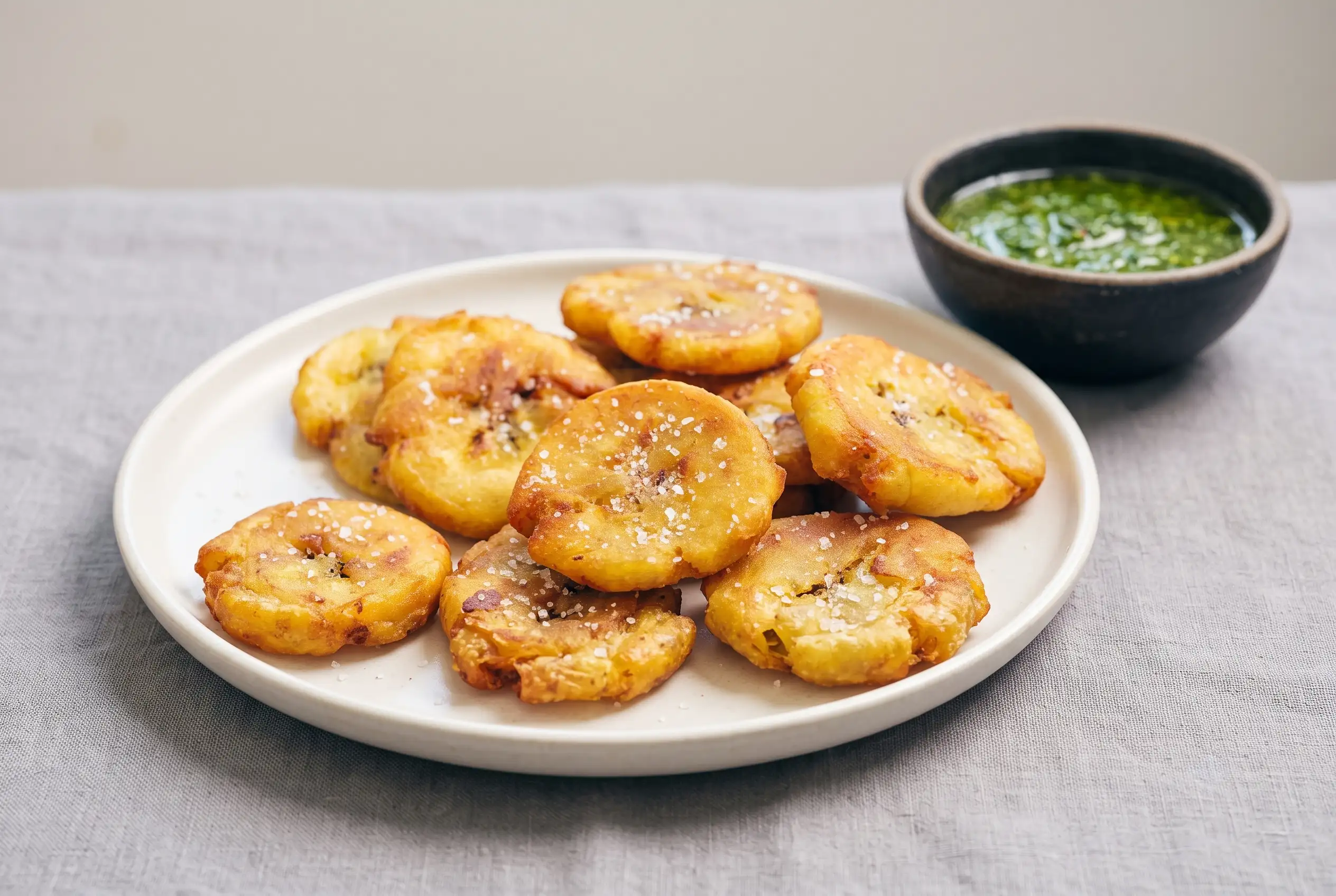
Crispy salted tostones transform green plantains into golden, crunchy bites with rough edges and a satisfying contrast between a tender center and a fried exterior. The double-frying approach gives these crispy tostones their signature texture, while a simple sprinkle of sea salt keeps the flavor focused on the plantain itself.
Green plantains work especially well for tostones because their firm structure holds up during frying, smashing, and frying again. The process creates a versatile side dish or snack that pairs naturally with a bright plantain dipping sauce such as Magic Green Sauce.
Crispy Salted Tostones Start With Green Plantain Choice
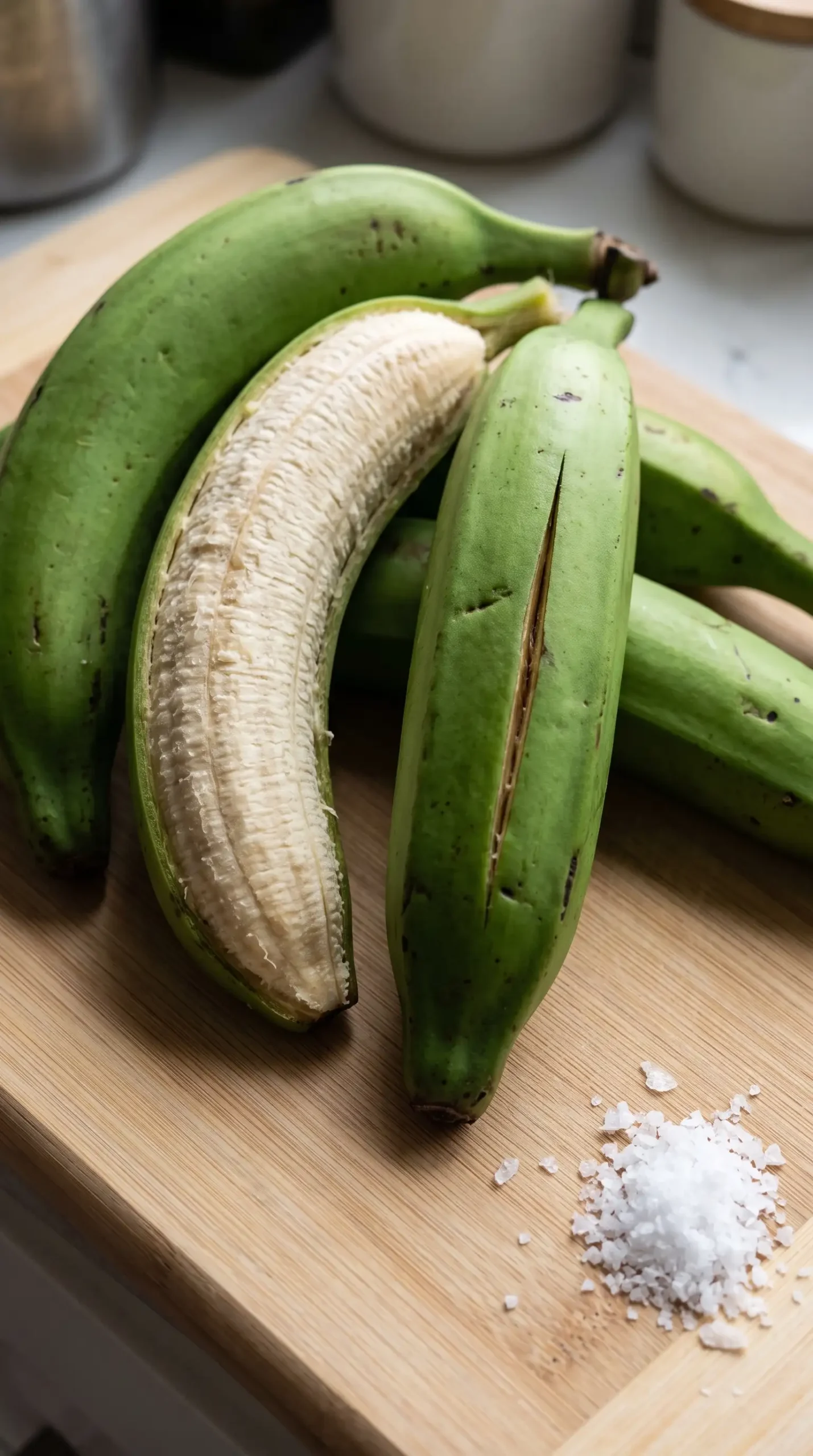
Selecting firm green plantains is the first decision that shapes the finished texture. At this stage, the plantain should have enough structure to be sliced into thick pieces and flattened without becoming soft or fragile. Green skins indicate that the fruit is still starchy and suitable for the frying process used for tostones.
During preparation, the peel requires a different approach from a ripe banana. Making a vertical cut through the skin helps release the peel, and using your hands or the edge of a spoon allows the firm fruit underneath to remain intact. Clean removal prevents uneven pieces that could affect how the plantain fries.
Freshly cut plantain pieces provide the foundation for the crunchy shape associated with this dish. Keeping the pieces consistent helps each one move through the frying stages at a similar pace, creating a more even result across the batch.
Green Plantains Need Firm Handling Before Frying
Firm plantains respond best to careful cutting and gentle handling because their texture is built around starch instead of the soft sweetness found in ripe fruit. Thick slices create enough surface area for smashing later while maintaining a sturdy interior.
Oil Control Shapes Crispy Fried Plantains Texture
Hot oil creates the exterior structure that makes crispy fried plantains recognizable. A heavy-bottomed pan helps maintain steady cooking conditions while the plantains develop their first layer of color and texture.
Batch frying gives each piece enough room to cook properly. Crowding the pan can interfere with even browning and makes it harder to judge when the plantains are ready to leave the oil for smashing.
Second frying brings the flattened pieces back into the oil so the rough edges can become deeply golden and crisp. The smashed shape increases the surface area exposed to heat, which is what creates the characteristic crunchy texture.
| Stage | Visual sign | Texture purpose |
|---|---|---|
| First fry | Light golden color begins to appear | Softens the plantain enough for smashing |
| Smashing | Flattened shape with rough edges | Creates more crispable surface area |
| Second fry | Golden and crisp exterior | Builds the finished crunch |
Crushing Technique Creates Tostones Edges
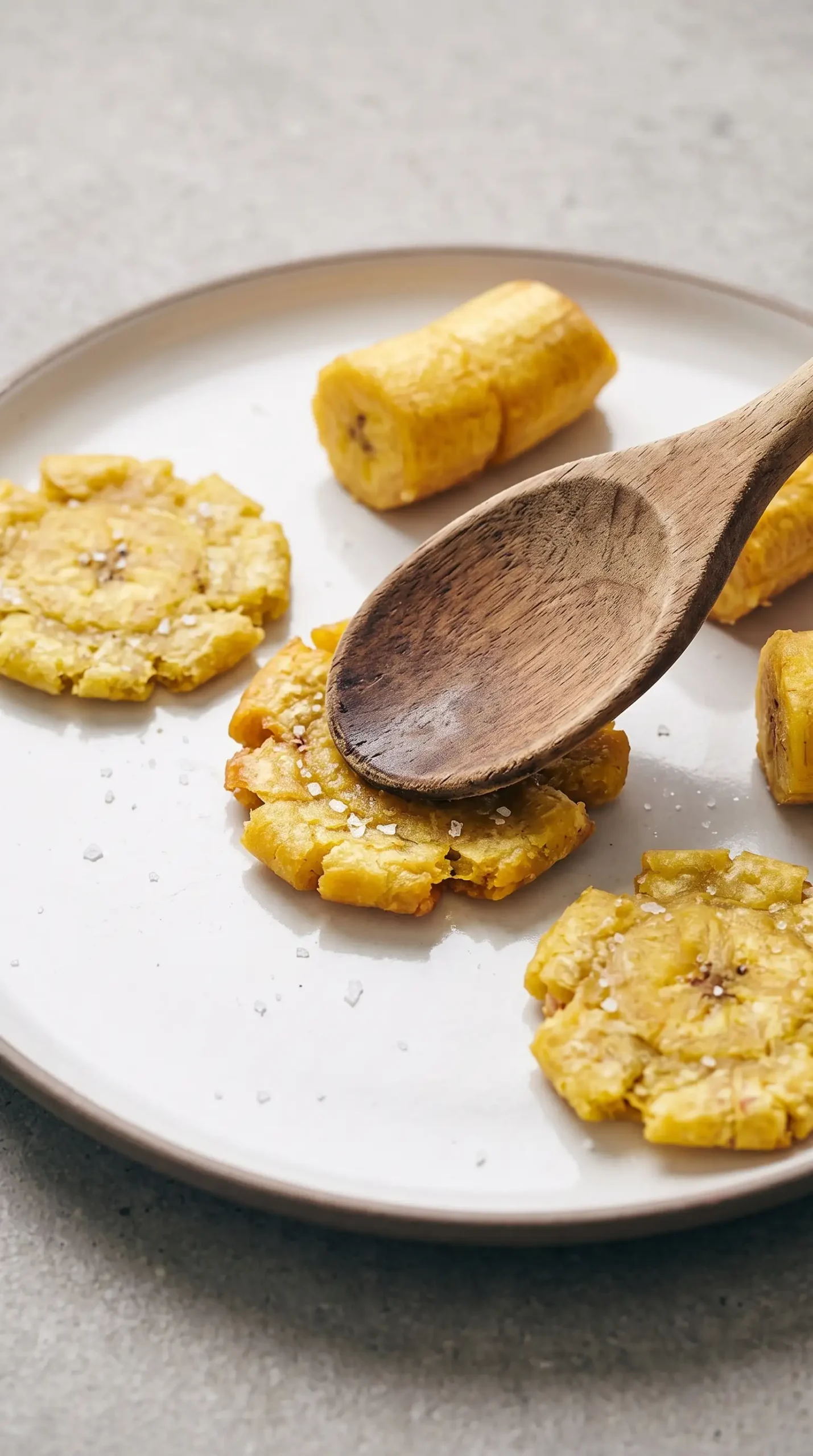
Flattened pieces develop the uneven edges that separate tostones from ordinary fried plantain slices. Using the back of a wooden spoon creates a wider surface while keeping enough thickness for a pleasant bite.
Flattening is part of the traditional process because green plantains are first cooked until they soften, then shaped and returned to the oil for twice-fried tostones with their signature crisp texture.
Salted Tostones Recipe Benefits From Simple Flavor Balance
Simple seasoning allows the natural character of green plantains to remain noticeable. Sea salt added after frying highlights the savory side of the dish and complements the crisp exterior without covering the plantain flavor.
Sea salt works best when added after excess oil has been drained because the seasoning can cling to the warm surface. The timing also keeps the salt visible and gives each bite a balanced savory finish.
Many cooks pair a salted tostones recipe with sauces that introduce freshness or acidity. Magic Green Sauce provides a contrasting dip option, adding another layer of flavor without changing the straightforward preparation of the fried plantains.
- Salt timing: Add seasoning after frying so the warm surface captures the flavor.
- Texture focus: Keep the plantain pieces crisp before adding any dip.
- Serving contrast: Pair crunchy bites with a smooth sauce for variety.
Crispy Salted Tostones Mistakes That Flatten Crunch
Overcooking the first fry can make the plantains harder to flatten cleanly. When pieces become too firm before smashing, the surface may resist shaping and the finished texture can become less balanced.
Uneven pieces can create mixed results because smaller sections may brown faster while thicker sections need more time. Cutting with attention to size helps each piece follow the same cooking path.
Poor timing after frying can also affect texture. Letting the smashed plantains sit too long before returning them to the oil may reduce the contrast between crisp edges and the softer center that makes tostones enjoyable.
Plantain Dipping Sauce Changes The Serving Experience
Magic Green Sauce adds a fresh, vibrant contrast to the salty crunch of tostones. Serving the dip alongside the plantains keeps the fried texture intact while allowing each person to control the amount of sauce in every bite.
Leftover Handling Keeps Plantain Texture Noticeable
Stored tostones are best approached with texture in mind because their defining quality comes from their crisp exterior. Keeping them protected from excess moisture helps preserve their structure before reheating.
Serving Ideas Highlight Crispy Plantain Contrast
Across servings, tostones can fit into meals as a snack, side dish, or dipping companion. On a party platter, their sturdy shape pairs neatly with crispy potato mojos, letting both fried sides share sauces while fresh garnishes add contrast.
Creative plates can use the rough edges and golden color as part of the presentation. Arranging the pieces with a bowl of dipping sauce creates an inviting contrast between the crisp plantains and a smooth accompaniment.
Dip choices can shift the overall experience while keeping the base preparation unchanged. A fresh green sauce emphasizes brightness, while other savory dips can create different pairings depending on the meal.
Two Frying Stages Explain Tostones Texture
Two stages of frying are what define the structure of tostones. The first stage changes the firm plantain into a shape that can be flattened, while the second stage develops the crisp exterior that diners expect.
Golden Tostones Show How Careful Frying Creates Crunch
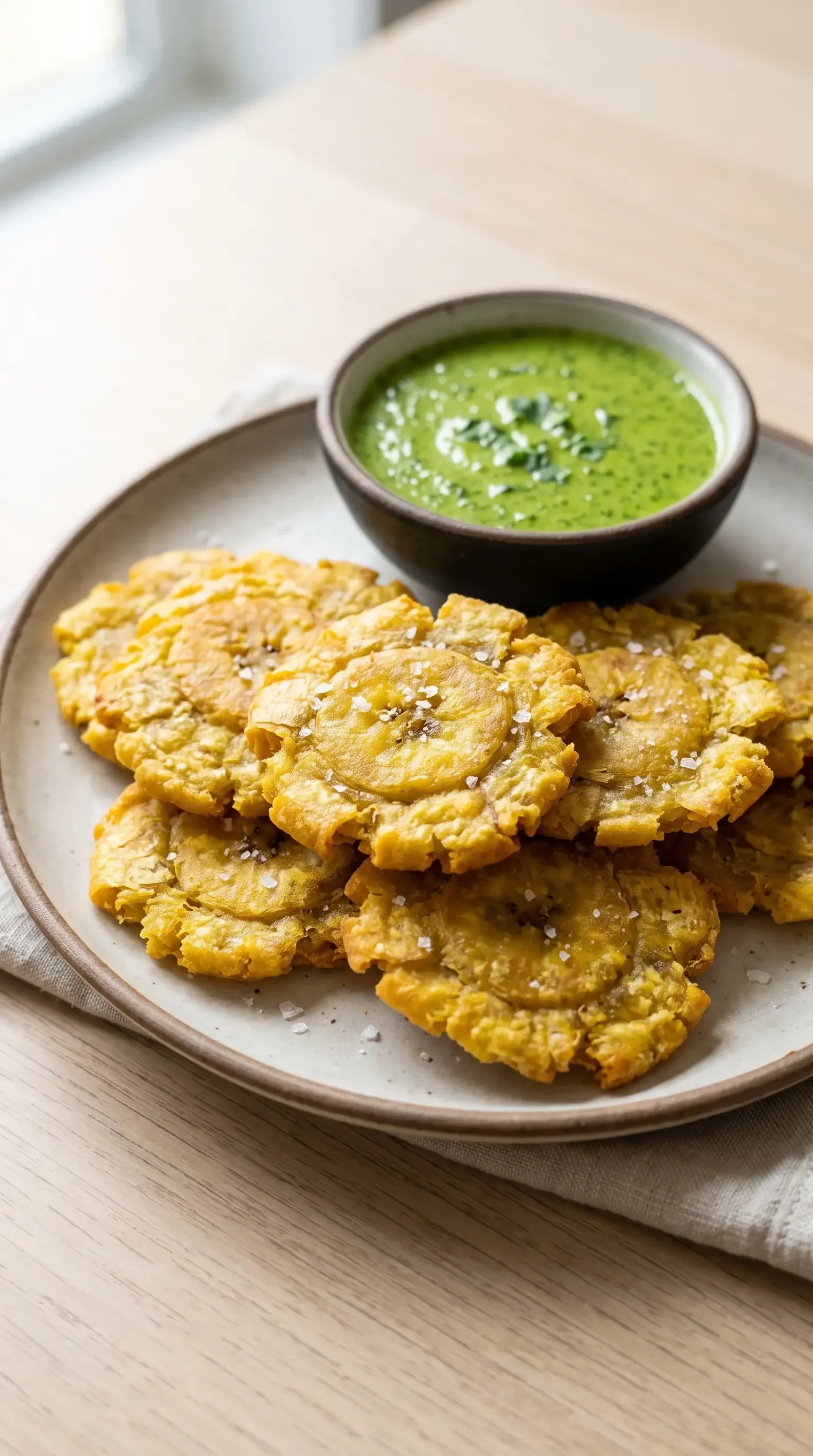
Golden surfaces and rough edges reveal the important cooking decisions behind crispy salted tostones. The combination of firm green plantains, controlled frying, flattening, and a final crisping stage creates the texture that makes this dish distinctive.
Careful handling keeps each piece sturdy enough to hold its shape while still delivering a light, crunchy bite. When the plantains are cooked with attention to timing and texture, a few simple ingredients become a memorable fried snack or side.
Crispy Salted Tostones Crunch Questions and Answers
How do I keep tostones crunchy?
Crunch comes from completing both frying stages and serving the plantains while their exterior is still crisp. Avoid covering warm tostones in a way that traps moisture, since moisture can soften the surface.
Can I use ripe plantains for this dish?
Plantain choice matters because green plantains provide the firm texture needed for smashing. Ripe plantains contain more sweetness and softness, which changes both the handling and the finished result.
Why do my smashed plantains break apart?
Pieces can break when they are cut too thin or when the plantain has not maintained enough structure during the first cooking stage. Using thicker pieces and gentle pressure during smashing helps maintain their shape.
When should I add sea salt?
Salt is best added after frying and draining because the warm surface allows the seasoning to stick. Adding it at that point also keeps the flavor concentrated on the crisp exterior.
What sauce goes well with salted tostones?
Magic Green Sauce is a natural pairing because it adds a fresh flavor contrast to the fried plantains. The sauce can be served separately so the crunchy texture remains noticeable.
Crispy Salted Tostones with Green Plantains and Sea Salt
Ingredients
Method
- Remove the plantain peels by slicing vertically through the skin and pulling the peel away with your hands or the edge of a spoon.
- Cut the peeled plantains into 1-inch thick pieces.
- Heat a layer of vegetable oil in a heavy-bottomed pan, using enough oil to fry the plantain pieces.
- Fry the plantains in batches. Once they begin to turn light golden, remove them from the oil and place them on a paper towel-lined plate.
- Flatten each fried plantain piece with the back of a wooden spoon to create a thinner shape with rough edges.
- Return the flattened plantains to the pan and fry for an additional 4-5 minutes until golden brown and crispy.
- Transfer the finished tostones to a paper towel-lined plate to remove excess oil.
- Sprinkle the tostones with sea salt and serve immediately with Magic Green Sauce or another dipping sauce.