
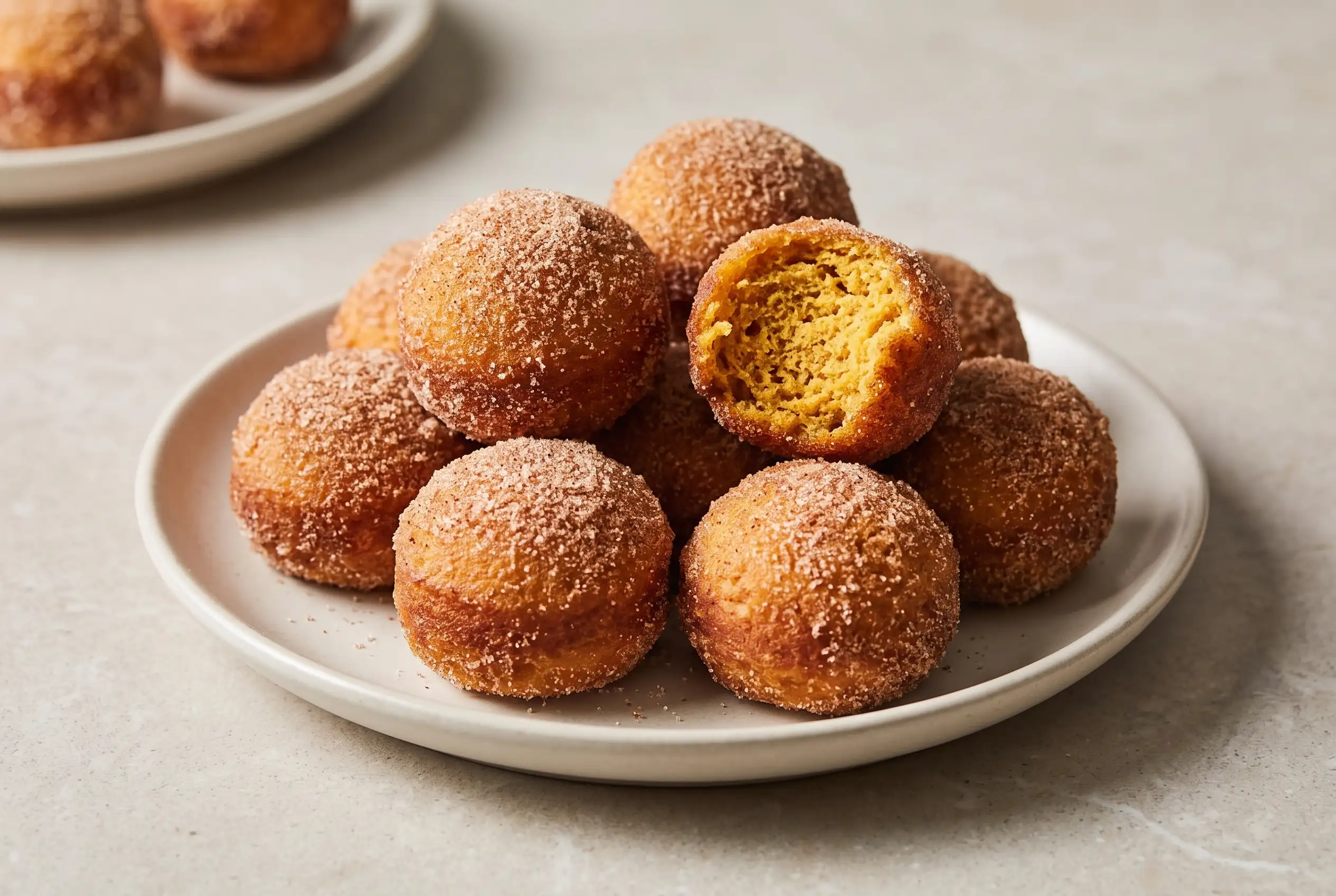
Donut balls bring together the cozy flavors of pumpkin, warm spices, and a crisp cinnamon sugar coating in a small, irresistible treat. These cinnamon sugar donut balls are made from a lightly spiced dough that uses pumpkin puree, buttermilk, and classic baking spices to create a soft center beneath a golden fried exterior.
Unlike large ring-shaped donuts, these bite-sized treats rely on careful handling and frying control to keep their rounded shape and tender texture. The dough is intentionally sticky, which helps create a fluffy interior, but it also means the shaping and frying steps deserve attention.
Pumpkin Dough Shapes the Donut Balls Experience
Pumpkin donut balls stand out because the dough carries both moisture and spice before the cinnamon sugar coating is added. Pumpkin puree works with the buttermilk and egg to create a richer texture that feels more cake-like than a traditional yeast donut.
Small portions of dough cook quickly, making the balance between exterior color and interior doneness especially important. A properly fried batch should develop a golden outside while remaining tender inside instead of becoming dry or overly crisp.
Warm spices including cinnamon, nutmeg, and allspice give these treats their seasonal character. The combination creates a familiar bakery-style flavor without requiring a complicated preparation process or a long rise time.
The Ingredients That Refine Pumpkin Donut Balls
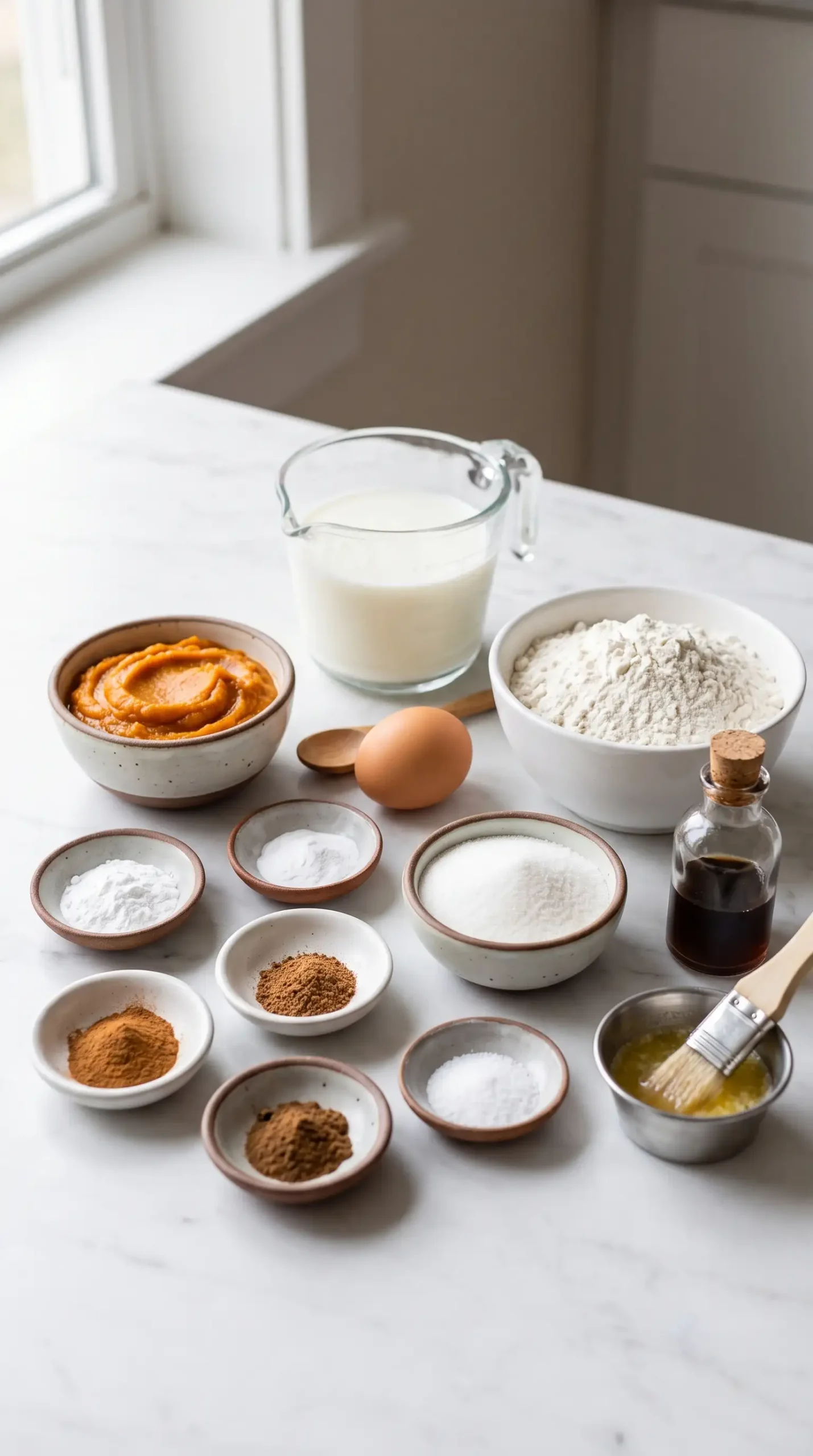
The most important ingredient choices for pumpkin donut balls involve the elements that influence texture and flavor. Flour provides structure, while pumpkin puree and buttermilk help keep the finished bites pleasantly soft.
Pumpkin puree helps keep the crumb moist, and pumpkin muffins rely on that softness in a baked format.
| Ingredient feature | Role in the dough | Reader benefit |
|---|---|---|
| Pumpkin puree | Adds moisture and seasonal flavor | Creates a softer interior |
| Buttermilk | Works with leavening ingredients | Supports a tender texture |
| Warm spices | Builds the signature flavor profile | Pairs naturally with cinnamon sugar |
Using the listed spices together creates a balanced flavor instead of relying only on the coating. The cinnamon sugar finish remains important, but the dough itself provides the foundation for the finished taste.
Mixing Choices That Protect the Tender Texture
Careful mixing keeps the texture of donut balls light and enjoyable. The dry ingredients should be combined before the wet ingredients are introduced so the baking powder, baking soda, salt, and spices distribute evenly.
Once the wet mixture joins the flour mixture, the dough should be stirred only until it comes together. Overworking the sticky dough can make handling more difficult because extra mixing encourages gluten development, which can affect the delicate texture that makes these bites appealing.
- Gentle stirring: Mix until the ingredients form a dough without unnecessary extra agitation.
- Light shaping: Use floured hands to manage the sticky dough while keeping portions compact.
- Quick frying: Move shaped pieces into the oil promptly so they maintain their form.
Cinnamon Sugar Donut Balls Need Careful Frying Control
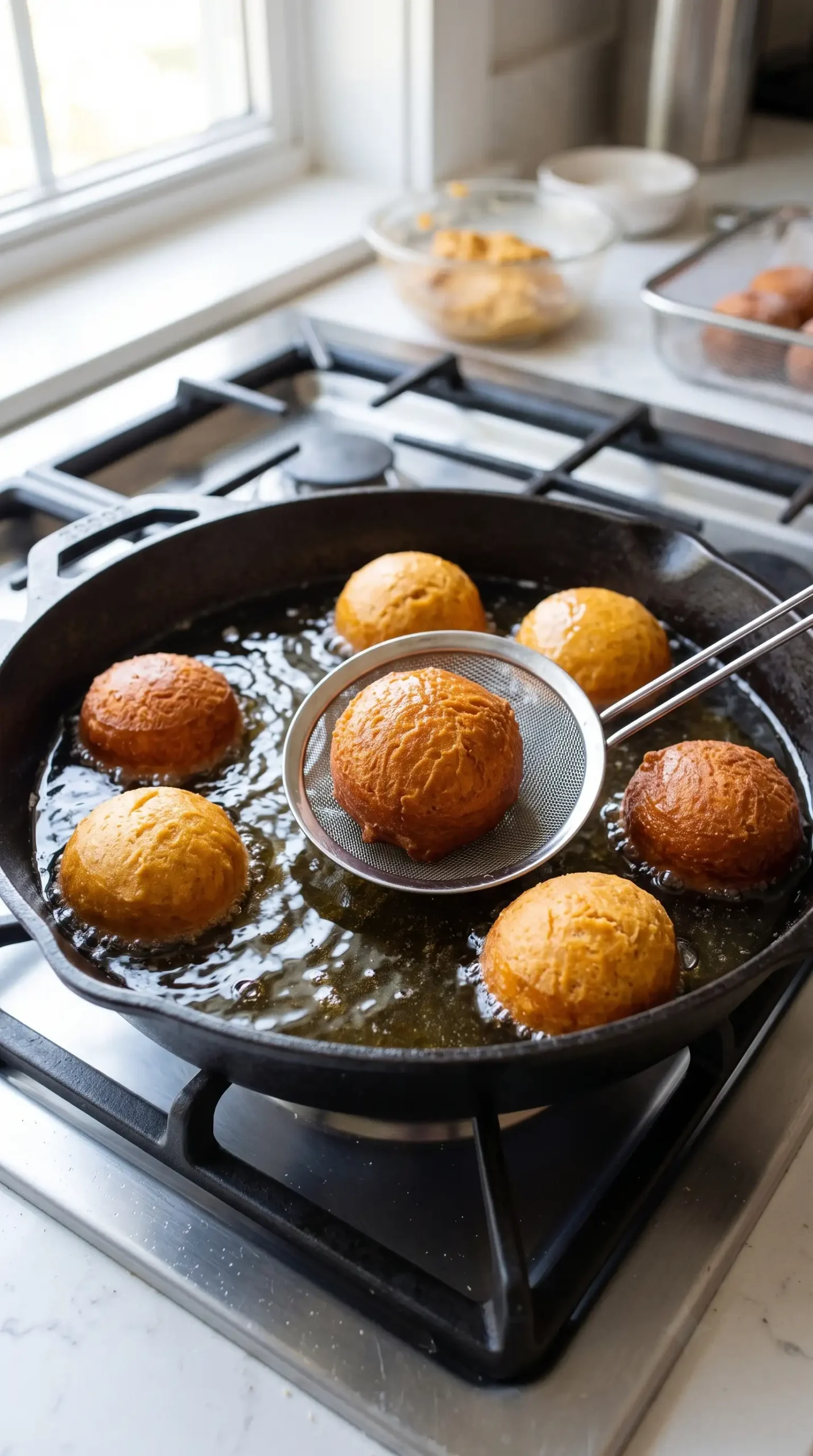
Frying control determines whether cinnamon sugar donut balls become evenly cooked treats or develop an overly dark exterior before the center is ready. The oil needs to be hot enough to create a golden crust while allowing the dough to cook through.
Dropping the shaped dough into the oil soon after forming helps preserve the round shape. The pieces naturally puff during frying, which creates the familiar donut-like appearance.
Several visual signs help guide the cooking process:
- Look for the underside to puff and turn golden before flipping.
- Check that exposed areas receive enough oil contact for even browning.
- Move finished pieces to paper towels so excess oil can drain before coating.
Oil Temperature Decisions Keep Donut Balls Balanced
The frying oil requires attention because the outside color can change quickly. When donut balls become dark brown almost immediately, the heat is likely too high, leaving the center at risk of remaining undercooked.
Common Mistakes With Cinnamon Sugar Donut Balls
Several problems can affect the final result, but each one has a clear adjustment. Understanding these mistakes helps create more consistent batches of cinnamon sugar donut balls.
- Overheated oil: A very dark exterior after a short frying time signals that the heat should be reduced.
- Early shaping: Rolling every portion far ahead of frying can allow the dough pieces to lose their shape.
- Skipping the coating timing: Adding cinnamon sugar after the pieces dry gives the coating a better chance to cling evenly.
Another common issue comes from judging doneness only by appearance. A golden surface is useful, but the inside still needs enough cooking time to become fully set.
Serving Moments That Suit Warm Donut Balls
Freshly served donut balls have their best contrast when the outside is warm and the cinnamon sugar coating is fragrant. They work well as a small dessert, a weekend breakfast treat, or a seasonal snack.
Simple serving choices keep attention on the pumpkin and spice flavors. Extra toppings are not necessary because the cinnamon sugar finish already provides sweetness and aroma.
Storage and Reheating Options for Donut Balls
Stored donut balls can remain enjoyable beyond the first serving when kept in an airtight container. Their texture is best soon after frying, but proper storage helps preserve their softness for later enjoyment.
Small Changes That Complement Pumpkin Donut Balls
Adaptations can highlight different parts of the flavor profile while keeping the original character intact. Pumpkin donut balls already contain warm spices, so optional changes should support those flavors instead of overwhelming them.
Possible approaches include adjusting the amount of cinnamon sugar coating for a lighter or sweeter finish. The coating remains the defining final touch, so changes work best when they respect the balance between dough and topping.
These treats are also naturally suited to seasonal menus because pumpkin pairs easily with the existing spices. Keeping the base preparation the same allows the familiar texture and flavor to remain consistent.
Frying Clues That Reveal Doneness
Observing the frying process provides useful information without cutting open every piece. The dough should expand, the outside should become golden, and the pieces should cook long enough for the centers to set.
| Observation | Possible meaning | Helpful response |
|---|---|---|
| Very dark outside quickly | Oil may be too hot | Lower the heat and continue carefully |
| Puffed underside | Structure is developing | Prepare to turn the piece |
| Dry surface after draining | Ready for coating | Roll in cinnamon sugar |
Attention to these signals makes the frying stage more predictable. Small size means changes happen quickly, so visual awareness is especially valuable.
Cinnamon Sugar Coating Creates the Signature Finish
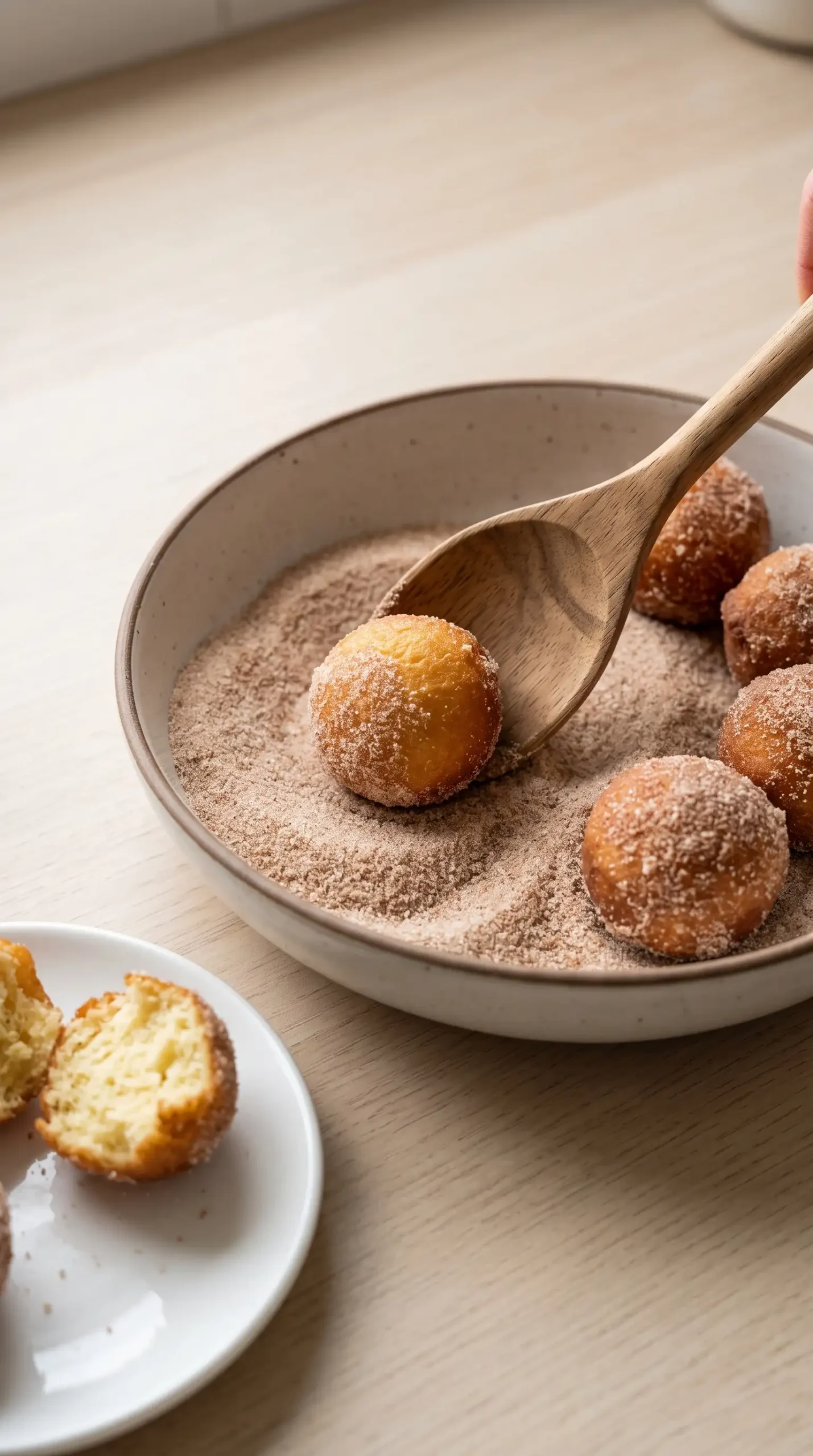
The cinnamon sugar layer transforms the fried dough into the recognizable finished treat. Applying it after draining allows the coating to cover the surface without becoming mixed into excess oil.
Texture plays an important role here because the coating contrasts with the soft interior. Each bite combines sweetness, spice, and the gentle pumpkin flavor from the dough.
Understanding Size and Shape for Donut Balls
Consistent sizing helps donut balls cook at a similar rate. Portions that are close in size are easier to monitor because they experience similar exposure to the frying oil.
The sticky dough makes shaping slightly different from working with a firm dough. Floured hands help with handling, while quick movement prevents the pieces from sitting too long before frying.
Donut Balls Show Their Best Texture When Fresh
Donut balls reveal their best qualities when the frying process creates a golden exterior, a tender center, and a cinnamon sugar coating that clings evenly. The most important cooking judgment comes from balancing heat, timing, and gentle handling.
Freshly finished cinnamon sugar donut balls reward attention to those details because the simple ingredients depend on careful execution. The pumpkin-rich dough, warm spices, and crisp coating come together when each stage is handled with patience.
Questions About Frying and Pumpkin Donut Balls
Why are my donut balls dark outside but uncooked inside?
Dark coloring with a raw center usually means the oil temperature is too high. Lowering the heat allows the outside to brown more gradually while giving the interior enough time to cook.
Can pumpkin donut balls be made without buttermilk?
Buttermilk contributes to the tender texture and works with the leavening ingredients. A suitable replacement can be used if needed, but the texture may vary from the original version.
How should donut balls be shaped before frying?
Use lightly floured hands to form small rounded portions and place them into the oil soon after shaping. Waiting too long can cause the dough portions to lose their shape.
When should cinnamon sugar be added to donut balls?
The cinnamon sugar coating should be added after frying and after the pieces are dry to the touch. This timing helps the coating stay on the surface and creates the intended sweet finish.
What makes cinnamon sugar donut balls different from regular donuts?
The smaller size changes the cooking experience by creating more coated surface area and a different balance between crisp exterior and soft interior. The pumpkin-spiced dough also gives these bites a distinct seasonal flavor.
Cinnamon Sugar Donut Balls with Pumpkin and Spices
Ingredients
Method
- Mix the flour, sugar, baking powder, baking soda, cinnamon, nutmeg, allspice, and salt together in a large bowl.
- Whisk the beaten egg, buttermilk, pumpkin puree, melted butter, and vanilla in a separate bowl.
- Pour the wet mixture into the dry mixture and stir just until a sticky dough forms.
- Add enough vegetable oil to a large skillet or Dutch oven to create a depth of about 2 inches. Heat the oil to about 375°F (190°C) over medium heat. Test the oil readiness by adding a drop of water; it is ready when it sizzles across the surface.
- Using floured hands, shape the dough into small balls about 1 1/2 inches in diameter and place them into the oil immediately after shaping.
- Fry the donut balls until the bottoms puff and turn golden brown. If the tops are not covered by oil, turn the pieces and fry for another 1-2 minutes.
- Remove the cooked donut balls from the oil and place them on a paper towel-lined plate to drain.
- Once the donut balls are dry to the touch, roll them in cinnamon sugar and serve fresh and warm.