
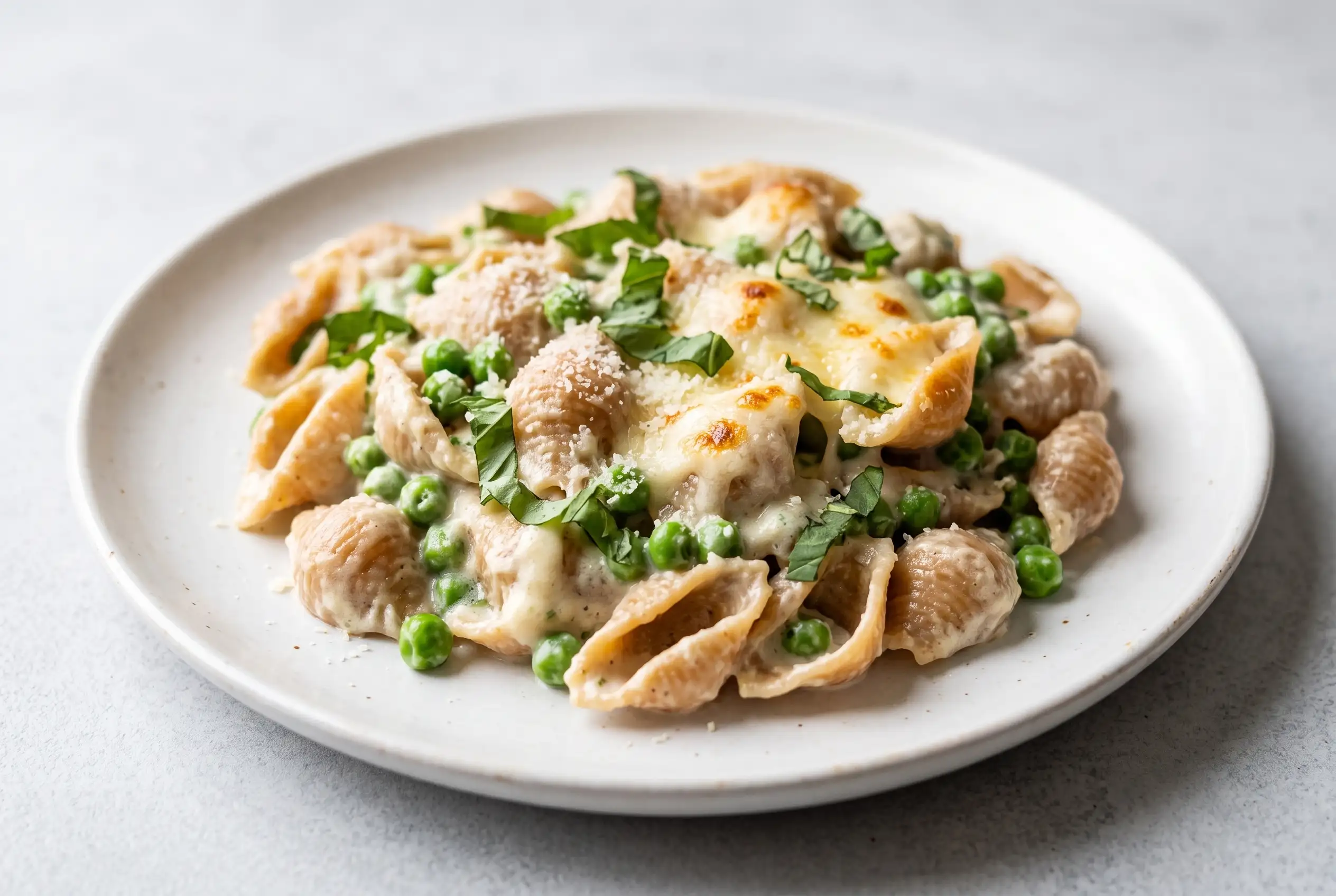
Farmer’s Market Pasta Brings Spring Peas to a Creamy Finish
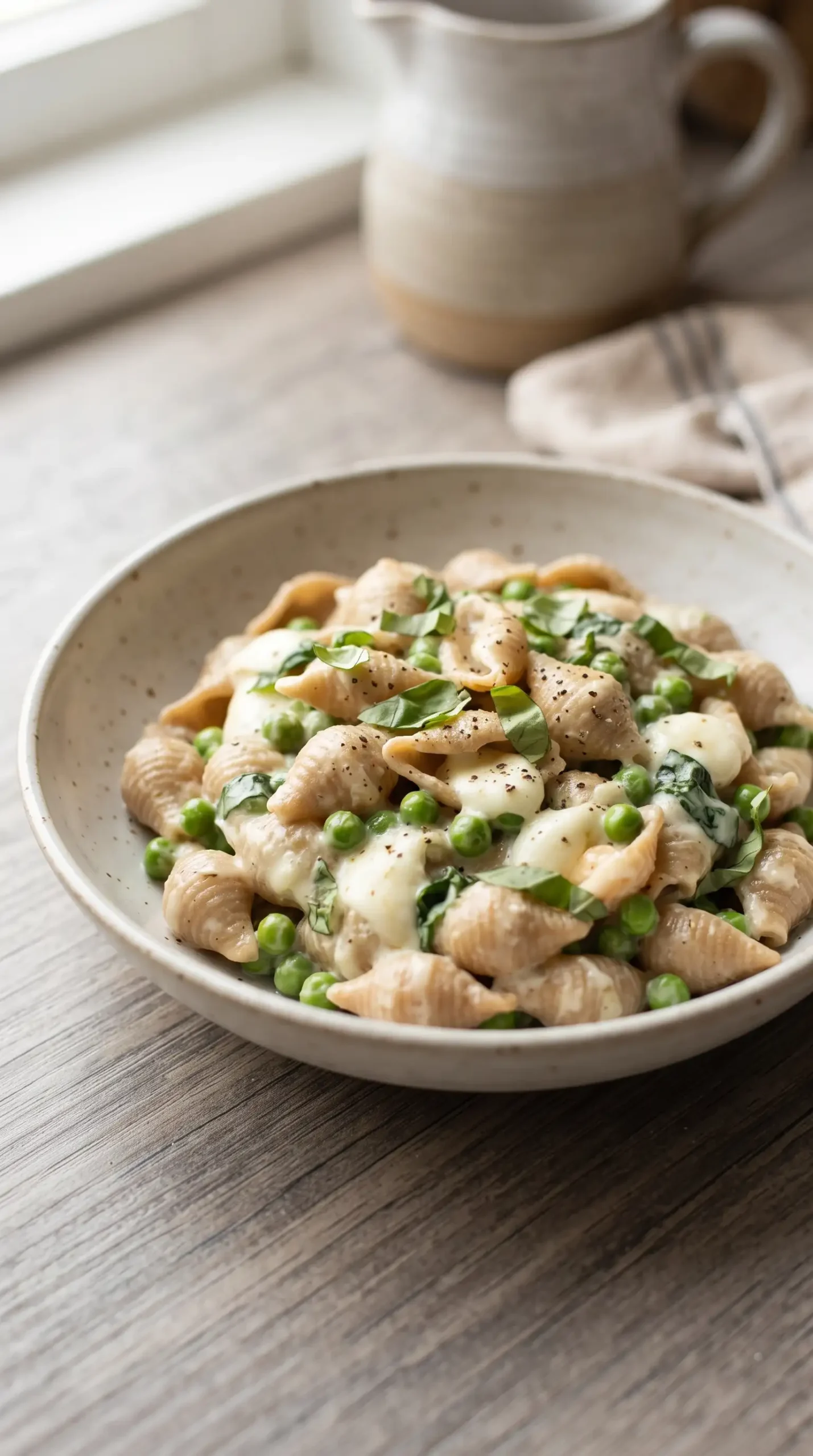
Farmer s market pasta captures the simple pleasure of turning fresh produce and a few carefully chosen cheeses into a comforting meal. Sweet peas, tender pasta, basil, ricotta, parmesan, and mozzarella come together in a dish that feels both rustic and polished. The creamy texture comes from blending the cheeses with aromatics and loosening everything with pasta water, creating a sauce that clings beautifully.
The combination works especially well because the vegetables stay recognizable while the pasta provides a satisfying base. The bright flavors of peas and basil balance the richness of the cheese mixture, and the melted mozzarella topping gives each serving a warm, baked finish.
The Cheese Blend Shapes Ricotta Pasta with Peas
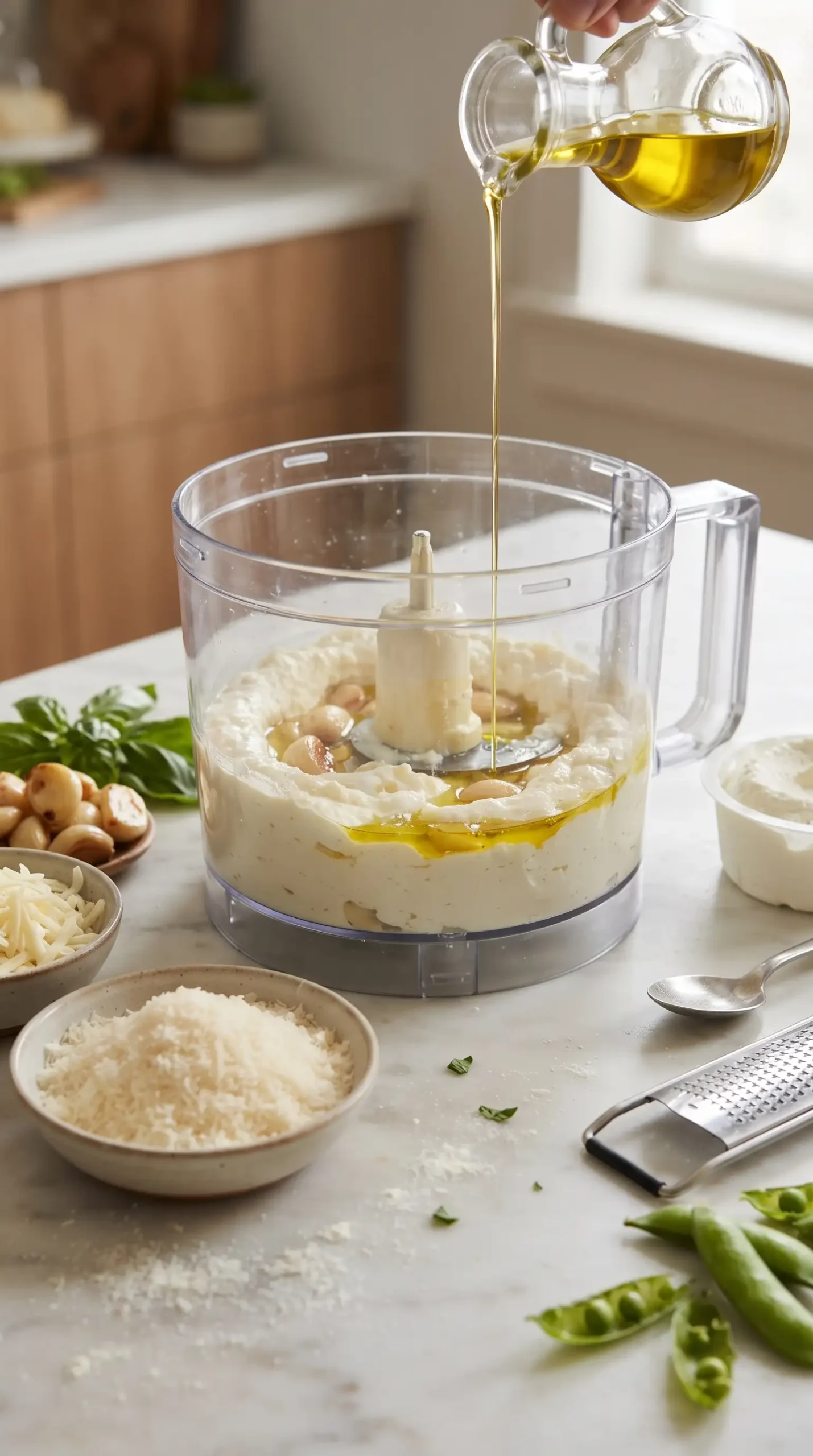
The most important ingredient decision in farmer s market pasta is the way the cheeses are handled. Ricotta or cottage cheese creates the smooth foundation, while freshly grated parmesan and mozzarella build a deeper savory flavor. Blending the ricotta with garlic and olive oil creates a creamy mixture that can coat pasta evenly.
Freshly grated cheese is especially useful here because it melts more smoothly into the sauce. The small amount of reserved pasta water helps the mixture become silky instead of thick and difficult to stir.
Fresh basil also plays an important role. Torn leaves provide a fragrant finish that keeps the dish from feeling too heavy, especially alongside the creamy cheese base and melted mozzarella topping.
Peas and Basil Create a Seasonal Pasta Balance
Peas bring sweetness and a soft texture that pairs naturally with creamy sauces. In farmer s market pasta, they are not hidden inside the dish; they provide the fresh contrast that makes each bite feel lighter.
Fresh vegetables can guide the balance of a creamy pasta dish by adding color, texture, and a lighter finish. A creamy kale pasta uses tender greens with a smooth sauce, creating a vegetable-forward combination that fits the same style of seasonal ingredient focus.
| Element | Role in the dish | Best handling choice |
|---|---|---|
| Peas | Fresh vegetable flavor and color | Cook until tender, then combine with pasta |
| Basil | Herbal brightness | Add torn leaves for a fresh finish |
| Cheese mixture | Creamy sauce texture | Blend until smooth before combining |
Cooking Control Keeps the Creamy Sauce Smooth
Good texture depends on controlling the pasta, cheese mixture, and heat at the right moments. Pasta should remain firm enough to hold its shape because it continues to absorb flavor once combined with the creamy sauce.
The reserved pasta water is a small but important tool. Its starch helps connect the cheese mixture and pasta, making the sauce easier to distribute because starchy pasta water can help emulsify and create a creamy texture. Adding it gradually allows the texture to stay creamy without becoming watery.
The broiling step requires attention because the mozzarella topping should melt and soften without drying out the pasta underneath. A short burst of high heat creates the baked mozzarella pasta finish that makes individual servings feel special.
Farmer’s Market Pasta Mistakes That Affect the Finish
Small choices can change the texture and flavor of farmer s market pasta. Avoiding a few common problems helps the creamy sauce and vegetable flavors stay balanced.
- Overcooking pasta: Pasta that becomes too soft may lose its structure when mixed with the cheese sauce.
- Skipping pasta water: Without the reserved liquid, the sauce may not spread as smoothly.
- Adding basil too early: Fresh basil is most effective when its aroma remains noticeable at serving.
- Using excessive broiling time: The mozzarella topping should melt while the pasta stays creamy.
A Creamy Pasta with Peas and Basil Fits Flexible Meals
Farmer s market pasta works well when the focus is on fresh, simple flavors. The dish can move easily from a casual family dinner to a more thoughtful meal served in individual portions.
The combination of peas, cheese, and basil also leaves room for seasonal adjustments. Similar fresh vegetables may complement the same creamy structure, but the original version remains centered on the sweet pea and herb pairing.
Serving Choices Highlight the Melted Mozzarella Pasta Layer
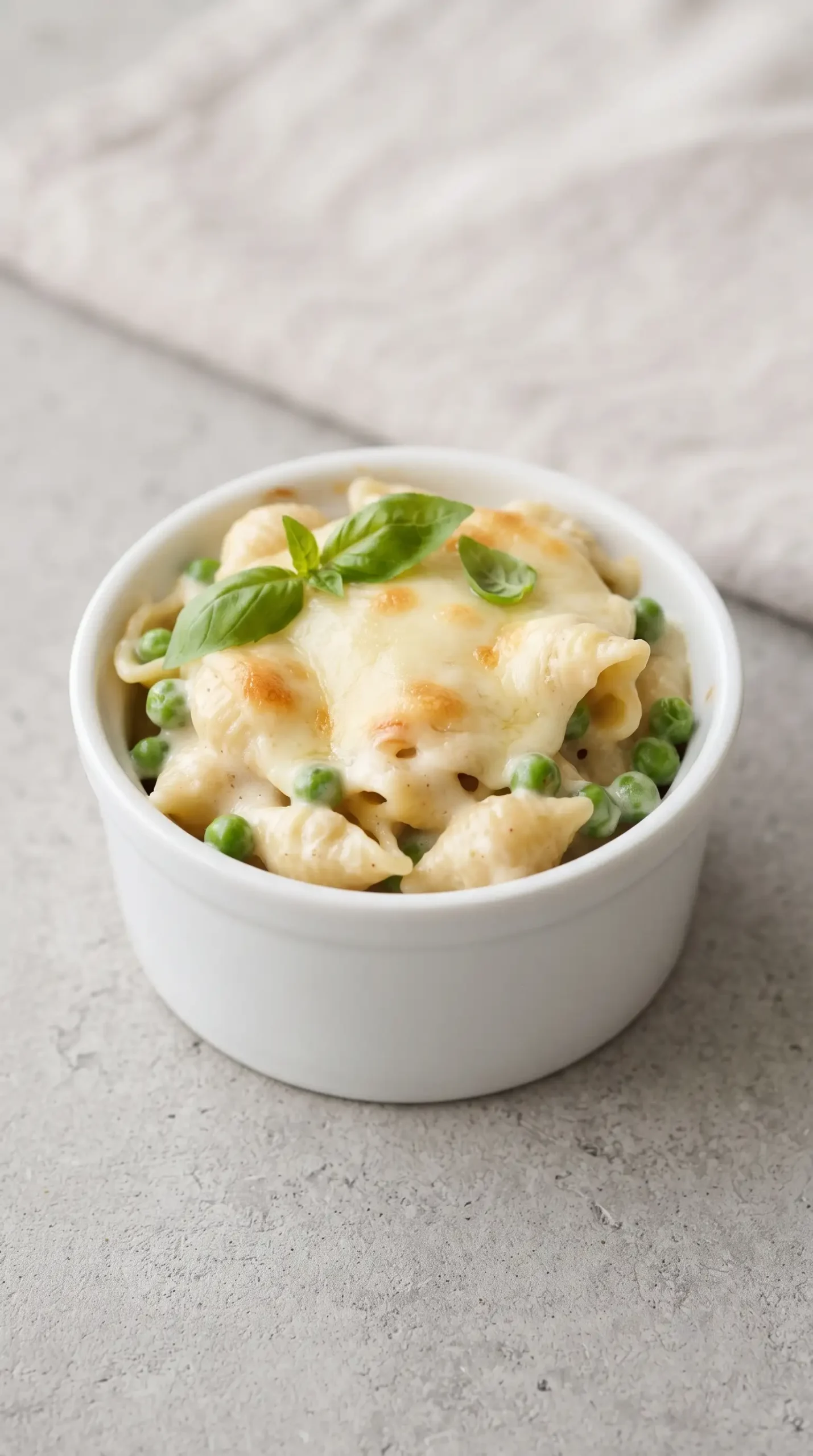
The individual ramekin finish gives baked mozzarella pasta its appeal. A portion with a melted mozzarella slice on top creates a contrast between the creamy interior and the soft, warm cheese layer.
- Serve warm: The cheese mixture has the smoothest texture shortly after preparation.
- Finish with basil: Fresh herbs add contrast after the richer ingredients are combined.
- Pair thoughtfully: A simple side can complement the creamy pasta without competing with it.
Farmers Market Pasta Texture Depends on Small Details
The texture of farmer s market pasta comes from several small decisions working together. Smooth blended cheese, properly cooked pasta, and the right amount of reserved water create a sauce that feels cohesive.
The peas should remain noticeable instead of disappearing into the creamy mixture. Their soft bite gives the pasta a more interesting texture and keeps the cheese from becoming the only dominant element.
Fresh Ingredients Give This Pasta Its Character
The appeal of farmer s market pasta comes from using ingredients that each have a clear purpose. The dish does not require a long ingredient list because the flavors are built around fresh peas, fragrant basil, and a balanced cheese combination.
Garlic blended into the cheese mixture adds savory depth throughout each serving. Olive oil helps create a smoother blend while supporting the flavors of the herbs and dairy.
Preparing Components Separately Improves the Final Bowl
Keeping the peas, pasta, and cheese mixture as distinct elements during preparation allows each part to reach the right texture. The peas can be cooked without affecting the creaminess of the sauce, while the cheese mixture can be adjusted before meeting the pasta.
This approach also makes it easier to notice whether the sauce needs additional pasta water or seasoning before the dish reaches its final stage.
Farmer’s Market Pasta Offers Simple Seasonal Adaptations
The core idea behind farmer s market pasta is adaptable without losing its identity. Fresh peas are the featured vegetable here, but the creamy cheese base provides a useful framework for other seasonal choices.
When making changes, keep the balance between vegetables, pasta, and sauce in mind. The cheese mixture should still coat the pasta, and fresh additions should support the creamy texture.
Storage and Reheating Keep the Creamy Pasta Enjoyable
Leftover farmer s market pasta can be stored and reheated carefully to protect its creamy consistency. Gentle reheating helps prevent the cheese mixture from becoming overly firm.
A small amount of moisture can help loosen the pasta as it warms. Stirring carefully keeps the sauce distributed and helps maintain the smooth texture created during preparation.
Farmer’s Market Pasta Shows How Creamy Sauces Can Stay Fresh
Farmer s market pasta succeeds because it combines comforting cheese with fresh seasonal ingredients. The peas, basil, and creamy sauce each contribute something different, creating a dish that feels rich while still carrying bright vegetable flavors.
The most important cooking judgment is preserving the contrast between the smooth cheese sauce and the fresh ingredients. When the pasta remains firm, the sauce stays silky, and the mozzarella melts properly, the dish keeps its balance from the first serving to the last.
Questions About Creamy Texture and Farmer’s Market Pasta
Can farmer s market pasta use frozen peas?
Yes, frozen peas can work well when fresh peas are unavailable. Cook them until tender and drain them before combining them with the pasta so excess moisture does not affect the sauce.
How can the cheese sauce stay creamy?
The smoothest texture comes from blending the ricotta or cottage cheese mixture thoroughly and using reserved pasta water to help the sauce combine with the noodles.
Can the pasta be prepared without broiling?
Yes, the dish can be enjoyed without the broiling step. The melted mozzarella topping adds a baked finish, but the creamy pasta remains flavorful when served directly after combining.
What pasta shapes work well with this dish?
Shells, like the suggested whole wheat shells, are useful because their shape can hold onto the creamy sauce and small pieces of peas.
Farmer'S Market Pasta with Creamy Ricotta and Peas
Ingredients
Method
- Cook the peas until tender, then drain and set aside.
- Cook the pasta until al dente. Drain the pasta and combine it with the peas and butter.
- While the pasta and peas cook, blend the ricotta cheese, garlic, and olive oil in a food processor until smooth. Season with salt and pepper, then mix in the grated cheeses and basil.
- Combine the cheese mixture with the pasta and add the reserved pasta water. Stir until the sauce is smooth and evenly coats the pasta.
- Portion the pasta into ramekins and place one slice of mozzarella on each serving.
- Broil the ramekins at 400°F (204°C) or higher for about 5 minutes, until the mozzarella has melted.