
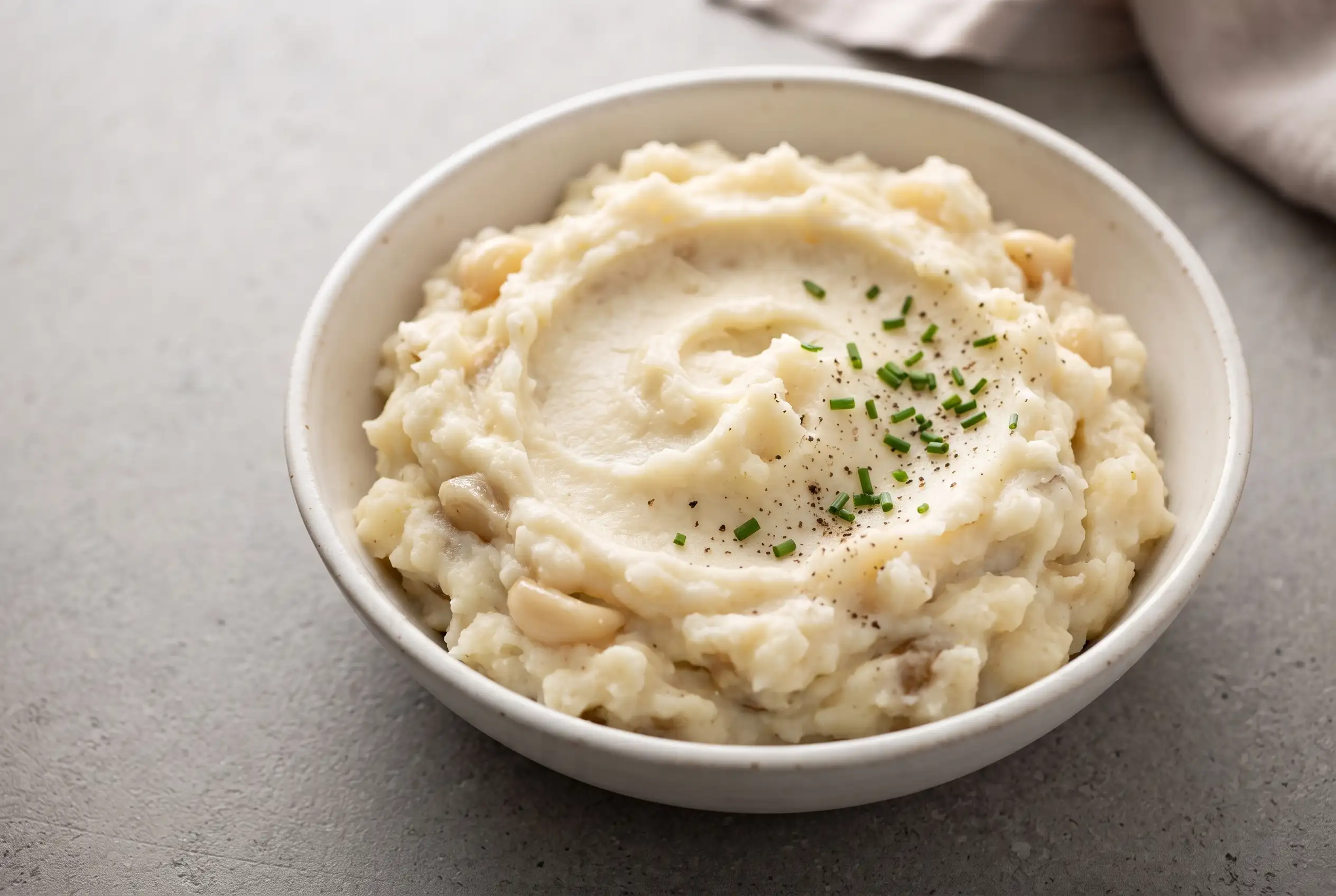
Garlic mashed potatoes bring together tender russets, mellow garlic flavor, and a rich finish in a simple comfort food that works for everyday meals and gatherings. These garlic mashed potatoes use a slow cooker approach that allows the potatoes to soften in a flavorful cooking liquid before being finished with butter and sour cream. The result is an easy garlic mashed potatoes recipe with a rustic texture and a creamy bite.
Slow cooker garlic mashed potatoes create hands-off comfort
Slow cooker garlic mashed potatoes are especially useful when stovetop space is limited or when you want the potatoes to become tender without constant attention. The gentle cooking environment allows the potato pieces to soften throughout while the garlic cooks into the surrounding liquid.
Russet potatoes define the texture of garlic mashed potatoes
Russet potatoes are a strong choice for garlic mashed potatoes because naturally starchy russet potatoes help create a fluffy, satisfying mash after they become tender. Cutting the potatoes into smaller pieces before cooking helps them soften evenly throughout the slow cooker.
Texture preferences can guide the finishing process. Rustic mashed potatoes can keep some small pieces of potato and skin for extra character, while a smoother result comes from spending more time mashing after the potatoes are fully tender.
Choosing how much to break down the potatoes changes the entire eating experience. A few gentle mashes preserve a homemade appearance, while a more thorough approach creates a smoother consistency closer to a classic creamy side dish.
| Texture preference | Finishing approach | Result |
|---|---|---|
| Rustic | Light mashing with some pieces remaining | Chunky, homemade texture |
| Classic creamy | Longer mashing after tender cooking | Softer and more uniform potatoes |
| Ultra smooth | Additional smoothing tools and careful handling | Very fine potato texture |
Milk and garlic build the flavor foundation
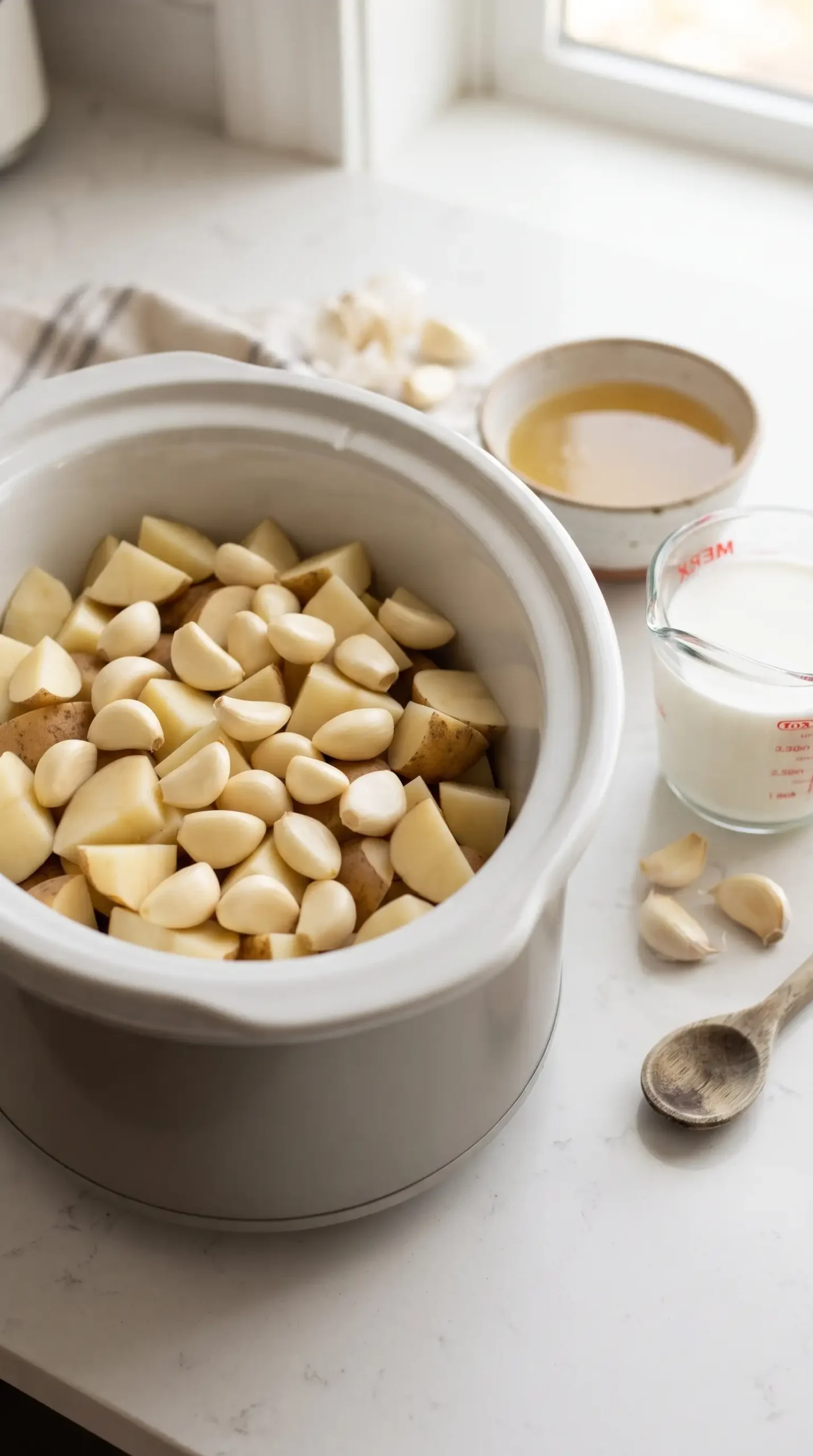
The cooking liquid carries flavor through every potato piece as the potatoes soften. Milk contributes richness, while broth adds savory depth during the slow cooking stage.
Garlic placement matters because the cloves cook gently alongside the potatoes. Using several cloves allows the flavor to become softer and more blended instead of creating a sharp raw garlic taste.
Salt deserves attention at the finishing stage because potatoes absorb seasoning as they cook and after they are mashed. Tasting before serving helps adjust the balance so the creamy garlic mashed potatoes have enough flavor throughout.
Butter and sour cream complete the creamy finish
Butter and sour cream are added after the potatoes become tender, giving the finished mash a richer texture and a balanced tang. Stirring these ingredients in after cooking keeps their flavors noticeable in the finished dish.
Slow cooker control keeps potato texture on track
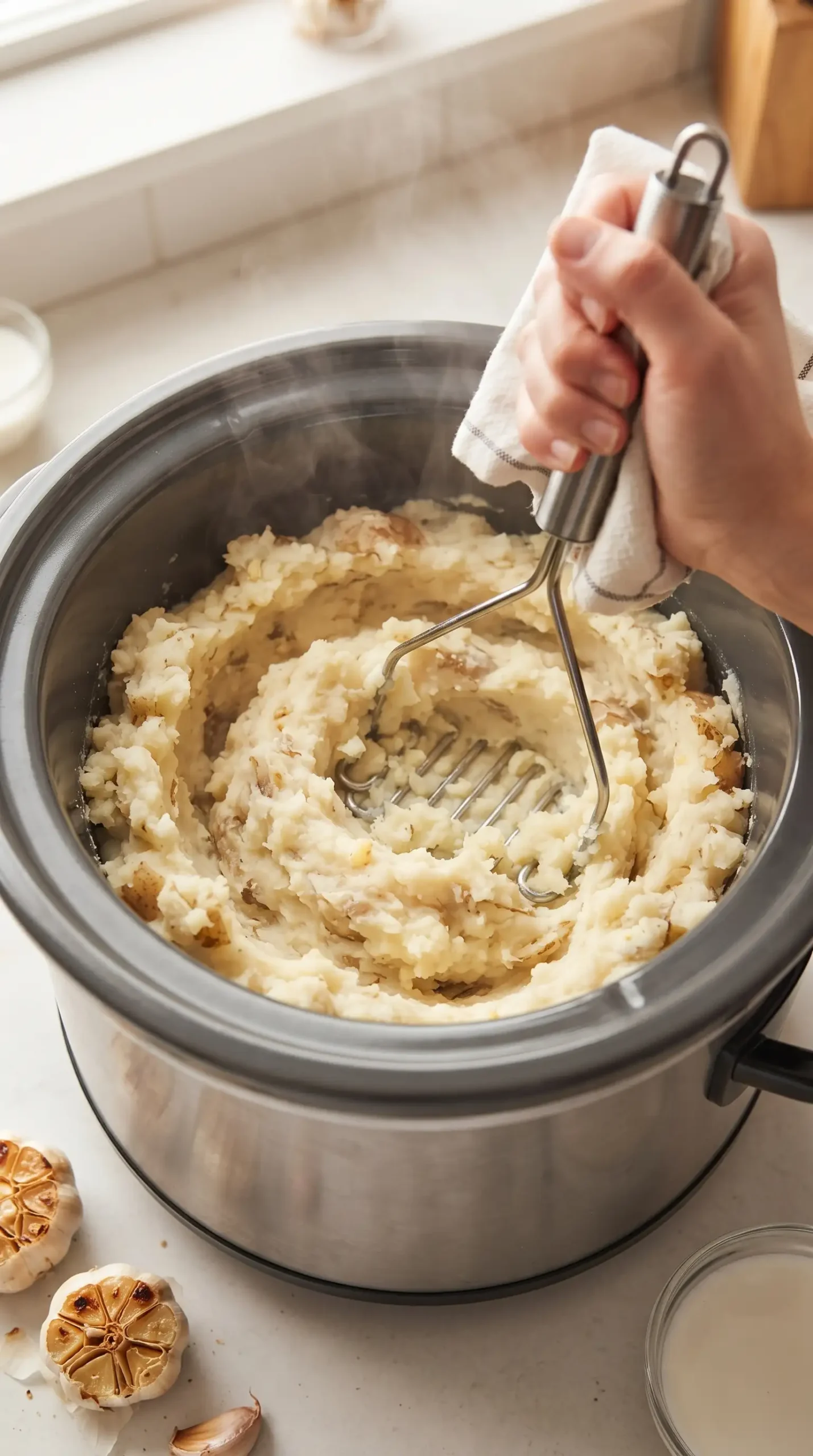
Successful slow cooker garlic mashed potatoes depend on recognizing when the potatoes have reached the right tenderness. Pieces should become soft enough to mash easily, allowing the cooking liquid and potatoes to combine into a cohesive side dish.
Careful mashing prevents unnecessary texture problems. An electric mixer can make the process quick, but keeping the mixer positioned carefully helps avoid splashing the thick potato mixture outside the bowl.
Temperature management during cooking also matters. Potatoes need enough time to soften fully, while aggressive handling after cooking can change their texture. Gentle mixing preserves the character created during the slow cooking stage.
Common garlic mashed potatoes mistakes to avoid
Several small choices can change the outcome of garlic mashed potatoes. Paying attention to tenderness, seasoning, and mixing technique helps prevent the most common issues with this style of preparation.
- Underseasoned potatoes: Taste after adding butter and sour cream, then adjust salt so the finished mash does not taste flat.
- Uneven texture: Allow the potatoes to become very tender before mashing so firm pieces do not remain accidentally.
- Overworked potatoes: Mix only until the desired consistency appears to keep the texture pleasant.
Serving choices highlight homemade potato flavor
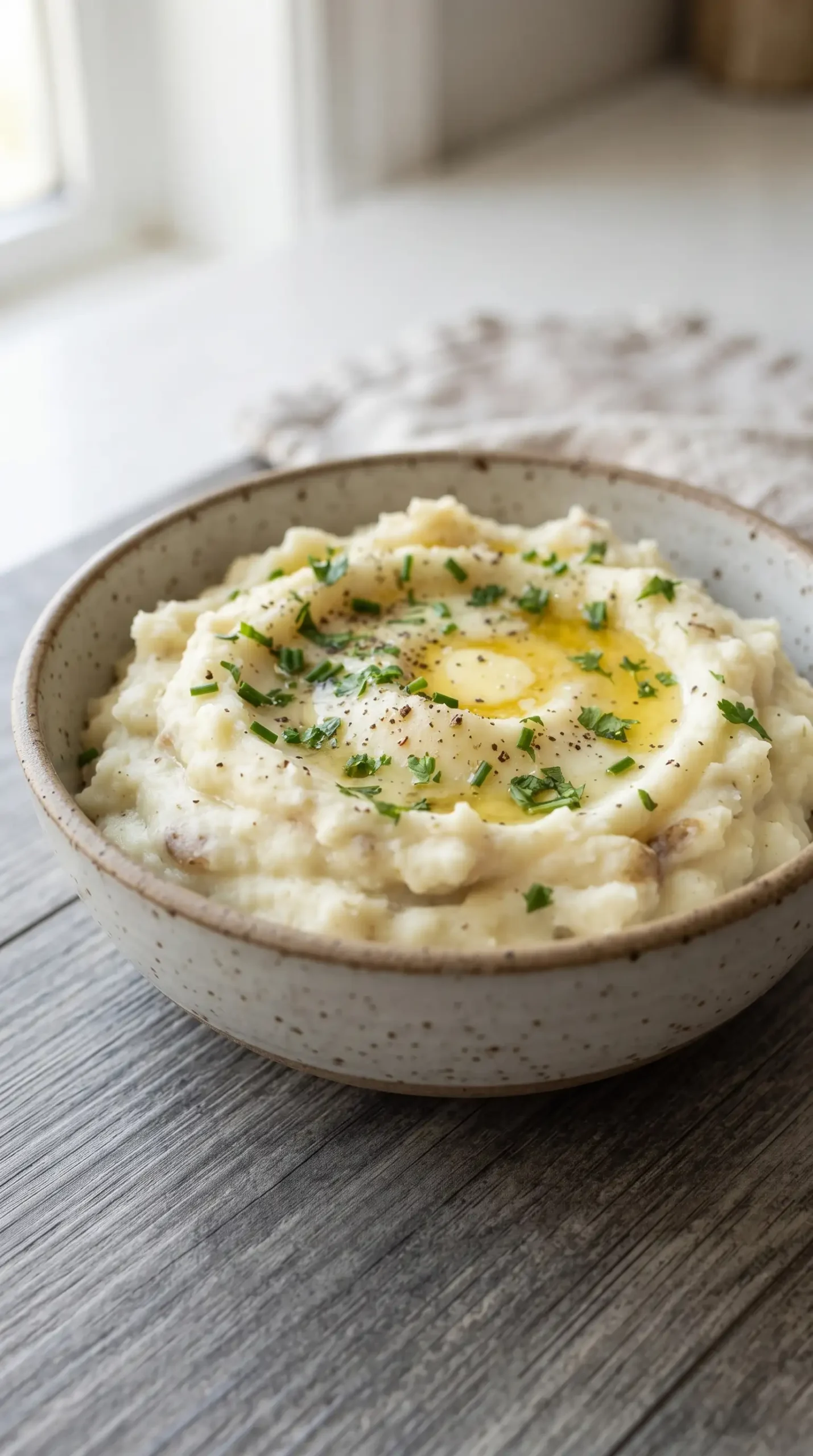
Garlic mashed potatoes pair naturally with meals that benefit from a creamy side dish. Their mild garlic flavor and rich texture allow them to support many main dishes without competing for attention. Serving a second crispy potato side dish can add contrast at the table by bringing a different texture alongside the soft, creamy mash.
Serving them warm helps maintain the soft texture created during preparation. If the potatoes sit for a while, gentle stirring can help keep the consistency appealing.
Simple adjustments keep the recipe flexible
Small changes can adapt garlic mashed potatoes to different kitchens while staying close to the original approach. Chicken broth works for a richer savory profile, while vegetable broth provides a suitable option when a meat-free side dish is preferred.
Garlic quantity can also be adjusted based on personal preference. A smaller amount creates a subtle background flavor, while additional cloves provide a more noticeable garlic presence.
Those looking for a smoother style can extend the mashing process after the potatoes are tender. A more rustic finish remains a great option when a homemade appearance and texture are preferred.
Slow cooker preparation simplifies busy meal planning
Using a slow cooker changes how mashed potatoes fit into a meal schedule. The potatoes cook in the same vessel where they are later mashed, reducing extra dishes and keeping the process straightforward.
Busy cooks can appreciate how the slow cooker garlic mashed potatoes approach separates active preparation from the longer cooking period. Once the potatoes are tender, the finishing ingredients can be incorporated before serving.
Garlic mashed potatoes pair well with practical toppings
Toppings and additions can personalize the finished bowl without changing the core preparation. Fresh herbs, extra seasoning, or a little additional butter can complement the creamy texture created by the potatoes.
Kitchen tools influence the finished potato texture
The tools used after cooking affect the consistency of the mash. Different approaches create noticeably different results.
- Hand masher: Keeps a rustic texture with visible potato pieces.
- Electric mixer: Speeds up mixing for a smoother finish when used carefully.
- Potato ricer: Creates a very fine texture for cooks who prefer an ultra-smooth style.
Easy garlic mashed potatoes recipe decisions improve every batch
The best results come from matching the texture and seasoning choices to the meal being served. A rustic version can feel comforting and casual, while a smoother version can fit a more polished dinner presentation.
Attention to a few details makes this easy garlic mashed potatoes recipe dependable. Fully tender potatoes, balanced seasoning, and careful mixing create the creamy side dish many cooks look for when making mashed potatoes at home.
Garlic mashed potatoes deliver comfort through gentle cooking
Garlic mashed potatoes succeed because the cooking process allows simple ingredients to develop into a cohesive dish. Tender potatoes, softened garlic, flavorful liquid, butter, and sour cream work together once the texture is handled with care.
The slow cooker approach rewards patience and attention to consistency. Keeping the potatoes tender and seasoning them thoughtfully creates a creamy side dish with a homemade character that stays true to its ingredients.
Garlic Mashed Potatoes Troubleshooting Questions
Can garlic mashed potatoes be made smoother?
Yes. A smoother texture comes from cooking the potatoes until very tender and continuing the mashing process until fewer pieces remain. A potato ricer can also create a finer texture if that style is preferred.
Why do my mashed potatoes still have lumps?
Lumps usually remain when potato pieces have not softened enough before mashing. Giving the potatoes more cooking time allows the pieces to break down more easily during finishing.
Can I use vegetable broth in garlic mashed potatoes?
Yes. Vegetable broth works as a substitute for chicken broth and keeps the dish suitable for meals where a vegetable-based cooking liquid is preferred.
How can I make the garlic flavor stronger?
Increasing the amount of fresh garlic provides a stronger garlic flavor while keeping the same cooking method. The slow cooking process helps soften the garlic as it blends with the potatoes.
Can I make these potatoes with an electric mixer?
An electric mixer can be used after cooking to help create a smoother mash. Keeping the mixer position controlled prevents the thick potatoes from splashing while mixing.
Garlic Mashed Potatoes with Sour Cream Slow Cooker Recipe
Ingredients
Method
- Add the potatoes, milk, broth, and garlic to a slow cooker, keeping the garlic on top of the potatoes. Cover and cook for 4-5 hours on high or 7-8 hours on low.
- Once the potatoes are very tender, mash them directly in the slow cooker bowl until the desired texture is reached. An electric mixer can also be used carefully to mix the potatoes while avoiding splashing.
- Mix in the salt, butter, and sour cream. Adjust the seasoning and texture as needed, then serve.